|
Highlights
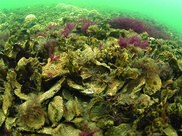
A new NOAA Fisheries Technical Memorandum describes how restored oyster reefs can benefit the ecology—and the economy. Researchers used computer modeling to explore how oyster restoration in Maryland’s Choptank River system could affect the area, highlighted by growth in the blue crab population and fishery. Contact: Kim Couranz
|
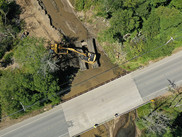
For decades, sediment buildup in California’s Butano Creek flooded roads and local communities, prevented steelhead and coho salmon from migrating, and contributed to substantial die-offs of fish. In October 2019, the NOAA Restoration Center and partners finished a $7 million effort to remove the sediment and restore the creek. Contact: Joe Pecharich
|
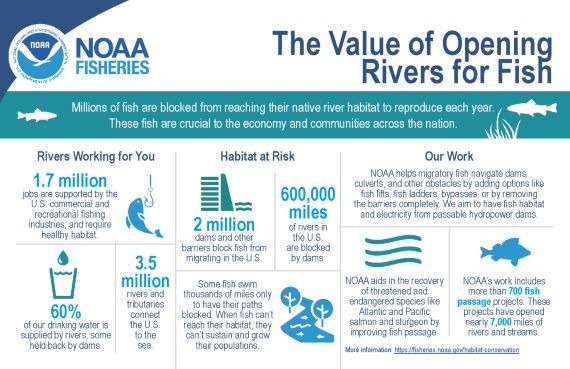
Every year, millions of fish migrate to their native habitats to reproduce. They are often blocked from completing their journey by human-made barriers, such as dams, culverts, and other obstacles. When fish can’t reach their habitat, their populations can’t be maintained or increased. Learn how NOAA helps migratory fish and communities by opening river and stream habitat. Contacts: Melanie Harris and Melanie Gange.
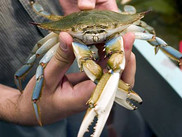
Temperature, salinity, and other aspects of water column habitat affect the species that live there. The Chesapeake Bay Interpretive Buoy System team took a look at how water temperature and salinity over the 2019-20 winter might affect blue crabs and striped bass. Contact: Kim Couranz.
|
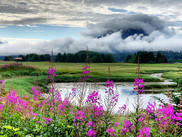
Wetlands—including marshes, mangroves, swamps, deltas, and floodplains—provide valuable benefits to fish, people, and communities. They’re habitat for the fish we eat, are often the front line of protecting coastal communities from storms, and support cleaner water. Here are five reasons why we love them. Contact: Jenny Smith.
|
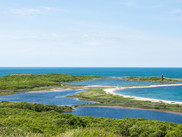
NOAA and other agencies restoring habitat after the Bouchard Barge-120 oil spill in Buzzards Bay on the north Atlantic Coast, have released a draft amendment to a previously approved 2014 restoration plan for public review and comment through June 17. The proposal calls to use up to $400,000 in remaining settlement funds for the Cuttyhunk Island Protection Project—a $7 million land acquisition in partnership with the Buzzards Bay Coalition. If approved, it would permanently protect hundreds of acres of habitat on the island. Contact: Jim Turek.
|
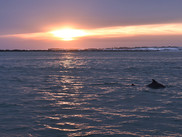
In 2019, the Deepwater Horizon Trustees continued the fourth year of post-settlement restoration in the Gulf of Mexico. Annual reports on all of this work, and an annual financial summary are now available. The reports are provided each year to help stakeholders and communities stay up to date on the Trustees’ and partners’ work. Contact: Nancy B. Wallace.
|
|
|
Habitat Across NOAA

What do you know about our ocean? The ocean is where life began over 3.5 billion years ago. Each year, NOAA celebrates our ocean throughout the month of June. We hope you join us on Twitter, Facebook, and Instagram. Look for #30DaysofOcean and #OceanMonth2020.
|
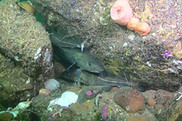
Fish rely on healthy habitat for growth and survival. NOAA works to reduce the negative effects of fishing gear on habitat to ensure they remain healthy and productive. Nets and dredges that are towed over the bottom of the ocean can disturb bottom habitats, removing and damaging plants and animals that live there. Learn more about ways we work to reduce the negative effects of fishing.
|

Map your way through the migration of the ‘ō‘io (Hawaiian bonefish), from the open waters of the pelagic zone to tiny, nurturing estuaries and beyond! This map-coloring activity allows students to explore the different habitats where ‘ō‘io live. Students will create a unique pattern to represent the habitats on their map. They will also learn about some of the different forms and functions of each stage of life cycles along the way.
|

A new study projects that climate change will pose management challenges for two commercially important species—American lobster and sea scallop—as suitable habitats move farther north. The researchers suggest that American lobster will move further offshore and sea scallops will shift to the north in the coming decades. Changes to their distribution and abundance will have impacts on our economy.
|
|
|
Announcements
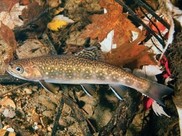
The National Fish Habitat Partnership (NFHP) recently announced its Waters to Watch for 2020. This annual list represents a collection of strategic conservation efforts implemented on rivers, streams, estuaries, and lakes to protect, restore, or enhance fish habitat. NOAA is a member of NFHP: a science-based, state-led initiative to protect, restore, and maintain America’s aquatic ecosystems.
|
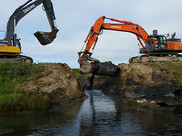
The Restoration Webinar Series, jointly hosted by NOAA and the U.S. Fish and Wildlife Service, is seeking presenters for webinars in July through December 2020. Now in its 8th year, the Restoration Webinar Series showcases best management practices and innovative techniques, and provides an avenue for practitioners to discuss how to address some of the biggest habitat restoration challenges facing North America today. Submit an abstract, or learn more about the Restoration Webinar Series.
|
|
|
|
|
|