|
When a Right Whale Dies
When a right whale dies and we find it in U.S. waters, we work with stranding network partners to do a necropsy so that we can find out more about the whale and what caused its death.
The right whale known as “Snake Eyes” likely died from entanglement in Canadian fishing gear.
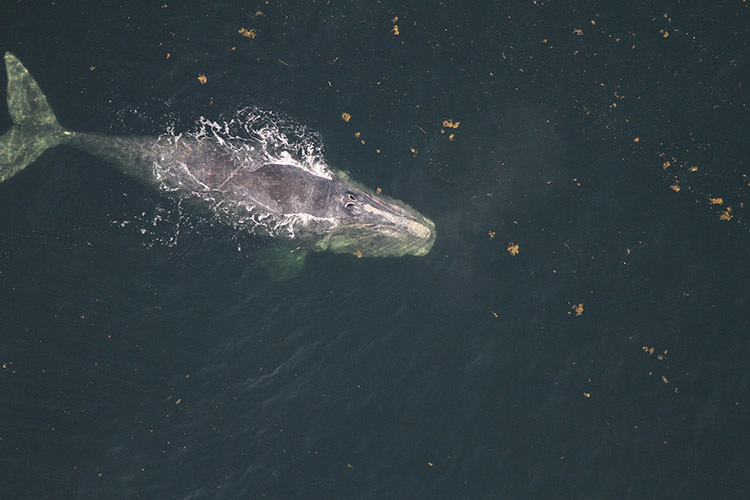 Snake Eyes as seen on July 16, 2019. Credit: Northeast Fisheries Science Center
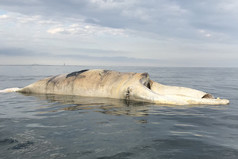
Around 3 p.m. on September 16, 2019, Atlantic Marine Conservation Society (AMSEAS) received a call about a very decomposed whale carcass. It was floating about 4 miles south of Fire Island Inlet of Long Island, New York. Dead whales floating in the waters off Long Island have been a fairly common occurrence over the last few years, mostly humpback and minke whales. When AMSEAS reported the call to us at NOAA Fisheries, we were prepared to assist with what has now sadly become somewhat routine response planning.
Day 1: Mobilizing the Response
Response planning involves a series of coordination calls. We need to:
-
Make arrangements to tow the carcass to a beach (usually public but not crowded).
-
Arrange heavy equipment (front loaders, backhoes) to help position the carcass.
-
Secure the carcass from tides and possible souvenir hunters.
-
Assemble a team to take measurements and samples (necropsy team).
-
Handle media and bystander inquiries.
-
Plan for the disposal of the carcass—usually deep beach burial, but sometimes other options are considered.
Our role in these cases is primarily to provide logistical and resource support to the authorized response organizations on the ground.
We joined a 4 p.m. call with representatives from AMSEAS, New York State Department of Environmental Conservation, U.S. Coast Guard, New York State Office of Parks, Recreation and Historic Preservation, and Fire Island National Seashore. While we were on the briefing call, some photos came in from the boater who first reported the carcass.
It didn’t take long for Ainsley Smith, marine mammal stranding coordinator for the Greater Atlantic Region, to review the photos. She said to the group, “Those look like paddle-shaped flippers to me.” Our hearts collectively sank, as that meant we probably had a dead North Atlantic right whale on our hands.
If they were indeed paddle-shaped flippers, this would be the first known right whale mortality observed in U.S. waters for 2019. It would come at a time when tensions are running high over pending regulations for fisheries to help reduce the threat of entanglement in fishing gear.
(Photo: Right whale carcass floating off Long Island. Credit: NY Department of Environmental Conservation)
|
|
|
|
|