Tributaries: Small Rivers, Big Returns
Big rivers with big dams get big attention. For example, the Penobscot River, New England’s second largest river, underwent a multi-million dollar, large-scale restoration project between 2004 and 2016. Work involved removing two dams, installing a fish lift, and constructing a nature-like bypass. The project opened up almost 2,000 miles of rivers and streams to many species of sea-run fish, including endangered Atlantic salmon, river herring, and American shad.
But when we evaluate habitat restoration, we look beyond the size of the river. We also evaluate many factors to figure out where we can get a good return on investment:
- Available spawning and nursery habitat.
- Previous dam removals, especially downstream barriers.
- Likely future dam removals.
- Stocking efforts to jumpstart population recovery.
- Current power generation on existing dams.
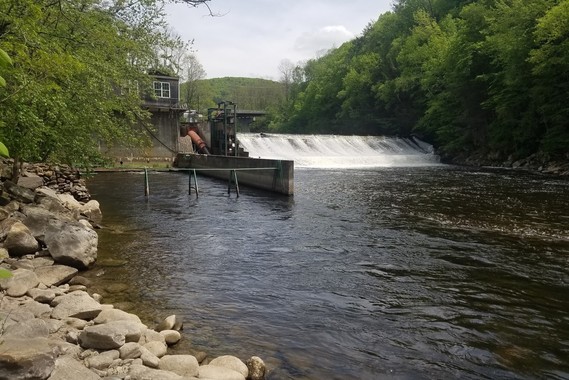 Fiske Mill is the first hydroelectric project on the Ashuelot River, which is a tributary to the Connecticut River.
Restoring Connecticut River Tributaries
Some tributaries, like the Ashuelot River in southwest New Hampshire, have high restoration potential. It feeds into the larger Connecticut River and has a wide variety of habitats, including riffles, deep pools, long runs, and warm water ponds. Before 2001, the river had six dams blocking fish passage. With the support of the NOAA Fisheries Restoration Center, three dams were removed (2001, 2002, and 2010), and now only three remain on the Ashuelot. We are now working with the three federally licensed hydroelectric projects to improve fish passage.
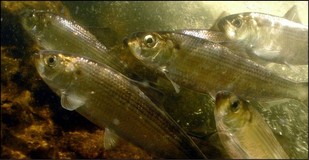
As part of the habitat plan for shad, the Ashuelot River receives 300-400 stocked American shad each year. These prized fish, roughly 12-20 inches long with blue-green backs, are notoriously picky about river flows. Removing dams and improving fish passage can make a huge difference in their success. The last American shad coastwide stock assessment in 2007 showed that populations were at an all-time low. However, we have confidence that our dam removal and fish passage improvement efforts will go a long way toward restoring these sea-run fish populations.
In order to remove dams, we need to build community support. NOAA representatives often attend community meetings to help answer questions about the removal process and explain the ecosystem benefits of restoring fish populations. Improving and adding fish passage at the three licensed dams, along with the previous dam removals, will allow fish to reach 43 river miles of high-quality upriver spawning and rearing habitat to many species of sea-run fish, including American shad.
|
|