|
Highlights
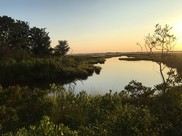
Do you know someone deserving of special recognition for outstanding leadership and achievements in the conservation and restoration of our nation's wetlands? If so, we invite you to nominate them for a National Wetland Award by December 20. Contact: Brenda Rupli.
|
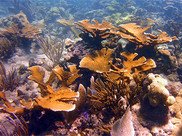
After Hurricane Matthew swept a destructive path through the south Atlantic and Caribbean, staff from the NOAA Restoration Center immediately set to work responding to a damaged coral reef off the coast of Puerto Rico. Three years later, monitoring of the restored reef has revealed healthy, thriving corals with survival rates at more than 90 percent. Contact: Tom Moore.
|
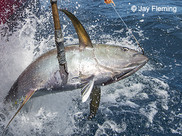
Are you a pelagic longline fisherman in the Gulf, and interested in restoring fish species impacted by Deepwater Horizon? The 2020 Oceanic Fish Restoration Project is now open for eligible vessel owners to submit quotes to participate by October 23. It offers vessel owners incentives to take a break from longline fishing, and using bycatch reducing gear. Contact: Amy Piko
|
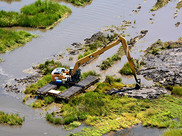
NOAA has announced the award of $24.8 million for three cooperative agreements as part of our efforts to support resilient coastal communities. The funding will help restore habitat along Louisiana’s coast under the Coastal Wetlands Planning, Protection, and Restoration Act (CWPPRA) Program, increasing protection for Louisiana communities and benefitting one of America’s richest fisheries. Contact: Cecelia Linder.
|
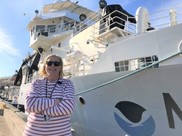
On October 7, a team of scientists and engineers left Newport, Oregon for a month-long research cruise along the West Coast. The expedition, representing collective efforts of three federal agencies led by NOAA Fisheries, will dive deep to explore corals, sponges, and fish habitat on the ocean floor. A live video feed will allow anyone to follow along with the expedition. Contact: Heather Coleman.
|
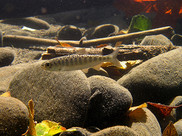
NOAA Fisheries consults with other federal agencies and tribes regarding federal actions that may impact endangered and threatened species, designated critical habitats, and essential fish habitats. This week, we released a newly upgraded and more efficient consultation tracking online system, the Environmental Consultation Organizer, to replace our previous system. Contact: Kara Meckley.
|
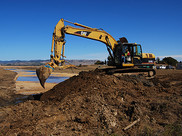
The Restoration Webinar Series, hosted by NOAA, the U.S. Fish and Wildlife Service, and the Society for Ecological Restoration, is soliciting abstracts for the 2020 program that are innovative, transferable, and include inland, estuarine, coastal or marine habitats. To submit a suggestion, visit the Restoration Webinar Series 2020 Abstract Submission Form. Contact: Melanie Gange.
|
|
|
Habitat Headlines from Around NOAA
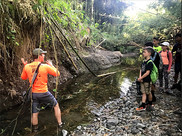
Scientists conduct integrated monitoring of coral reefs and communities in Guam as part of the Habitat Focus Area (HFA). Its initial focus was on improving watershed management to support the biology of the system and the health of the reef. The focus was expanded in 2014 to include three objectives that would promote ecological health and human well-being and support holistic natural resource management.
|
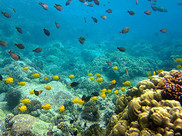
Over the last few years, mass coral bleaching events have seriously impacted coral reefs in the Pacific Ocean. For example, it is estimated that the 2015 event led to the loss of around half of the coral cover from West Hawaii. Overall, this research indicates that herbivore management has a role as part of a broader strategy to manage and reduce the threats to coral reefs.
|
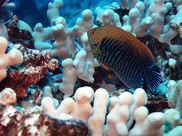
Satellite data from the NOAA Coral Reef Watch program indicate coral reefs in the Northwestern Hawaiian Islands are experiencing a major bleaching event. The National Coral Reef Monitoring Program surveyed the Papahānaumokuākea Marine National Monument and found extensive bleaching. Scientists will continue to monitor this event and consider these many ecosystem components during this time of unprecedented warming and potential bleaching.
|
|
|
|
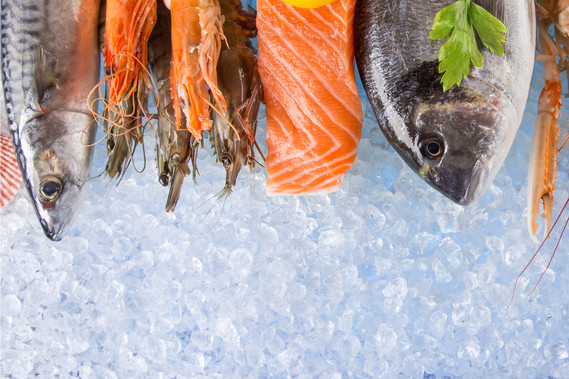
Join NOAA Fisheries for National Seafood Month 2019 and learn how we work to support healthy, sustainable seafood all year round. Read More >
|
|
|
|