|
Observer Data Supports Squid Fishery
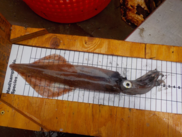
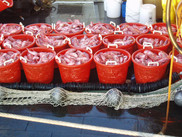
Last month, length frequencies measured by Northeast fisheries observers helped Massachusetts extend the Atlantic longfin squid fishery an extra week to June 16, 2019. In previous years, the fishery closed on the expected seasonal closure date, due to a lack of length data. This is one of many examples of how our Fisheries Sampling Branch, states, and fishermen work together to support fisheries in our region.
|
July is Habitat Month
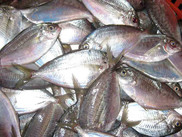
Join us as we celebrate our marine habitats and the life they support. Our region is home to a wide variety of fisheries, yet many consumers are not aware of just how rich and diverse our seafood is here. Supporting the sustainable harvest of seafood and knowing where it comes from are goals we share with a growing number of non-profit and community-based seafood programs.
|
Crew Survey Completed
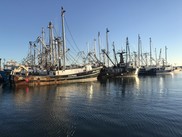
Our Social Sciences Branch has wrapped up fieldwork for the 2018 Socioeconomic Survey of Hired Captains and Crew in New England and Mid-Atlantic Commercial Fisheries. We are pleased to report that we surpassed our target sample size, with a total of 478 responses. Thank you to all who participated, and stay tuned for survey results to come soon.
|
An Unexpected Trawl Catch
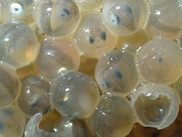
Fish eggs are an unusual catch for the Northeast Fisheries Science Center bottom trawl, which was designed to collect juvenile and adult fish and invertebrates near the ocean floor. During our Spring Bottom Trawl Survey, a cluster of very large fish eggs were collected in the trawl. The eggs were identified as one of the three species of wolffish in our area (genus: Anarhichas). These fish are known to produce large, sticky eggs that adhere to one another and to the sea floor. These benthic eggs are also rare in routine plankton samples, which target fish eggs in the water, and are not well documented. The Northeast Fisheries Science Center has one of the most thorough sampling programs of fish eggs and larvae in the country, many collected on another of our surveys, Ecosystems Monitoring. Check out our recent Ecosystem Monitoring cruise blogs, and find out 9 things you may not know about this important, ongoing monitoring effort.
|
New Deep Sea Coral Habitats
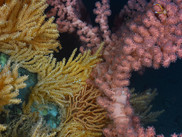
A joint U.S.-Canada scientific team, which included our scientist Dave Packer, spent 14 days aboard the NOAA Ship Henry B. Bigelow exploring deep-water habitats in unexplored areas off the Northeast United States and Atlantic Canada. The team used the Canadian remotely operated vehicle ROPOS to survey on both sides of the U.S.-Canada border at depths ranging from 237 to 1232 meters. Witness some of the amazing coral gardens, sponges and anemones the researchers encountered.
|
2019 Northeast Sea Scallop Survey Finishes
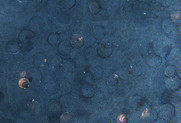
The 2019 Northeast sea scallop survey concluded in mid-June after about four weeks of operations aboard the R/V Hugh R. Sharp, first covering stations in the Mid-Atlantic and then on Georges Bank. This annual survey uses both a dredge to collect physical samples of sea life and their habitat, and a towed vehicle known as the HabCam. The HabCam is fitted with a number of sampling instruments, including cameras that photograph the ocean bottom. Mid-Atlantic operations were the most extensive HabCam coverage in the area to date. Dredge operations on Georges Bank were also comprehensive, although loss of the HabCam for several days and foul weather resulted in only about 30 percent of the HabCam coverage originally planned.
|
Stock Assessments in Full Swing
Collaborative Research on Flatfish
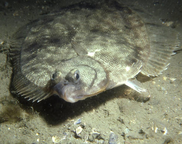
Scientists at the Northeast Fisheries Science Center are working with the Massachusetts Division of Marine Fisheries on collaborative research with fishermen. The team is investigating how climate-driven changes in fish distributions and habitat availability, along with regulatory and economic factors, affect scientific data and fishery landing reports of flatfish in the region. The project is using information from one-on-one conversations and group workshops conducted this summer with fishermen to help inform future stock assessments. This study is part of a larger research effort funded by Congress in 2018 to look at impacts of climate change on fisheries in the Northeast (details under the “Survey Projects” tab).
|
Ecosystem-Based Fisheries Management
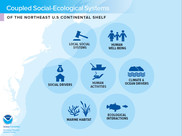
NOAA Fisheries researchers in the Northeast are pioneering ways of integrating science into fishery management on an ecosystem, rather than single species, scale. We recently released our regional implementation plan for moving toward more holistic management of our fisheries resources. The plan includes explicit evaluation of trade-offs during management decisions, ultimately aimed at providing stable and resilient fisheries, fishing communities, and ocean ecosystems. Recent outcomes of this effort include the Mid-Atlantic and New England State of the Ecosystem reports, which highlight the important role our ecosystems play in support of sustainable fisheries.
|
Record Number of Leatherback Turtles
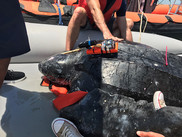
NOAA Fisheries researchers and colleagues captured and tagged a record 13 leatherback turtles in May off Beaufort, North Carolina, continuing a project begun in 2017 to assess the abundance, movements, behavior, and health status of these turtles. It is the second year this team has tagged leatherbacks off North Carolina, where the turtles aggregate in coastal waters during their northward spring migration.
|
Indicators Could Help End Overfishing
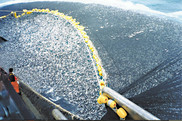
A recent paper by NOAA Fisheries researcher Jason Link and colleague Reg Watson from the University of Tasmania’s Institute for Marine and Antarctic Studies suggests that scientists and resource managers should focus on whole ecosystems rather than solely on individual populations. Population-by-population fishery management is more common around the world, but a new approach could help avoid global overfishing and the insecurity that brings to fishing economies.
|
|
|
Upcoming Events
July 9-11 Transboundary Resources Assessment Committee Meeting. St. Andrews, New Brunswick, Canada.
July 10 2019 Jearld Lecture on Diversity and Inclusion, presented by Warren Washington, 1 PM, Redfield Auditorium, 45 Water St, Woods Hole, MA
August 10 Woods Hole Science Stroll, 10-3 pm, along Water Street in Woods Hole, MA
August 13 Cooperative Research Engagement Session, 3-5 PM, Portland, ME
August 14 Cooperative Research Engagement Session, 3-5 PM, Gloucester, MA
August 20 Cooperative Research Engagement Session, 3-5 PM, New Bedford, MA
August 27 Cooperative Research Engagement Session, 3-5 PM, Riverhead, NY
August 28 Cooperative Research Engagement Session, 3-5 PM, Point Judith, RI
|
|
|
|
|