Science Connect - Issue 3 2018

Having trouble viewing this email? View it as a Web page.

Science Connect Banner

September 2018

2018 Issue #3


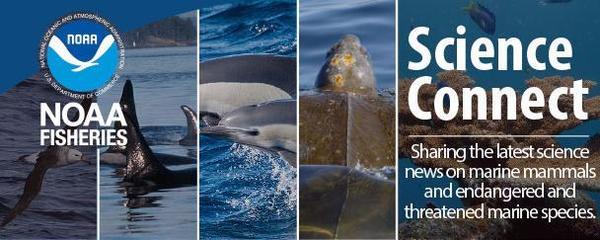
Local biomass baselines and the recovery potential for Hawaiian coral reef fish communities, Gorospe et al.

Reef Fish - Science Connect 2018 Issue 3- Gorospe

Knowing the baseline state of a reef ecosystem requires time-series data that describes the ecosystem before degradation. However, datasets with this type of information are rare. Alternatively, expectations about recovery can be estimated spatiotemporally by characterizing reef health along a gradient of human-impacted habitat. Using 717 fisheries-independent reef monitoring surveys in the main Hawaiian Islands from 2012 and 2015, the authors created a hierarchical, linear Bayesian model to develop spatially explicit and locally relevant total biomass and potential recovery baselines. These baselines were used to characterize spatial variability in herbivorous and total reef fish biomass, and are relevant to coral reef resiliency planning. Areas with the highest capacity to support reef fish and herbivore biomass were identified, as well as areas with high recovery potential.

Journal article

Photo courtesy of PIFSC and Christine Shepard


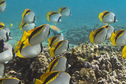
Inbreeding in an endangered killer whale population, Ford et al.

SC2018_3_Ford

Inbreeding is prevalent in the small population of the endangered Southern Resident killer whale (Orcinus orca). Characterizing inbreeding is important for evaluating population viability and recovery potential. Building on previous work with 68-94 nuclear loci from 105 individuals, the authors evaluated the degree of inbreeding in the population, quantified the relationship between inbreeding, heterozygosity and fitness, and evaluated trends in the effective number of breeders. They found that two males sired 52% of the sampled progeny since 1990 and that male reproductive success increased with age. The effective number of breeders is currently 26, which is similar to historic trends of <25 breeders in the population. The authors attempted to evaluate relationships between survival or fecundity and inbreeding; while weak negative relationships with survival were found, this question will be addressed in more detail with ongoing work. The degree of inbreeding in Southern Residents highlights the need to better understand the effects of inbreeding in killer whales and other cetaceans more globally.

SpeciesInSpotlightGraphic

 Journal article 

Photo courtesy of NWFSC; Permit No. 16163-01


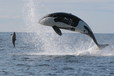
Impact of exceptional growth rates on estimations of life-stage duration in Hawaiian green sea turtles, Murakawa et al.

SC2018_3_Murakawaetal

Skeletochronology offers the dual benefit of measuring annual longitudinal growth rates and detecting important growth spurts in sea turtles. The authors counted growth spurts in 267 humeri of deceased stranded Hawaiian green sea turtles (Chelonia mydas) to improve estimates of annual growth rates, growth spurt frequency, age at first reproduction, life stage, and time to grow from the interior-most line of arrested growth to the stranding date (representing the time of death). The authors found that sea turtles may actually experience faster lifetime growth rates and earlier age at first reproduction than previously estimated from traditional mark-recapture methods that are unable to detect growth spurts. This study estimated the age at first reproduction to be at 37.5 years. Also, growth spurts may occur throughout the turtle’s lifetime with peaks for males from 50 to 59.9 cm and females from 70 to 79.9 cm SCL.

Journal article

Photo courtesy of John Johnson of One Breath Photography and PIFSC


Performance of manned and unmanned aerial surveys to collect visual data and imagery for estimating Arctic cetacean density and associated uncertainty, Ferguson et al.

Fergusonetal_SC2018_3

New technology and methods for aerial cetacean surveys are constantly emerging and need to be compared to existing, accepted methods for efficiency, cost-effectiveness, and efficacy. The authors compared visual data collected using three methods: 1) marine mammal observers aboard a manned aircraft, 2) autonomously collected imagery from the manned aircraft, and 3) autonomously collected imagery from a ScanEagle unmanned aircraft system (UAS). These data were used to calculate ten different performance metrics evaluating the precision and uncertainty in abundance estimates, species identification, and cost. Results suggest that visual data collected by marine mammal observers required the least post-processing, were a fraction of the cost to collect and interpret, and provided estimates of cetacean density with lower uncertainty than the other two methods. The study concluded that the use of UAS for conducting broad scale, beyond line-of-sight surveys to estimate cetacean density and distribution holds promise, but it is premature to implement them at this time due to safety concerns, limitations in collecting and processing data, and cost.

Journal article

Photo courtesy of AFSC; Permit No. 14245-03

Recent Publications


Environment, Climate, &
Ecosystem Effects

Friedman et al.

Environmental and geographic relationships among salmon forage assemblages along the continental shelf of the California Current. 2018. Marine Ecology Progress Series. Read More

Keogan et al.

Global phenological insensitivity to shifting ocean temperatures among seabirds. 2018. Nature Climate Change. Read More


Population Studies

Conrad et al.

Stable Isotope Ecology and Ancient DNA Analysis of Sea Turtles (Cheloniidae) from the Gold Rush-era (1850s) Eastern Pacific Ocean. 2018. Open QuaternaryRead More

Hinke et al.

Estimating nest‐level phenology and reproductive success of colonial seabirds using time‐lapse cameras. 2018. Methods in Ecology and Evolution. Read More

Leslie et al.

Structure and phylogeography of two tropical predators, spinner (Stenella longirostris) and pantropical spotted (S. attenuata) dolphins, from SNP data. 2018. Royal Society Open Science. Read More

Tucker et al.

Revised clutch frequency estimates for Masirah Island Loggerhead Turtles (Caretta caretta). 2018. Herpetological Conservation and BiologyRead More

Hard et al.

Quantifying variation in killer whale (Orcinus orca) morphology using elliptical Fourier analysis. 2018. Marine Mammal ScienceRead More


Conservation

Andrews et al.

Cooperative research sheds light on population structure and listing status of threatened and endangered rockfish species. 2018. Conservation GeneticsRead More

Carretta

A machine-learning approach to assign species to ‘unidentified’ entangled whales. 2018. Endangered Species ResearchRead More

Richerson et al.

Predicting the economic impacts of the 2017 West Coast salmon troll ocean fishery closure. 2018. Marine PolicyRead More

Stimmelmayr et al.

Oil fouling in three subsistence-harvested ringed (Phoca hispida) and spotted seals (Phoca largha) from the Bering Strait region, Alaska: Polycyclic aromatic hydrocarbon bile and tissue levels and pathological findings. 2018. Marine Pollution Bulletin. Read More


Methodology

Angliss et al.

Comparing manned to unmanned aerial surveys for cetacean monitoring in the Arctic: Methods and operational results. 2018. Journal of Unmanned Vehicle SystemsRead More

Bond et al.

Occurrence, fate, and confounding influence of ghost PIT tags in an intensively monitored watershed. 2018.  Canadian Journal of Fisheries and Aquatic SciencesRead More


Foraging

Gillis et al.

Foraging ecology and diet selection of juvenile green turtles in the Bahamas: insights from stable isotope analysis and prey mapping. 2018. Marine Ecology Progress SeriesRead More


Habitat

Madigan et al.

From migrants to mossbacks: tracer-and tag-inferred habitat shifts in the California yellowtail Seriola dorsalis. 2018. Marine Ecology Progress SeriesRead More


Behaviour

Bearzi et al.

Whale and dolphin behavioural responses to dead conspecifics. 2018. Marine Ecology Progress Series. Read More


The Protected Species Science Branch (PSSB) within the NOAA Fisheries Office of Science and Technology supports and provides the science necessary to inform management decisions. We do this by coordinating closely with the six Fisheries Science Centers, the Office of Protected Resources, and other NOAA Headquarters Offices.

This newsletter is intended to summarize the latest research on protected species from scientific publications that include one or more NOAA Fisheries authors. It will be distributed quarterly with alternate issues highlighting research from the East and West Coasts centers and offices.

Editorial Contacts: emily.markowitz@noaa.gov | mridula.srinivasan@noaa.gov

SciConnectFooter