HIGHLIGHTS
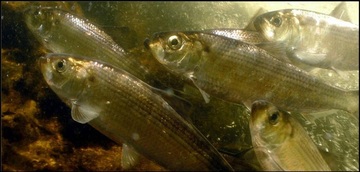
Make Plans
to Celebrate World Fish Migration Day
On April 21, organizations around the world will celebrate World Fish
Migration Day with events around the common theme of “Connecting Rivers, Fish,
and People.” NOAA Fisheries’ Greater Atlantic Regional Fisheries Office and the
Northeast Fisheries Science Center will host several World Fish Migration Day
events throughout the region.
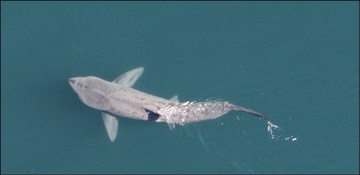
Basking Sharks Gather in Large Numbers off
Northeast Coast
Groups of basking sharks, ranging
from as few as 30 to nearly 1,400 animals, have been observed aggregating in
waters from Long Island to Nova Scotia. While individual basking shark
sightings are fairly common, such large groups are not. A new study explores
possible explanations for the phenomenon.
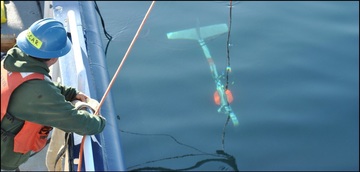
Public Invited to Follow Whale Research
Expedition Online
Scientists from NOAA and the
University of Rhode Island conducting a research cruise off the coast of
Massachusetts and Rhode Island invite students and the general public to learn
about their research on whales and their environment through live interactive broadcasts
from the ship at sea on April 5, 6, and
7.
Positive
Certification of Mexico for Driftnet Fishery
NOAA Fisheries issued a positive
certification decision to Mexico for taking appropriate corrective actions to
address the illegal, unreported, and unregulated fishing issues it was
negatively certified for in our 2017
Biennial Report to Congress under the High Seas Driftnet Fishing Moratorium
Protection Act. The next biennial report to Congress identifying nations with
IUU fishing will be in 2019.
Reminder: Informed Compliance
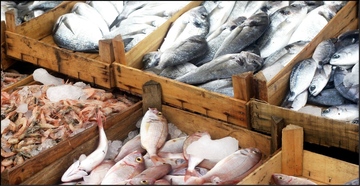
Provisions for Seafood Import Monitoring Program End April 9
Starting
Monday, April 9, all filings for seafood products covered by the Seafood Import
Monitoring Program must comply with the electronic filing requirements in order
for an entry to receive a "may proceed." For assistance regarding
compliance and submissions with SIMP data that has been rejected and cannot be
resolved by the filer, please contact SIMPsupport@noaa.gov or
call the SIMP Support Line at 301-427-8301, Monday through Friday, 8 am to 8 pm
ET.
West Coast
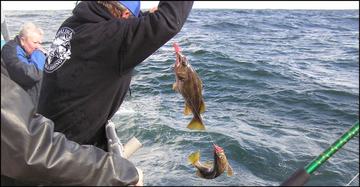
New Recreational Rockfish Fishery off
Oregon
Oregon fishermen have more opportunities to
catch rockfish, or groundfish, following NOAA Fisheries’ approval of a new
ocean fishery that uses selective gear to target plentiful species while
avoiding overfished species. This is expected to expand the benefits of a
recreational fishery that already generates more than $14 million annually for
Oregon’s economy.
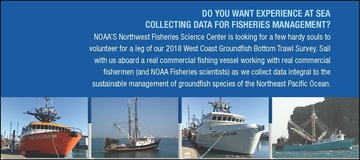
Science Center Seeks Hardy Volunteers for Fisheries
Surveys
The Northwest Fisheries Science
Center seeks a few volunteers for the 2018 West Coast Groundfish Bottom Trawl
Survey, which will be conducted in partnership with NOAA Fisheries scientists
and commercial fishermen aboard a commercial fishing vessel.
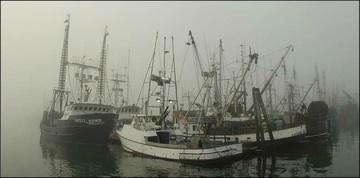
Study Estimates Cost of Salmon Fishery Closure
A new economic model estimated
that last year’s closure of the West Coast ocean salmon troll fishery cost
between $5.8 and $8.9 million in lost income for fishermen, with a loss of 200
to 330 jobs. The model, developed to help policy-makers anticipate closure
impacts, estimates the future losses associated with closures based on the way
fishermen reacted to previous closures.
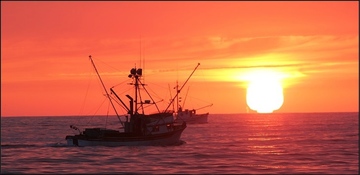
Model Informs West Coast Salmon
Allocation
Once salmon migrate to the ocean,
they mix freely up and down the West Coast of North America. This makes it a
challenge to apply different fishing rates for different populations and to
allocate catches among countries, states, and tribes. The Fishery Regulation
Assessment Model informs management decisions by analyzing genetic data to
determine which fish stocks are present, in what numbers, and where.
Pacific Islands
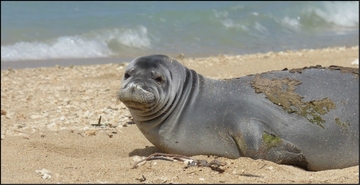
Parasite Poses Growing Threat to Monk Seals
NOAA Fisheries released a new
infographic and fact sheet explaining how Toxoplasma
gondii, the parasite behind toxoplasmosis, spreads from the mountains to
the oceans and ultimately harms Hawaiian monk seals. The cat-borne parasite
causes numerous other health impacts to wildlife, domestic animals, and people.
Southeast
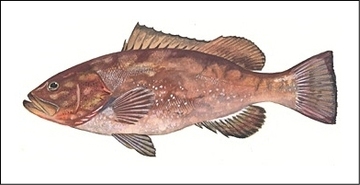
Proposed Red Grouper Catch Limits – Open
for Public Comment
By May 3, please submit your comments on a proposed rule for
Abbreviated Framework Amendment 1 to the South Atlantic Snapper-Grouper Fishery
Management Plan. The rule would reduce the annual catch limits for South
Atlantic red grouper in response to the results of the latest population assessment.
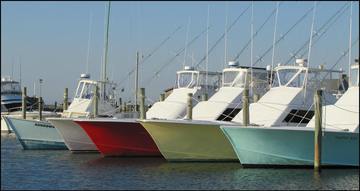
Proposed South Atlantic For-Hire Amendment
– Open for Public Comment
By May 13, please submit your comments on a proposed rule to implement
the For-Hire
Reporting Amendment, which would require those with charter/headboat
federal permits for Atlantic Coastal Migratory Pelagics, Atlantic Dolphin and
Wahoo, and South Atlantic Snapper-Grouper to submit electronic fishing reports
weekly.
Informational Webinars for For-Hire
Permit Holders
The South Atlantic Fishery
Management Council will host informational webinars twice a month for federal
for-hire permit holders to provide information about electronic reporting, the
proposed for-hire amendment, and upcoming training sessions. Webinars are scheduled
for April 5 and 16 and May 10 and 29.
Greater Atlantic
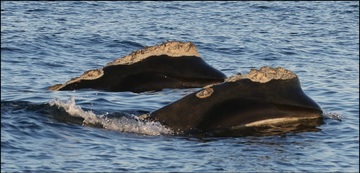
Increased Right Whale Monitoring in New
England
This spring, right whales are
congregating in Cape Cod Bay in greater numbers and earlier than usual. In response, researchers at the
Northeast Fisheries Science Center have extended their field season, conducting
surveys by both boat and aircraft despite the relentless winter weather.
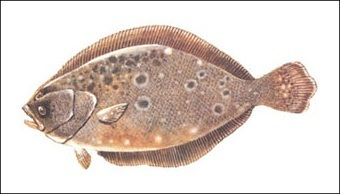
Scope of Summer Flounder Amendment – Open for Public Comment
By April 30, please submit your comments on the Mid-Atlantic Fishery
Management Council’s proposal to narrow the scope of issues addressed in the “Comprehensive
Summer Flounder Amendment“ down to summer flounder commercial issues for now, while waiting for updated recreational
information.
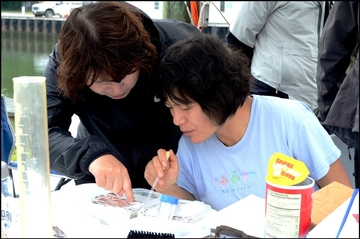
Women’s History Month Interview Series
March was Women’s History Month,
and even though it’s now April, we didn’t want to miss the final installment of
the Northeast Fisheries Science Center’s series featuring women scientists at
NOAA. This week, meet Judy Yaqin Li, a research ecologist at the Milford Lab in
Connecticut. She conducts phytoplankton and coastal environmental research with
a focus on applications to aquaculture.
|