Sample Totals for September 2026:
Qualitative Results: 544 (West), 685 (East), 1229 (All)
Quantitative Results: 225 (Total)
Samples analyzed and included in these counts are voluntarily submitted samples that were collected and provided by public health, harm reduction, or law enforcement agencies from across the country. The trends observed in these samples may not be representative of broader trends within the United States drug supply.
Prevalence & Three Month Trends
Samples Collected in September 2026
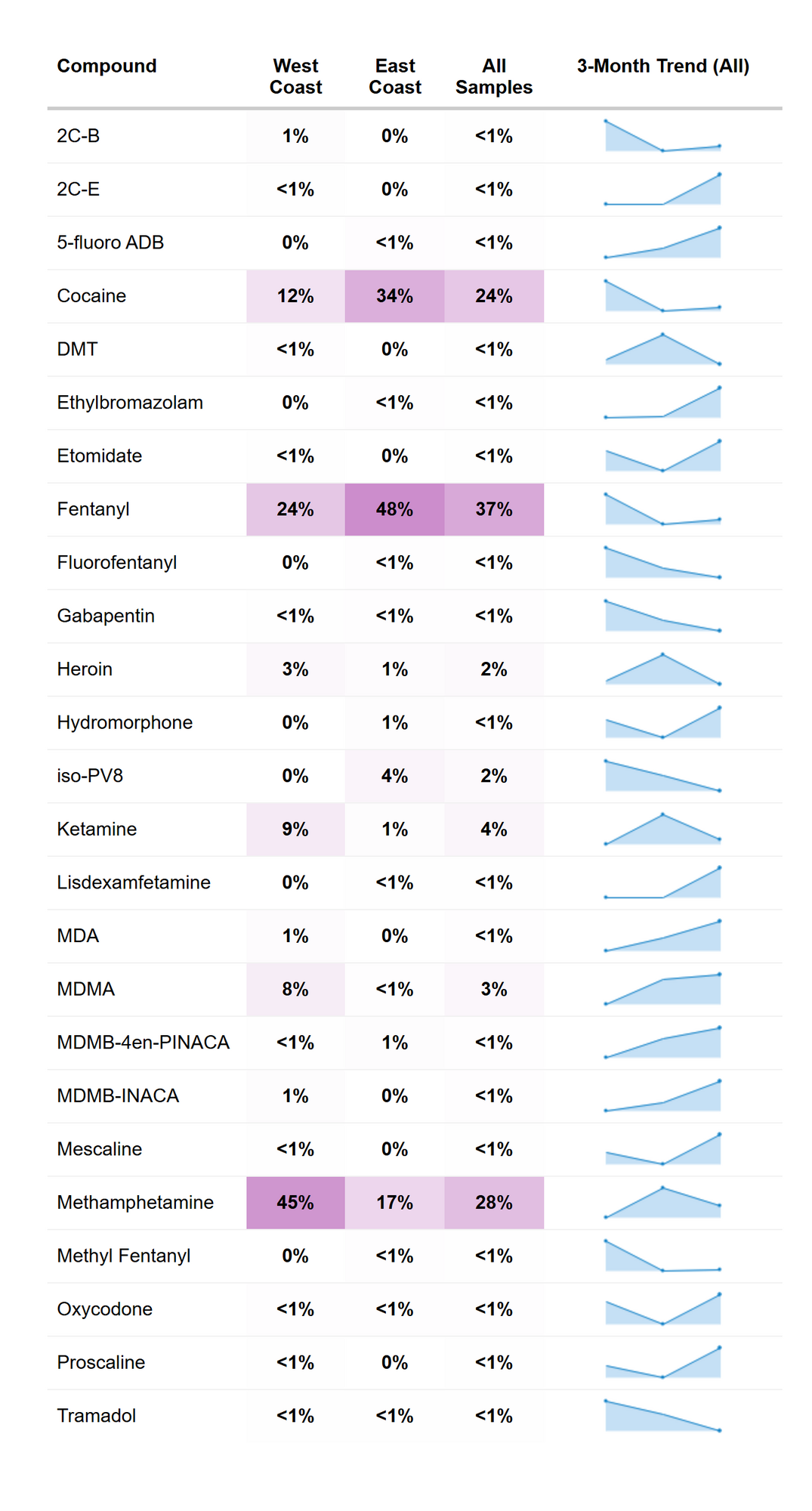
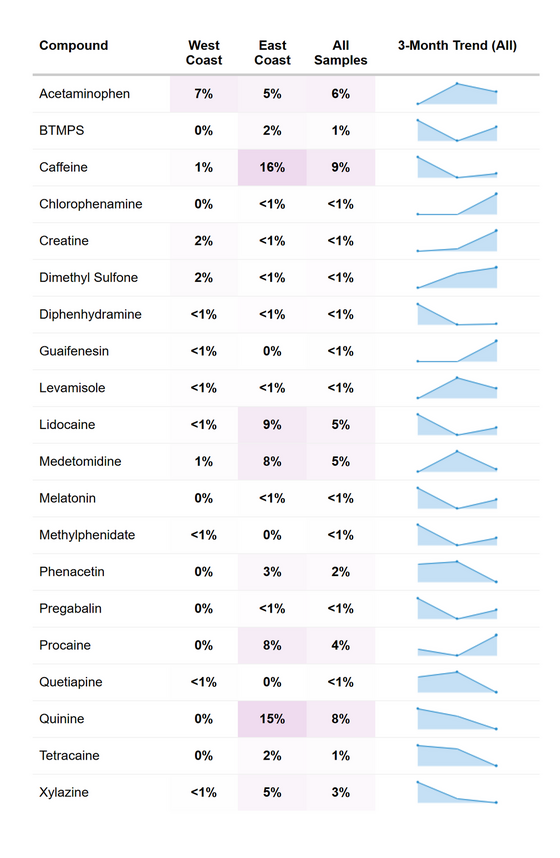
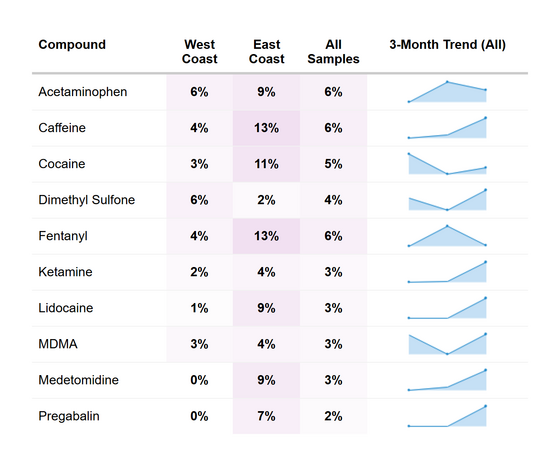
The tables below show the percent of samples containing select drugs (top) and adulterants (bottom). Percentages for West Coast samples, East Coast samples, and all samples are provided. A darker purple cell indicates a higher percentage.
The 3-Month Trend column has sparkline plots showing the percentage of samples containing the compound over the last three months. The right-most point on the plot corresponds to the percentage in the All Samples column. The center and left points are the percentages for August and July 2026, respectively.
Important Notes:
- Determination of salt form or distinction between salt and free base was not completed.
- For some compounds, such as fluorofentanyl, isomer determination was not completed. For instances where isomer determination was completed, the specific isomer is listed.
- Many samples contain multiple substances therefore summed percentages may exceed 100%.
Drug Prevalence
Adulterant Prevalence
 Compound Abbreviations
- BTMPS: Bis(2,2,6,6-tetramethyl-4-piperidyl) sebacate
- DMT: N,N-Dimethyltryptamine
- iso-PV8: alpha-Pyrrolidinoisoheptanophenone
- MDA: Methylenedioxyamphetamine
- MDMA: Methylenedioxymethamphetamine
Co-Detection for Cocaine, Fentanyl, & Methamphetamine
Samples Collected in September 2026
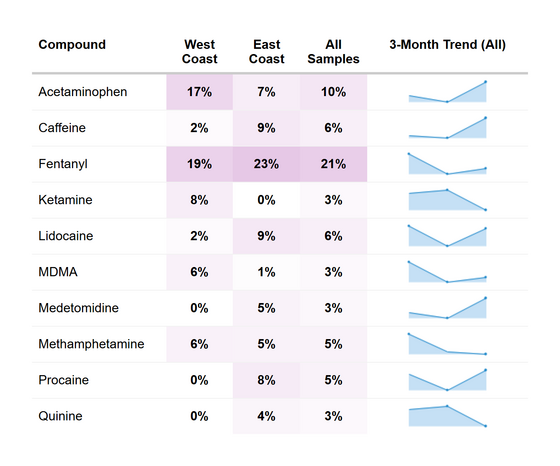
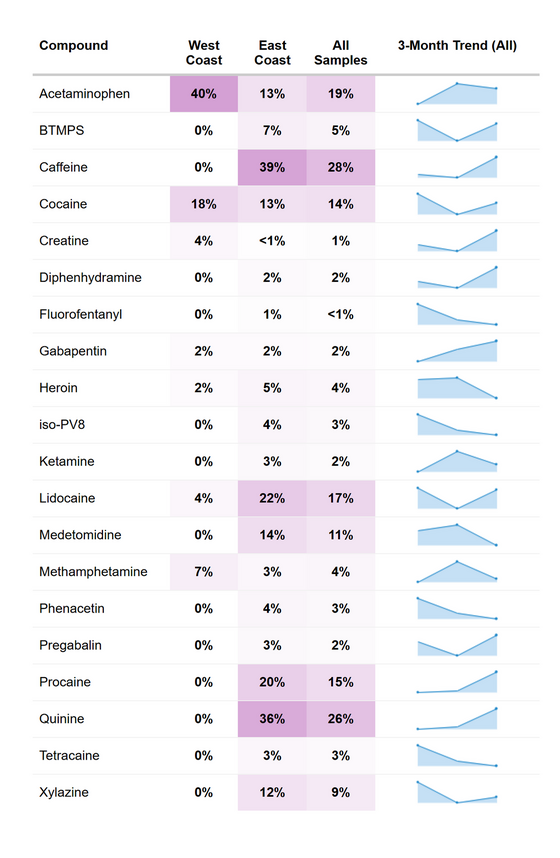
The following tables provide information on compounds commonly co-detected with cocaine (top), fentanyl (center), and methamphetamine (bottom). In each table, the listed values reflect the percentage of cocaine, fentanyl, or methamphetamine containing samples that also contained the listed compound. The top ten co-detected compounds are provided for cocaine and methamphetamine while up to the top twenty co-detected compounds are provided for fentanyl.
Important Notes:
- Samples collected from drug use paraphernalia (e.g. syringe, cooker, straw, pipe) have been excluded from these counts due to the high probability of co-use with multiple substances.
- It is possible that the listed drug is a contaminant or minor component in a substance with a different main drug. For instance, cocaine may be present as a contaminant in a fentanyl sample but included in the cocaine co-detection count.
- Byproducts and precursors are not included in the tables below.
- Many samples contain multiple substances therefore summed percentages may exceed 100%.
Cocaine Co-Detection (154 Samples)
 Fentanyl Co-Detection (237 Samples)
 Methamphetamine Co-Detection (89 Samples)
New Compounds Identified
Samples Collected in September 2026
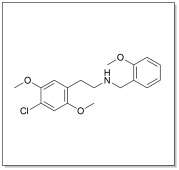
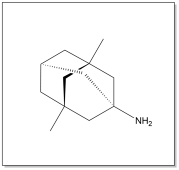
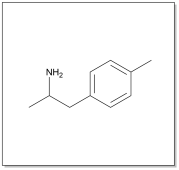
In September, three new compounds were detected for the first time in RaDAR samples.
Important Notes:
- Compounds discussed here are those that have been newly detected in RaDAR samples. This does not mean that it is the first identification of the compound in the drug supply.
- Determination of salt form or distinction between salt and free base was not completed.
 |
|
25C-NBOMe, a phenethylamine, was found in a single West Coast sample that contained no other detectable compounds.
|
|
Memantine, a drug used in the treatment of Alzheimer's, was found in a single West Coast sample that contained trace cocaine.
|
|
 |
 |
|
Methylamphetamine, an amphetamine, was found in a single West Coast sample that contained amphetamine, caffeine, and cocaine. The positional isomer of methylamphetamine was not determined (4-methylamphetamine shown).
|
Sample Type Breakdown
Samples Collected in September 2026
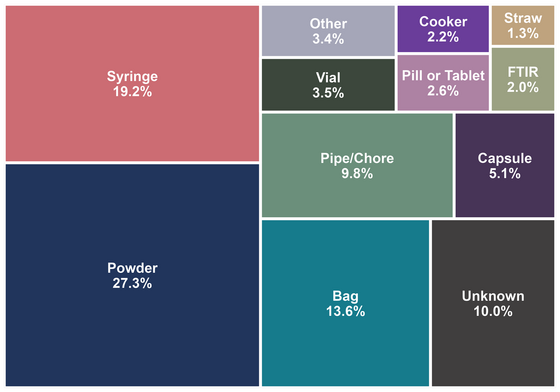
The plot below provides a breakdown of the types of items from which samples were collected.
Important Notes:
- Item types with a <1% contribution have been grouped into the "Other" category.
Drug Product Quantitation Summary
Samples Collected in September 2026
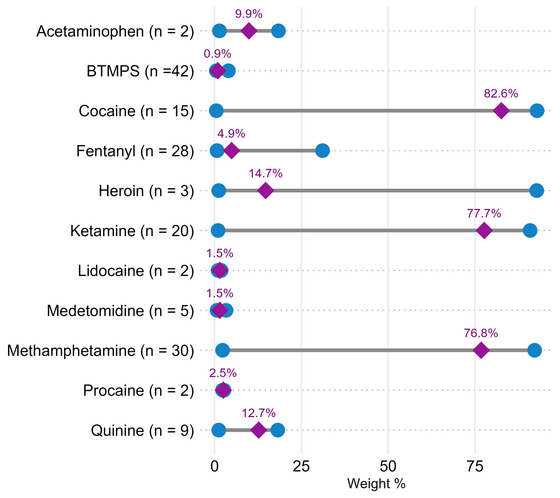
The plot below provides information on the quantitative testing of select drug product samples. Blue dots indicate the minimum and maximum weight percentages across all samples. The purple diamond represents the median weight percentage for all samples containing the compound.
Important Notes:
- Quantitative values less than 0.5% by weight have been omitted.
- Listed values are reported as the free base of the compound. Correction factors for salt form have not been applied.
Recent Publications
Trends in Fentanyl Adulteration From Rapid Drug Analysis and Research (RaDAR) Drug Checking Samples, January 2024 to June 2026
The illicitly manufactured fentanyl (IMF) market in the United States has grown increasingly adulterated, complicating public health and law enforcement responses. This study examines qualitative and quantitative fentanyl adulteration trends using data from the National Institute of Standards and Technology's (NIST) Rapid Drug Analysis and Research (RaDAR) program between January 2024 and June 2026. Analyzing 4563 qualitative and 1224 quantitative results from samples collected across 17 states, the research highlights significant geographic (East vs. West) and temporal shifts in the unregulated drug supply. Read More.
Determination of the enantiomeric makeup of ketamine in street drug samples
Ketamine is an anesthetic drug used recreationally for its psychoactive effects. Recently, the use of ketamine has increased. Ketamine is a chiral compound with two enantiomers, S-ketamine (esketamine) and R-ketamine (arketamine). Though the S- enantiomer is more potent, pharmaceutical ketamine is most often racemic. Asymmetric synthesis or optical resolution can be performed to increase the percentage of S-ketamine in samples, thereby increasing the potency. To investigate the form of ketamine present in the illicit drug supply, chiral liquid chromatography tandem mass spectrometry (LC-MS/MS) was used to analyze 139 drug paraphernalia residue or drug product samples submitted from August 2025 to February 2026. All samples analyzed were found to contain racemic ketamine. Read More.
Same name, different drugs: variability of fentanyl (‘dope’) products sold under the same label
Unregulated opioid markets are increasingly characterized by complex and variable drug compositions. In North-eastern and Mid-Atlantic US street opioid markets, fentanyl-containing powders are commonly sold in stamped glassine bags. These “stamps” function as branding and are often used by people who use drugs, harm reduction programs and public health agencies as informal indicators of product composition or risk. This study quantified the extent to which stamp identity is associated with the presence and concentration of fentanyl and co-occurring compounds. Read More.
In the News
NIST Study Shows How the Toxic Substances Mixed Into Fentanyl Vary Across the U.S. and Change Over Time
Public health officials and law enforcement agents are facing a growing challenge in combating the fentanyl epidemic: They lack detailed and timely information on the harmful and potentially deadly substances, including anesthetics, industrial chemicals, veterinary sedatives and other adulterants, that drug suppliers increasingly mix into the illicit fentanyl supply. Read More.
How the Federal Government is Tracking Changes in the Supply of Street Drugs.
"The National Institute of Standards and Technology's new harm reduction initiative is helping prevent needless deaths." Read More.
|