NIST Awards Nearly $3 Million for Educational Programs Focused on Circular Economy to Reduce Plastic Waste
 The U.S. Department of Commerce’s National Institute of Standards and Technology (NIST) has awarded nearly $3 million in total to six universities to create curricula and programs that will train students to discover and develop solutions to problems presented by our current approaches to the production and consumption of plastics. The grants support an interdisciplinary approach, spanning topics such as materials science, economics, business, and chemical, environmental and systems engineering.
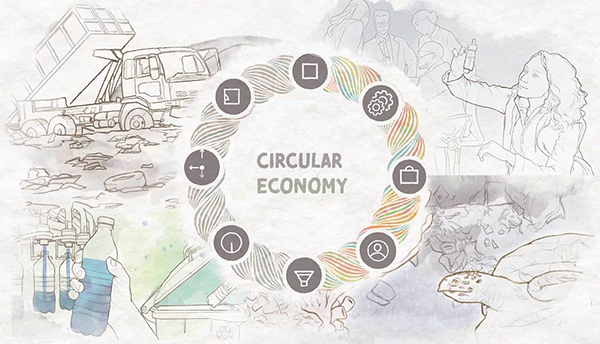
The Training for Improving Plastics Circularity (TIPC) Grant Program seeks to advance the future workforce needed to develop a circular economy for plastics. Today’s economy is considered “linear” — plastics are created from extracting petroleum, used, then thrown into landfills or the environment. But in a circular economy, plastics would be designed to retain their value through repeated reuse, repair and recycling, with disposal as a last resort. A circular economy requires new manufacturing methods, chemical processes and plastic separation capabilities, as well as new approaches for optimizing how plastic products are designed and how plastics cycle through the value chain.
|