Scientists Observe Long-Predicted Superconductor Property Using a Quantum Simulator
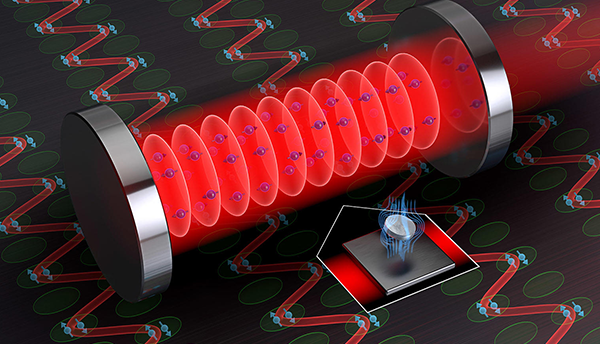 Superconductivity makes physics seem like magic. At cold temperatures, superconducting materials allow electricity to flow indefinitely while expelling outside magnetic fields, causing them to levitate above magnets. MRIs, maglev trains and high-energy particle accelerators use superconductivity, which also plays a crucial role in quantum computing, quantum sensors and quantum measurement science. Someday, superconducting electric grids might deliver power with unprecedented efficiency.
Yet scientists lack full control over conventional superconductors. These solid materials often comprise multiple kinds of atoms in complicated structures that are difficult to manipulate in the lab. It’s even harder to study what happens when there’s a sudden change, such as a spike in temperature or pressure, that throws the superconductor out of equilibrium.
|