New NIST Measurements Aim to Advance and Validate Portable MRI Technology
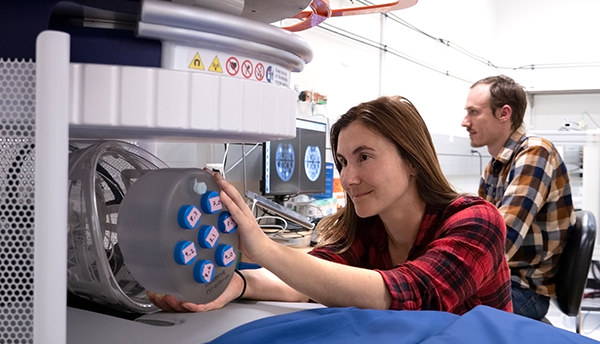 Magnetic resonance imaging (MRI) machines can clearly view non-bony parts of the body — soft tissue such as the brain, muscles and ligaments — as well as detect tumors, making it possible to diagnose many diseases and other conditions. However, the powerful magnets in conventional MRI machines make them expensive and bulky, confining them mainly to hospitals and other large facilities.
As an alternative solution, companies are developing new portable versions that have lower-strength magnetic fields. These new models can potentially expand the ways in which MRI is used. For instance, low-field MRI systems could be deployed in ambulances and other mobile settings. They also could cost much less, promising to make MRI more widely available, including in underserved communities and developing nations.
|