New Tiny Atomic Beam Clock Could Bring Stable Timing to Places GPS Can’t Reach
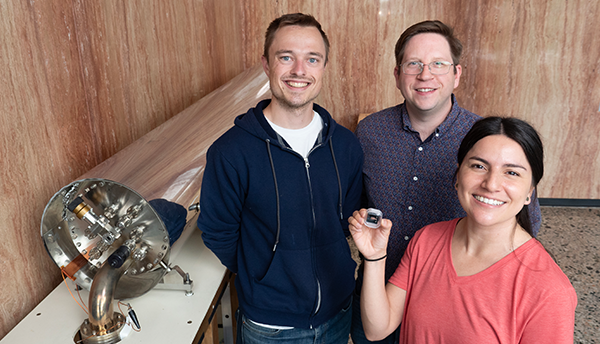 A new type of miniature atomic clock could provide better timing over the span of weeks and months compared with current systems. Researchers at the National Institute of Standards and Technology (NIST), in collaboration with researchers from Georgia Tech, have made the first-of-its-kind chip-scale beam clock. Their work has been published in Nature Communications.
Atomic clocks take many forms, but the oldest and one of the most prominent designs is built using atomic beams. These clocks send a beam of atoms through a vacuum chamber. At one end of the chamber, the atoms are set in a specific quantum state, and they start “ticking.” At the other end their ticking rate is measured or “read out.” Using the atoms’ precise ticking rate, other clocks can be compared to atomic beam clocks, and adjusted to match their timing.
|