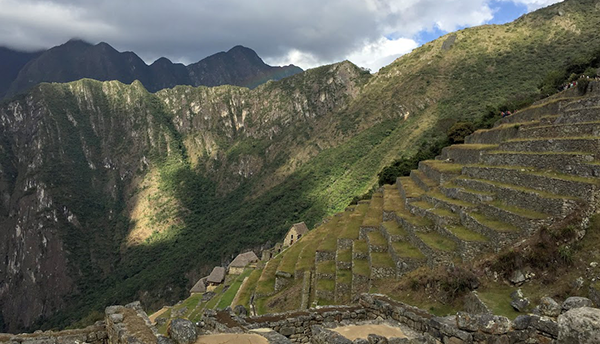
Historic Measures: How Standards and Technology Enabled the Inca Empire to Thrive
The Inca of the Andes exemplify South American Indigenous knowledge and achievement. Their ability to reign and administer their empire with the use of technology enabled its rapid expansion. While it is impossible to know all the ancestral knowledge that has been lost, we are grateful for the artifacts that remain and to the scholars who have shed light on these achievements. At the heart of the NIST mission is “advancing measurement science, standards, and technology in ways that improve our quality of life.” Oftentimes advancement happens best when we learn from other experts — including those who predate us by more than 500 years.
Though short-lived, the Inca Empire (1450-1534 A.D.) altered its environment very effectively to increase productivity. Most notably, the Great Inca Road (Qhapaq Ñan), a network of more than 40,000 kilometers (km) of roads, bridges and other structures, was an extraordinary engineering feat that had a great and lasting impact on the expansion, development, administration and control over their land. At the heart of these remarkable social and technological advances is the khipu (or quipu), a data recording device using knotted and colored strings made from cotton or camelid fiber. Khipus recorded statistical data for all matters like census, tributes, production, etc., and preserved narrative data including stories and poetry, among other things.
|