Making Measurements With a Fine-Toothed Comb
By Rebecca Jacobson, the public outreach coordinator for NIST Boulder
To many people, a measurement sounds mundane, like marking ticks on a ruler or reading the line on a thermometer. It’s a piece of data. And they tend to think that improved measurements look like finer and finer ticks on a ruler — which doesn’t seem very exciting.
But making new measurements is more than just making finer marks on a ruler. To measure something is to understand it, pull it apart and see how it works. New measurements can unlock possibilities that even scientists never thought of when they started out.
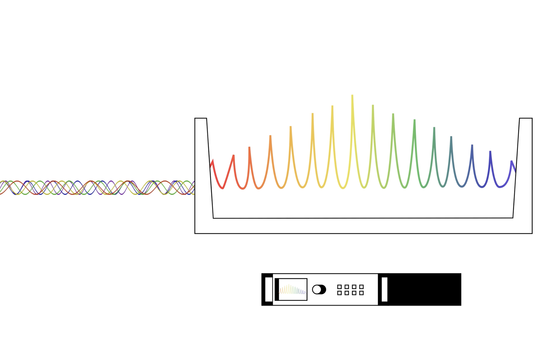
Perhaps there is no better example than the optical frequency comb. Very simply, this device is a ruler for light. Yet it’s so much more than a ruler.
|