|
Save the Date! 2023 SRP Annual Meeting
Please save the date for December 4-6, 2023, for the SRP Annual Grant Recipient Meeting, to be held in Albuquerque, New Mexico. This is a NIEHS-hosted meeting in collaboration with the University of New Mexico (UNM) SRP Center. More information on venue, hotels, registration, abstract submission, and agendas is coming soon.
Recordings Available: SRP Progress in Research Webinars
Recorded archives are now available for all four sessions of the SRP Progress in Research webinar series. The webinars featured new and renewed SRP multiproject centers that bring fresh ideas and approaches to tackle complex problems related to hazardous substances.
Funding Announcement: SRP P42 Centers
NIEHS announced the continuation of the Superfund Hazardous Substance Research and Training Program (P42) and is requesting applications to establish P42 Centers, which support problem-based, solution-oriented research that consists of multiple, integrated projects representing both the biomedical and environmental science disciplines. Applications are due October 2. To learn more, view the SRP Funding Opportunities Webinar recording.
|
|
NIEHS SRP News Stories
Take a moment to read about some of our colleagues' latest activities in this month's Environmental Factor, the NIEHS newsletter:
-
Safer water for Native American communities: Columbia University SRP researchers designed a community-led intervention to protect Tribal communities from arsenic exposure.
-
Extramural Paper of the Month: Environmental degradation may increase microplastics' toxicity: Environmental factors, such as ultraviolet light, can alter the chemistry of miniscule plastic fragments, potentially increasing their toxicity to lung cells, according to a study from the UNM SRP Center.
-
Extramural Paper of the Month: New technology can remove PFAS from water: Weaver Labs, an SRP-funded small business, developed a new per- and polyfluoroalkyl substance (PFAS) removal technology that can be reused multiple times and is potentially less expensive than current remediation techniques.
-
Extramural Paper of the Month: DNA-based sensor rapidly detects pesticide contamination: In a study funded partially by SRP, researchers created a DNA-based sensor that can detect trace amounts of organophosphate pesticides in food products that may be easier to use, more reliable, faster, and a more cost-effective alternative to traditional methods of pesticide detection.
Visit the SRP page for more stories about the program:
Horney Talks Disasters and Health Impacts
Jennifer Horney, of the Texas A&M University (TAMU) SRP Center, co-authored an op-ed piece in the World Health Day Special Collection of Elsevier Connect about the intersectionality and health impacts of disasters. Horney was also featured on an Emerald podcast, where she discussed the mental health impacts of the COVID-19 pandemic, as well as interventions to improve resilience of the public health workforce.
Srivastava Interviewed by Kentucky Education Television
Sanjay Srivastava, director of the University of Louisville SRP Center, was interviewed by Kentucky Education Television about the environmental causes of cardiovascular disease, specifically related to volatile organic compounds.
Yale SRP: 1,4-Dioxane and Community Health
The Yale SRP Center was featured in a Riverhead Local article, WHSU Public Radio, and Citizen’s Campaign for the Environment about the connection between 1,4-dioxane contamination and health effects among Long Island residents and communities.
The Center was also featured in a Newsday article about the presence of 1,4-dioxane in common household products, such as shampoos and cleaners.
URI Researchers Talk PFAS
Elsie Sunderland, project leader at the University of Rhode Island (URI) SRP Center, and Heidi Pickard, a URI SRP trainee, were quoted in a WBUR/NPR News Series about their research on the contribution of PFAS precursors to diverse PFAS exposures near contaminated sites.
NCSU in the News
Scott Belcher, of the North Carolina State University (NCSU) SRP Center, was interviewed by The Guardian about high concentrations of PFAS in contact lenses — calling some lenses “almost pure PFAS.” Belcher was also quoted by ABC11 News about racial disparities in PFAS exposures, urging corporations to take responsibility for PFAS contamination.
Jamie DeWitt and Jane Hoppin were interviewed by Waterloop podcast about the human health impacts of PFAS exposure. DeWitt was also featured in an ABC11 News article about widespread PFAS contamination in drinking water, linking high PFAS exposures to cancers, high cholesterol, and immune system dysfunction.
In a WECT News story, Hoppin discussed results of blood sampling among Wilmington, North Carolina, residents, where alarming concentrations of PFAS were measured. Hoppin was also quoted by ABC11 News about the environmental justice issue related to PFAS in North Carolina.
|
|
Green Engineering in Environmental Remediation
This month we heard from Kelly Rivenbark, a trainee at the Texas A&M University (TAMU) SRP Center mentored by Timothy Phillips.
What is the focus of your research at the Texas A&M University SRP Center?
I research the development and assessment of clay and carbon-based sorbent materials for environmental remediation. I study how we can use green engineering to remove hazardous chemicals — like benzene — from water, soil, and air.
|
|
 |
How did you become interested in this work?
I grew up on a farm in rural North Carolina, so I spent a lot of time outside as a child and was always interested in the connection between environmental quality and human health. After earning my bachelor’s degree in chemistry, I wanted to use my knowledge and skills to make products that promote human and environmental health.
Tell us about a recent award and what it means to you.
I am honored to have received the Best Graduate Student Abstract Award at the Society of Toxicology annual meeting from the Sustainable Chemicals Through Contemporary Toxicology specialty section. It was great to see the reception of my work and connect with other students and experts in the field.
What factors have contributed most to your growth as a researcher throughout your time as an SRP trainee?
Mentorship from my PI, Timothy Phillips, and from others from TAMU SRP has been essential in my growth as a researcher. Insightful webinars, hands-on disaster response training from the TAMU SRP Center, and attending the SRP annual meeting last December have also contributed to my growth.
What is one piece of advice that you have for other SRP trainees?
Attend the annual SRP meeting and other conferences! These events are a great way to present your research, get valuable feedback, and connect with lots of different individuals.
|
|
EPA Water Toxicity Sensor Challenge
Current methods for detecting and identifying contaminants in water are expensive, time-consuming, and require the use of specialized laboratories with expensive equipment and highly trained personnel. Because of these limitations, there is a significant interest in developing a new generation of sensors that detect the presence of toxicity in water, as opposed to specific contaminants. Join the Environmental Protection Agency (EPA) Water Toxicity Sensor Challenge to develop a prototype sensor that can detect toxicity faster and cheaper than current methods. Register to compete by June 10.
EPA Seeks Public Input for PFAS Rulemaking
EPA is issuing an Advance Notice of Proposed Rulemaking asking the public for input regarding potential future designations of PFAS as hazardous substances under the Comprehensive Environmental Response, Compensation, and Liability Act. Comments are due by June 12. Read more about the proposed rulemaking on the EPA website.
EPA Training on Radiation Risk Assessment
Want to obtain a working knowledge of conducting Superfund radiation risk assessments? EPA will provide training at the 2023 Annual Meeting of the Health Physics Society. The all-day course includes lectures and demonstrations of EPA's risk and dose assessment calculators developed by the Superfund remedial program. The sessions will be held in National Harbor, Maryland, on July 22.
|
|
Exposure to PFAS Can Make It Harder to Keep Weight Off With Diet
Exposure to PFAS can make it harder to keep weight off after dieting, according to NIEHS-funded researchers at The University of Rhode Island SRP Center. PFAS are widespread in the environment and have been linked to a large range of serious health issues, including harming metabolism and increasing obesity.
The team used data from a European cohort of nearly 1,800 individuals that first lost at least 8% of their body weight, and then completed a specific diet for at least 26 weeks. The researchers then examined the levels of five different PFAS in plasma samples from a subset of the group taken at the beginning of the study.
The researchers found significant links between weight gain and PFAS levels, regardless of the diet that participants followed. After a year of adhering to the diets, the researchers found that the participants with the highest level of PFAS in their blood had gained about 11 pounds more than those with lower PFAS levels.
These findings support mounting evidence that exposure to certain environmental toxins could explain the variable success of diets. The researchers suggest that the impact of PFAS chemicals on weight gain should be considered in future dietary studies to avoid confounding variables.
|
|
Vélez Vega Wins EnHIP Award
Carmen Vélez Vega, of the PROTECT SRP Center, was honored during the National Library of Medicine’s Environmental Health Information Partnership (EnHIP) 2023 Annual Meeting for her contributions to health disparity and equity research.
SRP Trainees Awarded
Asta Habtemichael, URI SRP trainee, was awarded the Donald Cunnigen Award for Excellence in Graduate Studies at the university’s Annual Black Scholars Awards for his outstanding academic performance, active scholarly research, and leadership.
Jenny Rempel, a trainee at the University of California (UC), Berkeley SRP Center, won a 2023 Human Rights Fellowship from the university, which will support her community-engaged work to assess short-term drought emergency programs and water adaptation processes.
UC Berkeley trainees Rachael Phillips and Seraphina Shi, mentored by Alan Hubbard, are members of a research team that won third place in the NIH Long COVID Computational Challenge.
Duke Researchers Recognized for Climate Commitment
Avner Vengosh and Joel Meyer, of the Duke University SRP Center, won funding from the Duke Climate Research Innovation Seed Program (CRISP) to investigate the harmful impacts of mining certain minerals used in the production of renewable energy technologies, focusing on Indigenous communities in Bolivia. Nishad Jayasundara is also part of a team that won CRISP funding to create a new way to monitor lithium contamination in the ground, air, and water using vascular plants like ferns and pine trees.
Charlotte Clark won Duke’s Lifetime Achievement Award for her key role in advising Duke’s sustainability efforts and inspiring students to create a more sustainable world.
|
|
Strategies for Responsibly Reporting Back Environmental Health Research Results
What: Identify, develop, or adapt, as well as test strategies for responsibly reporting back environmental health, non-genomic research, and gene-environment interaction results to research participants and key partners. See the May 2023 Environmental Factor for more information about this funding opportunity.
Funder: NIEHS
When: Applications due June 15.
SBIR E-Learning for HAZMAT and Emergency Response
What: Small Business Innovation Research (SBIR) grant applications to develop technology-enhanced training products for the health and safety training of hazardous materials (HAZMAT) workers, emergency responders in disasters and infectious disease response, and worker resiliency training.
Funder: NIEHS
When: Applications due July 14.
NIH Director’s New Innovator Award Program
What: Supports early-stage investigators of exceptional creativity who propose highly innovative research projects with the potential to produce a major impact on broad, important areas relevant to the mission of NIH.
Funder: NIH Common Fund
When: Applications due August 18.
NIH Director’s Early Independence Awards
What: Supports promising junior investigators who wish to pursue independent research soon after completion of their terminal doctoral degree or post-graduate clinical training, forgoing the traditional post-doctoral training period and accelerating their entry into an independent research career.
Funder: NIH Common Fund
When: Applications due September 6.
Chemical Threat Agent-induced Pulmonary and Ocular Pathophysiological Mechanisms
What: Research seeking to understand mechanisms of chemical toxicity and to identify potential molecular/genetic targets that reduce acute effects of chemical threat agents that affect the lungs and eyes.
Funder: NIEHS
When: Applications due September 20.
Superfund Hazardous Substance Research and Training Program
What: SRP Center P42 grants to support problem-based, solution-oriented research centers that consist of multiple, integrated projects representing both the biomedical and environmental science and engineering disciplines.
Funder: NIEHS
When: Applications due October 2.
Addressing the Impact of Structural Racism and Discrimination on Minority Health and Health Disparities
What: Research projects that address structural racism and discrimination in one or more NIH-designated populations with health disparities in the U.S. Applications are expected to provide a conceptual model identifying hypothesized pathways between discrimination and health outcomes.
Funder: NIEHS
When: Applications due October 10.
|
|
2023 DataWorks! Prize Announced
The 2023 DataWorks! Prize will focus on best practices for advancing biological and biomedical research activities, with a focus on practices that enable robust data management during the research process. Participants will submit their data sharing and reuse best practices in a form that can be used by an audience of their peers, such as a teaching resource or tool for active data management. Submissions are due July 24.
NCBI Seeks Input on Data Submission
The National Center for Biotechnology Information (NCBI) is requesting input on a short survey about your data submission needs and the generation of SARS-CoV-2 sequence data. Please forward the survey to any colleagues who might be generating sequence data. The survey expires July 31.
VCF Files for Population Genomics Codeathon
NCBI and the National Institute of Allergy and Infectious Disease invite programmers and nonprogramming subject matter experts to apply to join an upcoming codeathon, Variant Call Format (VCF) Files for Population Genomics: Scaling to Millions of Samples. During the week-long codeathon, teams of 5-10 participants will collaborate virtually to design visualizations and write software using SARS-CoV-2 VCF files as a case study. The event will be held July 31 – August 4. Registration closes June 17.
|
|
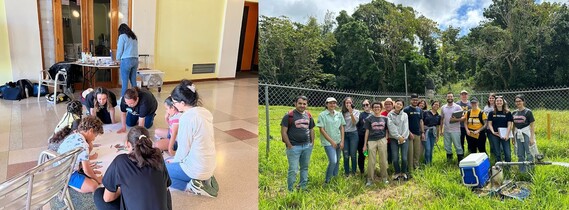 PROTECT SRP trainees from different projects, cores, and institutions took part in the first ever PROTECT trainee trip to Puerto Rico. The trip gave the students an up-close, inside look at how environmental and human samples are collected and analyzed for PROTECT research. They also participated in report-back activities and created educational activities for children about environmental health, including a puppet show and coloring worksheets. (Photo courtesy of PROTECT SRP Center)
|
|
ECHO Deputy Director
NIH is seeking a dynamic, process-oriented, and experienced scientific leader for the position of Deputy Director of the Environmental Influences on Child Health Outcomes (ECHO) Program. ECHO focuses on solution-oriented research addressing how a broad range of early environmental exposures (from biology to society) affect key pediatric outcomes with high public health impact.
NIH Global Recruitment Vacancies
The Global Recruitment Unit serves NIH’s 27 Institutes and Centers with global recruitment efforts and has several new postings — including the NIEHS Division of Extramural Research and Training’s Program Officer and Scientific Review Officer positions. Several opportunities are accepting applications now, and others will open throughout the summer.
Deep South Center for Environmental Justice Positions
The Deep South Center for Environmental Justice is a nonprofit organization dedicated to improving the lives of children and families harmed by pollution and vulnerable to climate change in the Gulf Coast Region. They have several opportunities in support of research, education, community and student engagement for policy change, as well as health and safety training for environmental careers.
UCLA Seeks Professor of Computational Toxicology
The University of California, Los Angeles (UCLA), Jonathan and Karin Fielding School of Public Health invites applicants for a tenured-track faculty position in computational toxicology. The successful candidate must have a Ph.D. or equivalent in toxicology, environmental and occupational health, or a closely related field, and will be expected to establish an internationally recognized, extramurally funded research program.
Multiple Openings at Wayne State
The Institute of Environmental Health Sciences/Center for Urban Responses to Environmental Stressors at Wayne State University is recruiting for several new faculty positions. Institute researchers and community partners solve complex environmental health problems through research, community engagement, and education.
University of Washington Postdoc
Karen Levy's research group in the Department of Environmental and Occupational Health Sciences at the University of Washington is seeking a postdoctoral fellow. The post-doc will work on the NIAID-funded project, ‘’Enteropatogenos, Crecimiento, Microbioma, y Diarrea” (ECoMiD), and the position will be supported by a NIEHS-funded T32 training grant, along with other lab funding.
Mount Sinai Seeking Data Analyst
The Institute for Health Equity Research at Mount Sinai is seeking a data analyst to support research focusing on health and health care disparities using survey and health systems data. The ideal candidate will have strong quantitative data analysis skills and experience working with SAS, SPSS, STATA, Oracle, Python, R, or a similar statistical software package.
VA Industrial Hygienist Opportunity
The Department of Veterans Affairs (VA) seeks a GS-13 level industrial hygienist. The position serves as the facility industrial hygienist assigned to the Safety and Emergency Management Service at the VA Palo Alto Health Care System in California. Responsibilities include preparation, writing and timely submission of internal and external documentation, reports, and correspondence.
Positions at the University of Maryland
The University of Maryland is seeking a community engagement coordinator and education core coordinator to support their Center for Community Engagement, Environmental Justice and Health team. The center has facilitated partnerships with community-based organizations, advocacy groups, health practitioners, and policymakers to reduce contamination, improve environmental quality, and enhance community health.
Research Associate Opportunity with UNC
The Center for Public Engagement with Science in the University of North Carolina at Chapel Hill Institute for the Environment seeks a postdoctoral research associate. This research associate will support curriculum development and teacher professional development activities associated with an NIH-supported project: Iterative Design to Engage All Learners.
USC Postdoc Training Fellowship
The Keck School of Medicine of the University of Southern California (USC) is seeking postdoctoral fellows for their Environmental Genomics training program, supported by NIEHS. The program aims to provide training across epidemiology, genomics, biostatistics, bioinformatics, and computational biology to study environmental and genetic risk factors of disease.
Postdoc Scholar Opportunity at OHSU
Oregon Health & Science University (OHSU) is seeking a full-time postdoctoral fellow in environmental health sciences, molecular genetics, or a related field. The postdoc will work as part of a team on an Outstanding New Environmental Scientist R01 award funded through NIEHS.
|
|
|
SRP Research Brief 342: Exposure to PCBs During Nursing Leads to Temporary Diabetes-Related Health Effect (Kevin Pearson, University of Kentucky)
Watch the latest Research Brief video!
Past Research Briefs are available on the SRP website. To receive the monthly Research Briefs or to submit ideas, email Brittany Trottier (brittany.trottier@nih.gov).
|
|
 |
|
|
 |
|
TAMU Hazardous Waste Operations & Emergency Response Training Course
June 13, 2023
College Station, Texas
|
|
|
|
ITRC Microplastics Webinar
June 13, 2023
Virtual
|
|
|
|
|
International Society for Environmental Epidemiology (ISEE) – North American Chapter
June 19-21, 2023
Corvallis, Oregon
|
|
|
|
2023 TechConnect World Innovation
June 19-21, 2023
Washington D.C.
|
|
|
|
|
Indigenous Environmental Health Research Workshop
July 13-14, 2023
Virtual
|
|
|
|
Annual Meeting of the Health Physics Society
July 22, 2023
National Harbor, Maryland
|
|
|
|
|
National Environmental Health Association – Annual Educational Conference & Exhibition
July 31-August 3, 2023
New Orleans, Louisiana, and Virtual
|
|
|
|
National Brownfields Training Conference
August 8-11, 2023
Detroit, Michigan
|
|
|
For more events, check out our SRP events page.
|
|
|
To see the latest SRP grantee publications, visit the SRP Grantee Publications page.
Visit the SRP Materials for Grantees page for helpful information, such as SRP administrative supplements information, SRP best practices, guidelines for NIEHS logo use, and the Data Collection Form.
See the SRP Science Digest to read more about recent SRP research highlights and activities.
The SRP Events page contains information about upcoming meetings, seminars, and webinars.
The SRP website also has Search Tools to help you learn more about projects funded by the program.
|
|
 |
|
Need to get in touch with an NIEHS SRP staff member? Check out our Contact Staff page. |
|
|
 |
|
JOIN THE @SRP_NIEHS KNOWLEDGE NETWORK ON TWITTER!
NIEHS uses Twitter, a popular social media tool, for information sharing through tweets. Many SRP Centers also have accounts, and it would be great if all participated! Follow us @SRP_NIEHS to instantly hear news about the program, noteworthy publications, events, and job opportunities for trainees.
|
|
|
|
|
|