|
You’re invited to the next Building Bridges Symptom Science webinar. This webinar series brings together interdisciplinary researchers in cancer symptom science to share their expertise and further discussions in the field.
Treatment for cancer can be harmful to the cardiovascular system both acutely while receiving treatment, and/or long after as late effects for survivors . In this webinar, we will discuss the current state of research on evaluating and managing cancer treatment-related cardiotoxicities. Dr. Ruddy and Dr. Herrmann, a practicing oncologist and cardiologist respectively, will discuss the state of the science in cardio-oncology management and mitigation of these cardiotoxicities, and exciting new tools and directions for cardio-oncology research.
Date: Wednesday, July 30, 2025
Time: 3:00 to 4:00 p.m. ET
Speaker(s)
|
Joerg Herrmann, M.D.
Cardiologist
Director, Cardio-Oncology Clinic
Director for Research, Ischemic Heart Disease Program
Mayo Clinic Comprehensive Cancer Center
Kathryn J. Ruddy, M.D., M.P.H., FASCO
Oncologist
Co-leader, Cancer Prevention Control and Survivorship
Research Program
Mayo Clinic Comprehensive Cancer Center
|
|
 |
Moderators
Eileen Dimond, R.N., M.S.
NCI Division of Cancer Prevention
Bishow Adhikari, Ph.D.
NHLBI Division of Cardiovascular Sciences
Registration is required.
NIH scientists pioneer promising treatment for intractable cancer pain
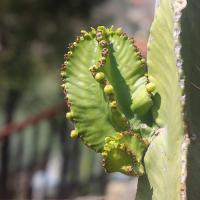
NIH scientists recently reported that a first-in-human clinical trial of a new therapy based on the plant-derived molecule resiniferatoxin (RTX) shows that it is a safe and effective agent for pain control in patients with intractable cancer pain. Researchers tested a single injection of small quantities of RTX into the lumbar cerebral spinal fluid (by lumbar puncture) of advanced-stage cancer patients and found that it reduced their reported worst pain intensity by 38% and their use of pain-relieving opioids by 57%.
|
Questions? Comments? Please email: DCPSymptomScience@nih.gov.
Learn more about the DCP Building Bridges Symptom Science Webinar Series.
|