CTSU Updates: What’s new
The January 2022 NCORP Monthly Meeting slides are now available in CTSU.
Important Dates:
Next Biobank Monthly Meeting
Tuesday, February 8, 2022, from 1:00 p.m. to 2:00 p.m. Eastern time
Mini-Symposium - Maximizing the Research Use of Small Biopsy Tissue
Please let your oncology and radiology staff know about this symposium.
Wednesday, February 9, 2022, from 9:00 a.m. to 12:00 p.m. Eastern time.
The mini-symposium will address challenges and successful approaches for obtaining biopsies, appropriate tissue handling, and subsequent analysis to attain sufficient quality and quantity of analytes for molecular research and clinical testing.
To view the agenda and register for the event, please visit: https://cbiit.webex.com/cbiit/j.php?RGID=rb7d902221fa11b76d50ac1919b5b0954
Please contact Dr. Lokesh Agrawal, Lokesh.agrawal@nih.gov with questions. |
Spotlight: The Value of the Cancer Moonshot Biobank External Scientific Panel
The Cancer Moonshot Biobank’s External Scientific Panel (ESP) has been a vital addition to the Biobank, contributing important insights into the patient and provider experience, and helping the Biobank integrate these considerations into the study. ESP members bring expertise as healthcare providers, patient advocates, and experts in biobanking, clinical trials, bioethics and communications. The ESP has provided advice for the Biobank study on protocol exclusion criteria, so as to not unnecessarily exclude patients; on study design, to ensure that cancer health disparities are addressed; and on policies and procedures regarding the return of individual biomarker testing results to participants. They have also provided valuable input on digital communications such as the design and content of the Engagement Website, and eConsent documents and video. We’d like to express our sincerest gratitude for the ESP’s valuable input and ongoing participation since inception of this study.
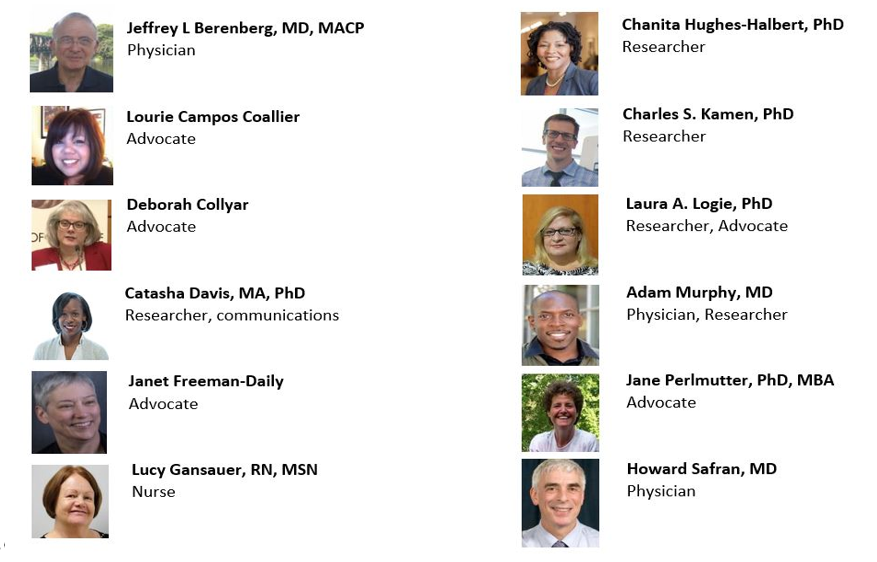 The members of the Cancer Moonshot Biobank's External Scientific CommitteeClick to edit this placeholder text.
FAQ Highlights
Question 1:
We have a potential patient for the Moonshot Biobank. The patient, confirmed stage IVB metastatic non-small cell carcinoma with ALK mutation, started Alectinib two weeks ago, which is 108 days from start of therapy. The patient had their three-month CT scan a week ago showing target lesions are 75%+ smaller.
If the patient were to enroll today, would we just need to collect archival tissue and collect blood, and then collect blood and fresh biopsy at progression (if they progress)? We are not sure what specimen collections would be required since the patient is past the 12-week timepoint of being on treatment.
Response 1:
Yes, that is the correct enrollment approach for this patient. The 3-month/12-week on-treatment assessment time point is a guide, but not strictly required as we know that this time frame can vary from patient to patient.
Question 2:
A potential patient for the Moonshot Biobank was diagnosed in April 2020 with stage IV rectal adenocarcinoma with liver and lung metastases. Archival tissue was collected in April 2020. The patient started mFOLFOX/LV/Zirabev in June 2020 and showed progression in July 2021. The patient’s treatment was then changed to FOLFIRI/Avastin. The last scan in November 2021 showed stable disease, and the patient was switched to maintenance 5FU/LV/Avastin. The patient has been on Avastin since diagnosis, but the oncologist added Onivyde when the patient progressed in July 2021.
Do the two lines of standard-of-care therapy received after the collection date of archival tissue make the patient ineligible for Moonshot (The first was Folfox/LV/Zirabev and second was FOLFIRI/Avastin)?
Response 2:
That is correct; the patient is ineligible to enroll at this time because they received multiple therapeutic regimens since the date of archival tissue collection.
Reminders
- The Cancer Moonshot Biobank project is intended to facilitate research into why cancer treatments work for some patients and not others, and why treatments can work for a while and then stop working. To do this kind of research, scientists need both biospecimens and data. Therefore, it is very important to complete the entry of treatment data (drugs, dates, etc.) in Rave. Please respond to Rave queries in a timely manner. If you have questions about Rave, please email STS.Support@theradex.com.
- Please let us know if your site’s CRA or Lead CRA has changed. You can update your roster through RSS or by emailing Jane Wanyiri (jane.wanyiri@nih.gov). Up-to-date information is vital for study staff to provide timely access to eConsent, the Engagement Website, newsletters, and monthly meetings.
- If your site would like an archival FFPE block returned, please provide a written request in the shipping box. It will take two-to-four weeks to return the material.
 This year marks the 50th anniversary of the National Cancer Act.
Learn how the National Cancer Act of 1971 helped to change the course of cancer research and why NCI is commemorating its 50th anniversary throughout 2021. #NothingWillStopUs
National Cancer Institute’s 50th Anniversary Stories:
Phyllis Pettit Nassi Goes the Distance for Underserved Communities
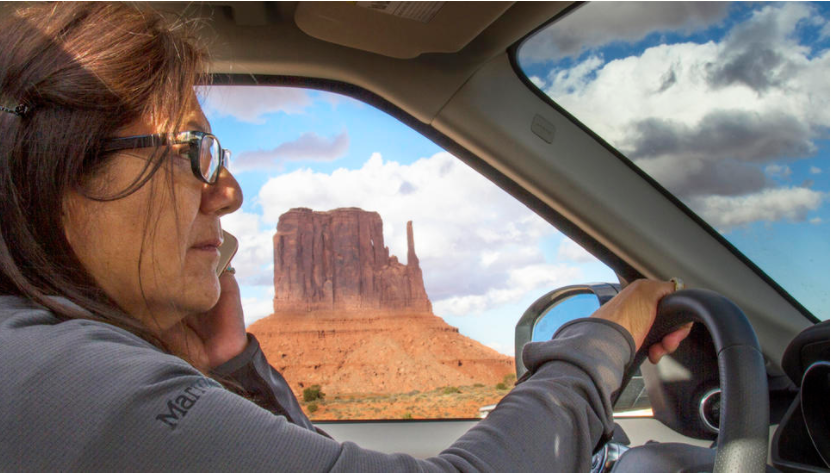
Phyllis Pettit Nassi is a health advocate and Associate Director at Huntsman Cancer Institute in Salt Lake City, Utah. She regularly drives nine hours to Montana and flies to Alaska to access remote communities to talk about cancer. As a member of the Otoe-Missouria Tribe and the Cherokee Nation, she understands cultural rules but still meets resistance. “As is traditional, we don’t talk about diseases because you bring that to you by talking about it.”
Using knowledge about clinical trials and precision medicine partly gained from participating on an NCI advocacy board and working group, she alerts communities that “cancer research is moving so fast, and our gap in participation is getting wider.” Eventually some people open up and share their voices and perspectives, which she brings to the medical community and NCI, when working to increase clinical trial access and improve care. And “that’s when we can have a conversation” about things such as traditional medicine practices or needing language interpreters, she said.
Advocates such as Pettit Nassi maintain the momentum of the National Cancer Act. Pettit Nassi, however, does not take credit. “I am not who I am or what I do without the gift of the people,” she said. “They open the doors. With their permission, it’s their stories I tell. It’s them.”
|