This section of NCI’s Fiscal Year 2023 Annual Plan & Budget Proposal explains how NCI is reimagining the clinical trial enterprise so that clinical research is available to people wherever they are. With additional investments, NCI can support more research to expand telemedicine into clinical trials, increase access to trials for underserved communities, and incorporate methods that simplify enrollment and data collection.
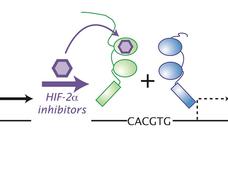
The Food and Drug Administration has approved belzutifan (Welireg) to treat adults with von Hippel-Lindau disease (VHL) who have tumors of the kidney, brain, nervous system, or pancreas. The approval is based on a small clinical trial of belzutifan in people with VHL-associated kidney cancer, all of whom also had other VHL-associated primary tumors.
Researchers in women’s cancers have begun testing a promising surgery for premenopausal women at high genetic risk for ovarian cancer that avoids early menopause. In a large clinical trial sponsored by NCI, researchers will determine if removing just the fallopian tubes is as effective as removing both the ovaries and fallopian tubes (salpingo-oophorectomy) at preventing these cancers from developing.
This section of NCI’s Fiscal Year 2023 Annual Plan & Budget Proposal tells the story of Marilyn, a cancer survivor facing a new diagnosis of colon cancer during the COVID-19 pandemic. Using telemedicine, Marilyn kept in touch with her care team and is participating in an NCI-sponsored phase 3 clinical trial offered locally through Marshfield Medical Center, an affiliate of the Wisconsin NCI Community Oncology Research Program community site.
Clinical Trials Information for Patients and Caregivers
Participating in a cancer treatment clinical trial is a big decision. This page discusses things to consider when you are deciding whether to take part in a clinical trial.
This phase 2 trial will measure the immunologic responses of people with glioblastoma or gliosarcoma treated with immune checkpoint inhibitors, a type of immunotherapy. Doctors want to see if changes in immune cells in the blood of people taking the drugs nivolumab (Opdivo), ipilimumab (Yervoy), and temozolomide (Temodar) for these cancers are associated with how long they live.
This phase 1 trial will evaluate a test to help doctors choose the most effective chemotherapy drugs for treating people with cancer that has spread throughout the abdomen. In peritoneal carcinomatosis, cells from certain types of cancer form tumors in the lining of the abdomen (peritoneum). Standard treatment is surgery to remove the tumors (cytoreductive surgery) followed by infusing heated high-dose chemotherapy into the abdomen. For this trial, doctors will collect pieces of tumor tissue during surgery, before infusion of heated chemotherapy. They will expose the tissue to different heated chemotherapy drugs outside of the body to determine which combination of drugs might work best with each person’s cancer. They want to see if choosing treatment in this way leads to better results for these patients.
This phase 2 trial will test Minnelide in people with a rare and highly aggressive type of pancreatic cancer (adenosquamous carcinoma of the pancreas). Minnelide rapidly releases a molecule into the bloodstream that slows cancer cell growth and causes cancer cells to die. Doctors want to see if treatment with this experimental drug will help people with this type of pancreatic cancer.