|
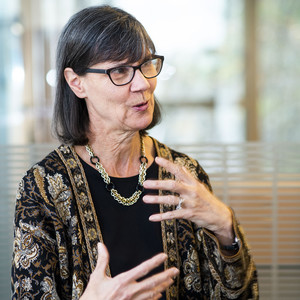
NCCIH Director Dr. Helene Langevin recently shared her views on acupuncture research, NCCIH’s research priorities, and her own interest in connective tissue in a wide-ranging RELIEF podcast with Dr. Stephani Sutherland.
Acupuncture, Dr. Langevin explained, is a very ancient practice that has been used for centuries, but how it works is still not fully understood. It has some beneficial effects, especially in painful conditions, but there’s a long ways to go to understand exactly what happens when needles are inserted in the body and how that translates into a beneficial effect. Acupuncture is a complicated form of treatment. Much happens during an acupuncture treatment in addition to simply the needles being inserted.
NCCIH’s research focuses primarily on two areas, Dr. Langevin said. One is natural products, including herbs and probiotics, and the other is mind and body approaches, which include acupuncture, yoga, massage, tai chi, and meditation.
Connective tissue—the tissue that fills the gaps between other structures in the body—deserves more study because it spans the entire body, Dr. Langevin said. The importance of connective tissue, especially in the musculoskeletal system, is starting to be recognized. Differences in connective tissue have been observed between people with and without back pain, but it’s unclear whether they are caused by pain or whether they predispose people to pain.
|