|
It’s the end of the year – and the decade! In the past ten years, the ODH has made more than 400 awards across eight grant programs to support digital research, professional development, international collaboration, and open access scholarly publication.
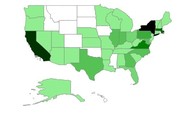
We’ve awarded grants to institutions based in 41 states and territories, including state universities, private colleges, community colleges, HBCUs, and non-profit organizations, as well as collaborative multinational projects.
Read on to see what's happened at the ODH during the past year. We can’t wait to see what the next decade will bring!
|
This week, the NEH announced the brand new Fellowships Open Book Program, a limited competition designed to make outstanding humanities books available to a wide audience.
This program, offered to university and non-profit presses, will fund the creation of open access editions of humanities monographs whose underlying research was funded by one of the eligible NEH fellowship programs. Deadlines will be held in March, August, and December. Eligible publishers can apply through a streamlined process on the program website.
This (fiscal) year, the Office of Digital Humanities made 41 new awards through three ODH grant programs: Digital Humanities Advancement Grants, a partnership with IMLS; Institutes for Advanced Topics in the Digital Humanities; and the Humanities Open Book Program.
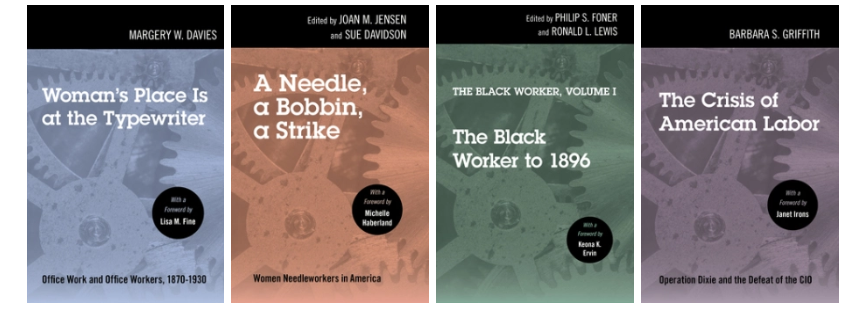
To learn more about the impact that some of these projects are having, check out this interview with a Rutgers University faculty member teaching with Temple University’s Open Access Labor Titles, an HOBP awardee. We also love this article in Slate about digitizing Indigenous materials, which features Breath of Life 2.0, a DHAG project.
To learn more about these and all of our awards, visit our website.
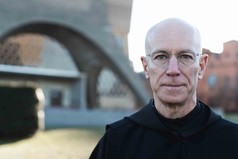
For the first time ever, an ODH awardee gave the 2019 Jefferson Lecture, the highest honor the federal government bestows for distinguished intellectual achievement in the humanities.
Father Columba Stewart was awarded a Digital Humanities Advancement Grant in 2017 for his project “Ensuring Access to Endangered and Inaccessible Manuscripts.” His lecture, “Cultural Heritage Present and Future: A Benedictine Monk’s Long View,” was held on October 7, at the Warner Theatre in Washington, D.C.
Read more about Father Columba or watch a livestream of the video.
|
Digital Humanities Advancement Grants (DHAG), a partnership with IMLS, support innovative, experimental, and/or computationally challenging projects at different stages throughout their lifecycles, from early start-up phases through implementation and sustainability.
This year, we have published guidelines in a new format known as a Notice of Funding Opportunity (NOFO), and have made some changes to the application requirements. We have also launched a series of blog posts and a webinar which help provide insight into the application process.
The application deadlines for 2020 will be January 15 and June 15.

We are pleased to introduce Hannah Alpert-Abrams as our Program Specialist in NEH's Office of Digital Humanities! Hannah was formerly a postdoctoral fellow at the John Carter Brown Library at Brown University and at LLILAS Benson Latin American Studies and Collections at the University of Texas at Austin.
Hannah is an experienced digital humanist and former project manager for the NEH-ODH funded “Reading the First Books” project. She writes and presents on topics in digital humanities and critical archival studies. Hannah has an MA and PhD in comparative literature from the University of Texas at Austin as well as a BA in English from Oberlin College.
|
On Wednesday, April 29, 2020, we'll be hosting an ODH Project Directors Meeting at NEH Headquarters in Washington, DC. The event will feature a keynote speaker along with presentations from recent award recipients about their ODH-funded projects. We'll share more information in the coming months about how you can register to join us at this free event.
|