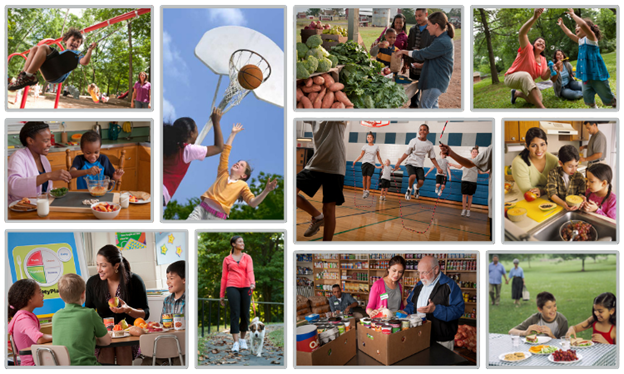
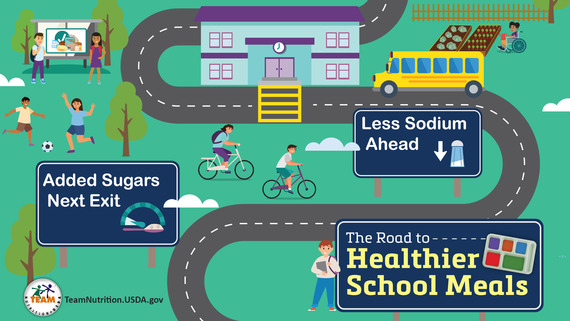
 Research shows that school meals are the most nutritious food source for American schoolchildren—thanks in large part to the work of school nutrition professionals, parents, school meal partners, the food industry, and U.S. Department of Agriculture (USDA) to make school meals healthier over the past decade.
USDA’s Food and Nutrition Service (FNS) published the final rule titled, Child Nutrition Programs: Meal Patterns Consistent With the 2020-2025 Dietary Guidelines for Americans, which is the next step in continuing the science-based improvement of school meals and other USDA child nutrition programs (CNP), as well as advancing USDA’s commitment to nutrition security. The changes are based on a comprehensive review of the Dietary Guidelines for Americans, 2020-2025, robust stakeholder input on the CNP meal patterns, and lessons learned from prior rulemakings.
While this rulemaking was effective July 1, 2024, USDA is gradually phasing in required changes over time. Program operators are not required to make any changes to their menus as a result of this rulemaking until school year 2025-26 at the earliest.
 Strengthening school meals is one of the best investments we can make in our children’s futures. USDA’s commitment to work with school meal partners to provide nutritious school meals comes from a common goal we all share: to help children lead healthier lives.
By law, USDA is required to develop school nutrition standards that reflect the goals of the most recent edition of the Dietary Guidelines for Americans. Yet most children are consuming too much added sugars and sodium and not enough fruits, vegetables, and whole grains, leading to a rise in diet-related diseases. By following the science and listening to extensive feedback from all our school meal partners, USDA is making gradual updates to the school nutrition standards in a few key areas to give children the right balance of many nutrients for healthy, tasty meals.
For Schools: Map Out Your Menus
 Prepare for the road ahead with these ready-to-go menu planning, nutrition education, and school meal promotion resources that support the updates to the school nutrition standards.
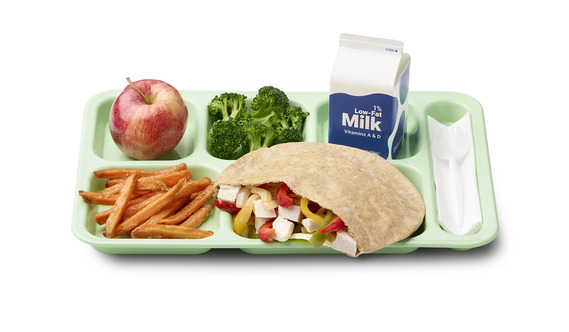
There are many ways, to offer school lunch and breakfast trays. Although school meals must meet federal meal pattern requirements, school districts choose what foods go on the menu. School lunch and breakfast menus may look different based upon local and regional food preferences, what foods are produced locally, and what items might be in season.
Click to see a slide show (clicking the arrows on the left and right side of each image) to see professional photographs of delicious and nutritious meals from across the country that students are lining up to eat.
New! Program Participation Dashboard
In June, we launched a new, interactive dashboard that features state, territory, and national level data for FNS nutrition programs.
The FNS Program Participation Dashboard is a tool that provides new, in-depth insight into publicly available data, specifically, program participation and meals served across ten FNS nutrition programs. This dashboard is available to the public and uses the most recent data available to provide users greater insight into critical programs that touch the lives of millions of Americans daily. It allows users to explore and display data several ways and across different geographic locations. Most importantly, it makes key programmatic data available to download in an easy-to-use format.
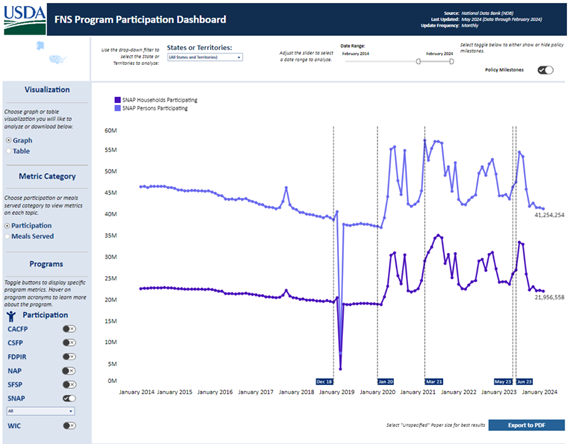 This marks the eighth interactive dashboard that FNS has released and is the first to bring together participation data across FNS nutrition programs in one place. This dashboard reinforces FNS’s commitment to open and accessible data. For more information, and to view all the data dashboards, visit Data Visualization. For more information on USDA’s commitment to open data, visit the USDA 2024-2026 Data Strategy.
Farmers Market Week 2024
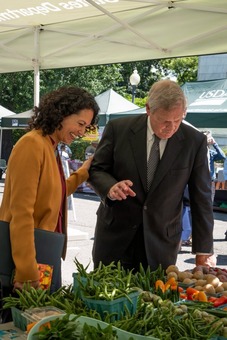
During National Farmers Market Week 2024, celebrated from August 4-10, various events and activities took place across the country to highlight the importance of farmers markets. This year marked the 25th anniversary of the celebration.
Many farmers markets hosted special events such as cooking demonstrations, live music, and kids’ activities to attract more visitors and create a festive atmosphere.
Did you get a chance to visit any farmers markets during National Farmers Market Week? 🍓🥕
|
Ch-ch-ch-ch-Changes!
Just like David Bowie sang it, we've seen a few changes at FNS this summer. As you may be aware, we have had a number of transitions in FNS leadership recently.
Here is a summary of those transitions:
Stacy Dean who served for 3.5 years as Deputy Under Secretary for Food, Nutrition, and Consumer Services (FNCS) began a new adventure outside the agency last month (July). Stacy Dean will be the inaugural Carbonell Family Executive Director of the Institute at George Washington University.
Cindy Long who has three decades of experience in the Food and Nutrition Service (FNS), including serving as Administrator since 2021, assumed the role of FNCS Deputy Under Secretary (DUSEC).
Dr. Tameka Owens assumed the role of Acting Administrator for FNS. Dr. Owens had been serving as the FNS Assistant Administrator.
Kumar Chandran who had served as Acting Under Secretary for FNCS returned to his previous post as Senior Advisor in the Office of the Secretary.

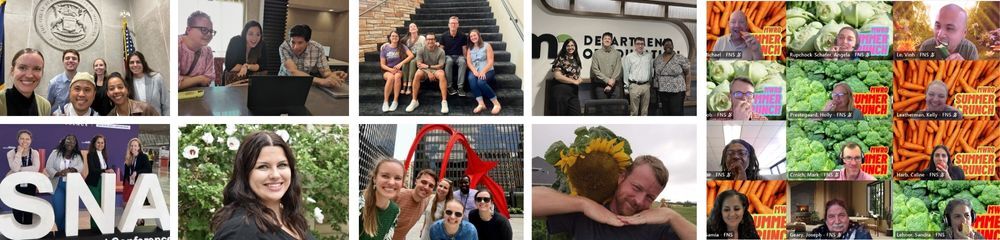 In the Midwest, we RISE. We strive to Respect everyone, do our work with Integrity, and Serve our community with Excellence. We are Midwest!
Since our last edition of At the Table we’ve been fortunate to hire new staff.
Brandin Seibel joined our SNAP team. “I joined FNS because I am interested in putting my years of experience and knowledge in the SNAP program to good use by helping other states manage their SNAP programs to the best of their ability" Brandin jumped right in and helped Iowa set up Disaster SNAP benefits (D-SNAP) in his first weeks with us.
And we hired Stevey Poppe to work with SNAP Employment and Training. “I strongly believe in the food assistance programs that FNS supports. I’ve spent over a decade working with the Wisconsin SNAP program and I’m excited to continue working with the program and the state agencies that administer it in a new capacity.”
Megan Stoltenburg joined MWRO SNAP just last week. She is a Returned Peace Corps Volunteer who served in Ukraine and worked professionally for the Peace Corps as a recruiter. “I was originally attracted to the mission-driven work happening at FNS. A few years ago, I was able to volunteer as a Farm to School grant reviewer. FNS has been on my radar since then and I’m excited to contribute to the mission now.”
We are thrilled to have these new folks join our team!
Midwest Out and About
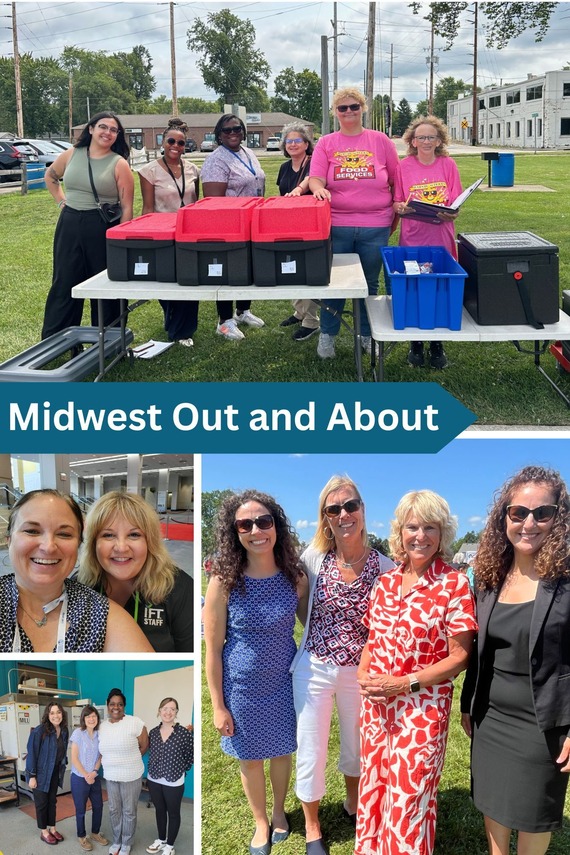 Top: Midwest's Sandra Lehner and Katie Cerda along with Wanda McNeil and Ashley Lee from FNS national office visited rural Indiana to see four summer food service rural non-congregate sites in July. Site directors and staff observed much higher participation at rural non-congregate sites in comparison to congregate. Hobart High School observed their student participation increase 3-fold in comparison to previous summers!
Middle: Penny Weaver, public affairs specialist and Tracy Fink, director, Scientific Programs & Science and Policy Initiatives at Institute of Food Technologists pose together at the IFT FIRST Annual Event and Expo held in Chicago in July. FNS participated in a featured session titled “Empowering Nutrition Security: A Vision for Health Equity and Impactful Partnerships.” Learn more here: Advancing Healthy Equity and Nutrition Security - IFT.org
Bottom left: SNAP E&T Analyst Liz Czarnecki poses with Jessica Ramos from IDHS, Sabriena Gibbs, SERO SNAP E&T analyst, Emily Doughtery, vice president of Client Service at Jane Addams Resource Corporation. Liz coordinated site visits at three E&T providers — Revolution Workshop, Jane Addams Resource Corporation (JARC), and National Able Network. National Able Network also serves as an E&T intermediary in Illinois. The providers shared how SNAP E&T 50/50 funding allows them to provide vocational training, employment coaching, job retention, and wrap around support services to SNAP recipients with multiple barriers to employment, including justice involvement, limited education, and limited work history.
Bottom Right: Midwest employees Christina Palazzolo, Sandra MacMartin and Samia Hamdan pose with "Maranda" at a Park Party Recess in Kentwood, Michigan. Park Parties are held all over West Michigan in partnership with Michigan Department of Education to celebrate community and summer meals of course!
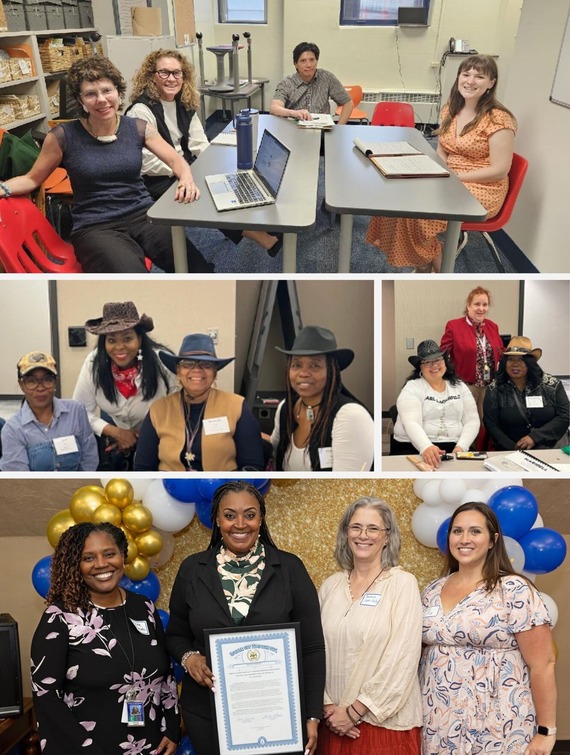 Top: WI staff Jennifer Putzer, Seeds of Health WIC Clinic director Ann White with Midwest's Victor Ho and Ellie Bauer talk Wisconsin Senior/Farmers Market Nutrition Program. The team visited the Seeds of Health WIC clinic in Milwaukee and an Aging and Disability Resource Center in Baraboo. There they saw certifications and learned about outreach work local agencies are doing to reach participants.
Middle: The Midwest SNAP Quality Control (QC) branch hosted all seven Midwest states in Chicago for a state exchange QC training and conference. Approximately 35 state staff and 15 Midwest staff attended the “rodeo” themed meeting. The conference allowed states to share best practices ideas and strengthen their QC knowledge so that they will meet their established goals and measures in SNAP performance. In the left photo: April Moss, Kahla Leggett, Rochelle Clay, and Glenda Battle. In the right photo: Maribelle Cerda, Terri Lischka and Marquita Turner.
Bottom: At the Michigan DHHS WIC 50th anniversary celebration with a tribute issued by Gov. Gretchen Whitmer. Brenda Jegede, director, MDHHS Bureau of Health and Wellness; Christina Herring, Michigan WIC director; Sarah Lyon-Callo, senior deputy director, MDHHS Public Health Administration; and Kristi Fox, Midwest branch chief, Supplemental Food Programs were part of the celebration.
Sunny Start to Summer Meals
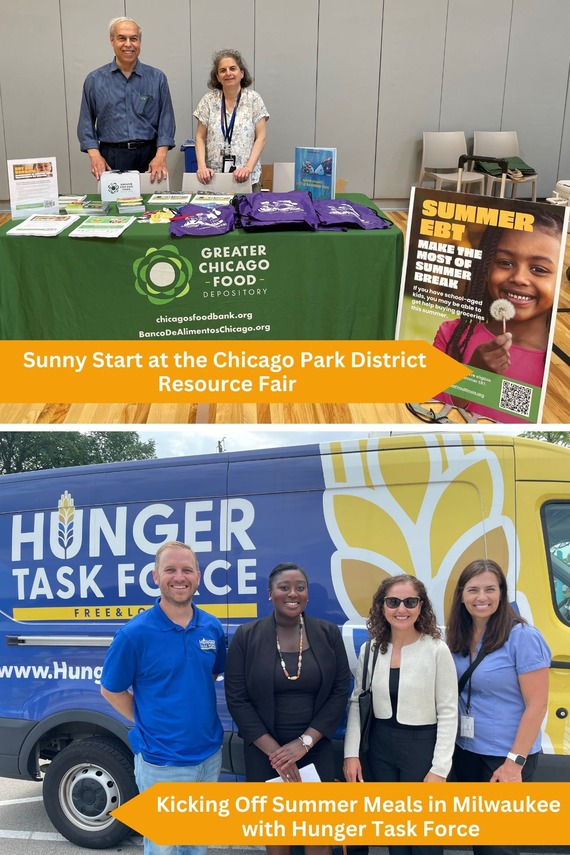 Top: Midwest's Maged Hanafi and Sandra Lehner participated in the Chicago Park District’s celebration to kick off summer: “Sunny Start with Summer Meals” at the Park District’s Brighton Park Community Campus in the gymnasium of the new Brighton Park Community Campus’s 58,100-square-foot two-story multi-purpose circular building. The resource event was focused on nutrition and summer meals. Maged and Sandra shared a table with the Greater Chicago Food Depository (GCFD). Beth Kenefick, GCFD senior policy advisor, provided community members with information on Summer EBT in Illinois, and on the services offered by GCFD.
Bottom: Milwaukee Hunger Task Force Chief Executive Officer Matt King, USDA FNS Senior Advisor Jayme Holliday, FNS Midwest Region Child Nutrition Director Samia Hamdan and WI Department of Public Instruction Director of Community Nutrition Programs Amanda Cullen. Samia Hamdan and Jayme Holliday joined the Hunger Task Force in Milwaukee, WI to kick off the Summer Food Service Program in June. Set up at 170 sites across Milwaukee County, more than 600,000 free meals will be served by summer's end to kids who need them.
SUN-sational Summer!
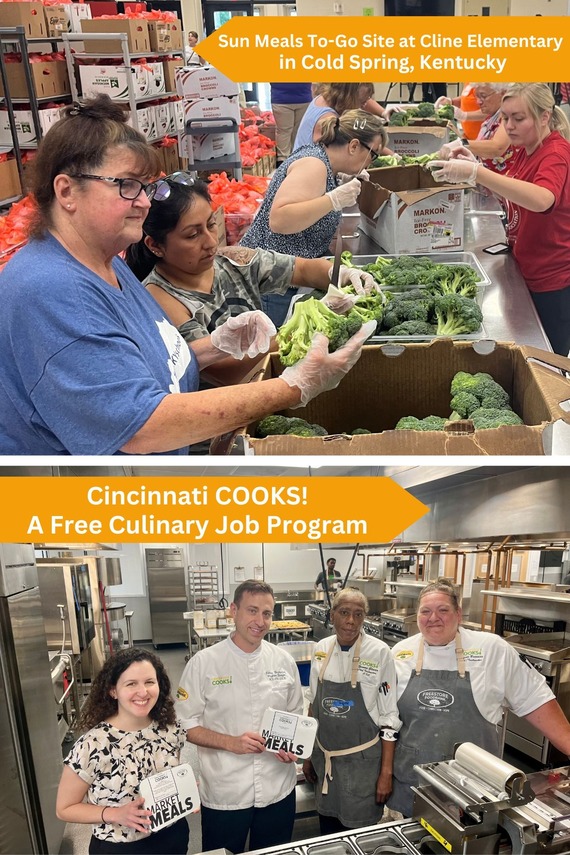
Top: Midwest staff and FNCS Chief of Staff Deborah Swerdlow visited a Sun Meals To-Go Site at Cline Elementary in Cold Spring, Kentucky. Local education officials, State department of ED staff and the school nutrition director (who is also the Kentucky SNA president) were also in attendance to chat with Deborah.
Bottom: Deborah Swerdlow and Midwest staff visited the new Freestore Food Bank in Cincinnati. Attendees were from diverse organizations, including the Kentucky Department of Agriculture, a Cincinnati city council member interested in nutrition security, Ohio SNAP Education, and the Ohio Association of Food Banks, among others. Conversations included SUN program, Local Food Purchasing Agreements, USDA Foods, and a prepared meal project that uses locally procured food. In the photo, Deborah poses with chefs from Cincinnati COOKS! a free culinary job training program for under- and unemployed individuals. Learn more here: Job Training - Cincinnati COOKS! - Freestore Foodbank - Tristate Area 🍳
At the YMCA, You Can Have a Good Meal!
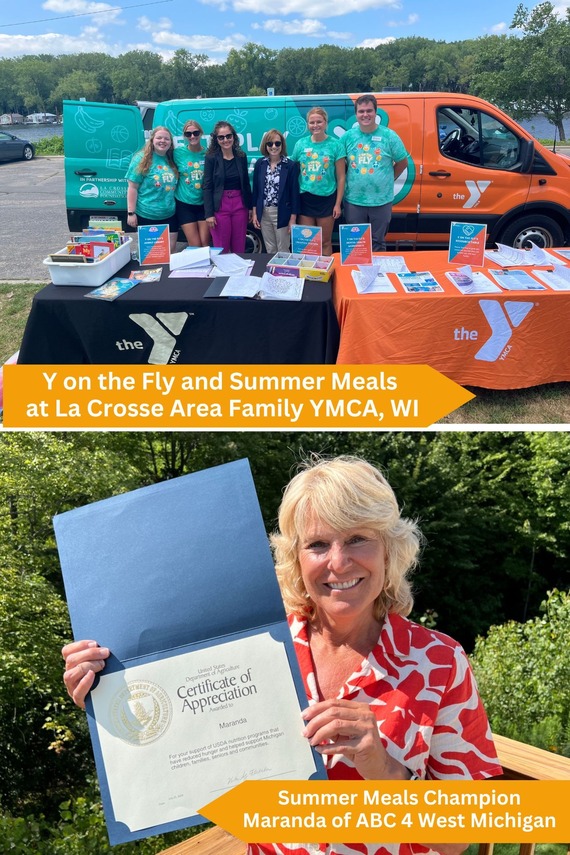 Top: The YMCA’s summer meal programs have been making a significant impact across various communities. For instance, the Monroe Family YMCA in Michigan has served over 35,000 meals to local youth this summer. The program was recently honored with a visit from USDA officials, highlighting its success and the importance of such initiatives. Similarly, the La Crosse YMCA has been providing meals to families in need at 21 sites that include two local libraries, two YMCA sites and two NEW park locations this summer. Some sites serve breakfast and lunch, and the two YMCA sites provide lunch on Saturday and Sunday too. These programs aim to ensure that children and teenagers receive nutritious meals even when school is out, addressing food insecurity during the summer months.
Bottom: FNS Midwest gave a big shout out to Maranda for her promotion of the summer meals program in Michigan. Cheers to another successful Park Party Recess season and 30 years of bringing Park Party magic to local kids!
Modernizing WIC with Online Shopping
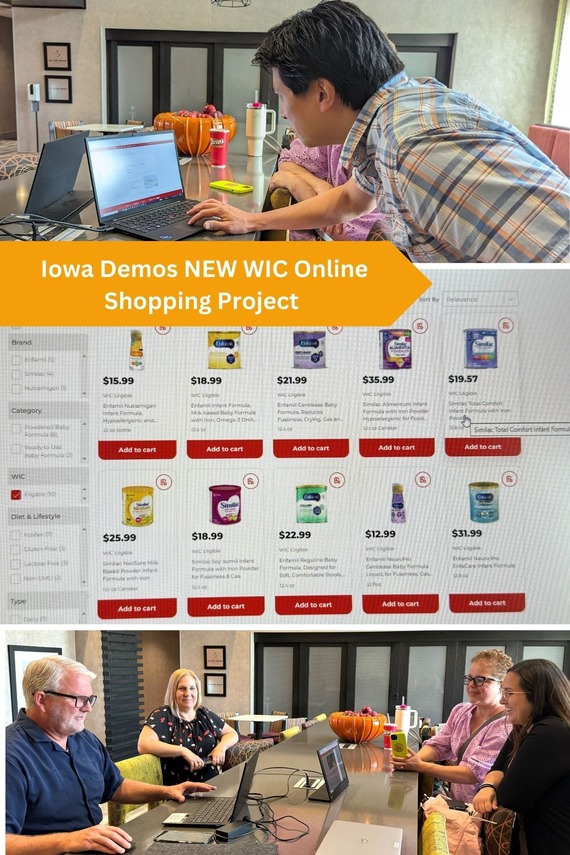 Top: Midwest's Nancy Ranieri, Kristi Fox and Victor Ho attended a demonstration of Iowa’s NEW online shopping project for WIC participants. They observed how shoppers can search ‘WIC eligible’ food groups, buy WIC and non-WIC foods at the same time, and they saw that items can be added to an online cart over multiple days so participants can check out when they are ready. Very exciting time for WIC participants in Iowa…and for the Midwest team.
Middle: Screen shot of WIC eligible food and formula options. Lots of great choices.
Bottom: Iowa team members, Kenny and Brandy, with the Midwest WIC team get down to business and place online purchases as part of the demo.
Tribal Partner Visits
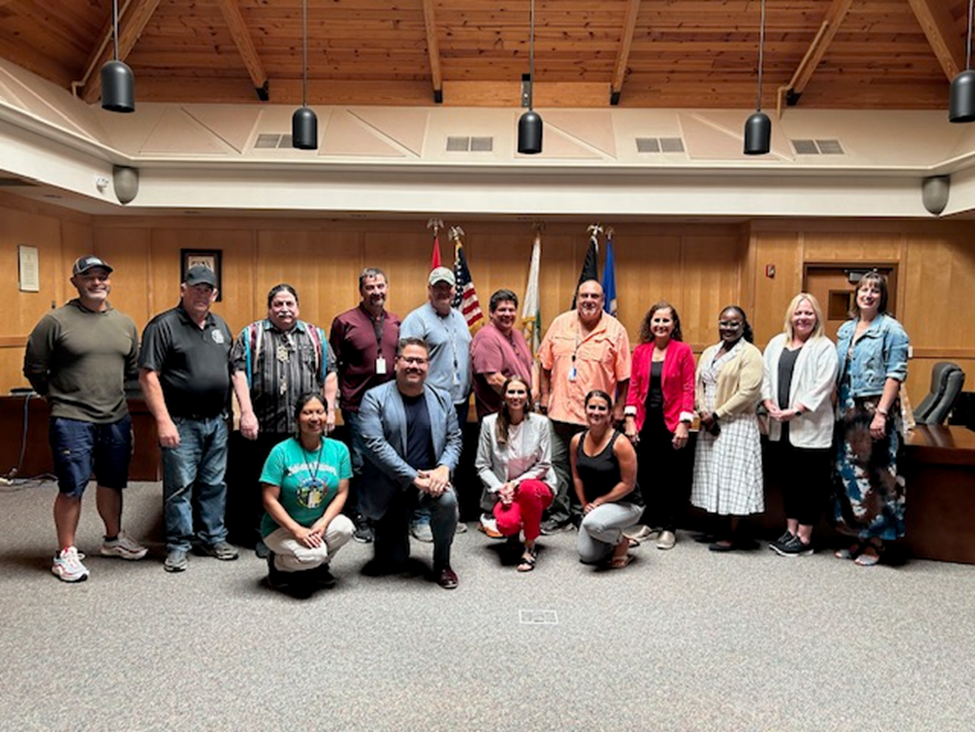
In July, MWRO visited several of our Tribal partners to see programs in action and hear directly from tribal leaders and those administering our programs. In Michigan, the FNS team met with the Hannahville Potawatomi Indian Community and the Keweenaw Bay Indian Community, and in Minnesota, they visited the Fond du Lac Ojibwe School (photo above). During these visits, FNS shared information about SUN Programs, SNAP retailer opportunities for tribal farmers, USDA grants as well as other topics.
The FNS team looks forward to more opportunities to visit other tribal partners to see the great work happening all around the Midwest Region.
USDA Makes Record-Breaking $14.3 Million Investment in Farm to School Grants
Twenty-One Grants Awarded to Midwest Farm to School Programs
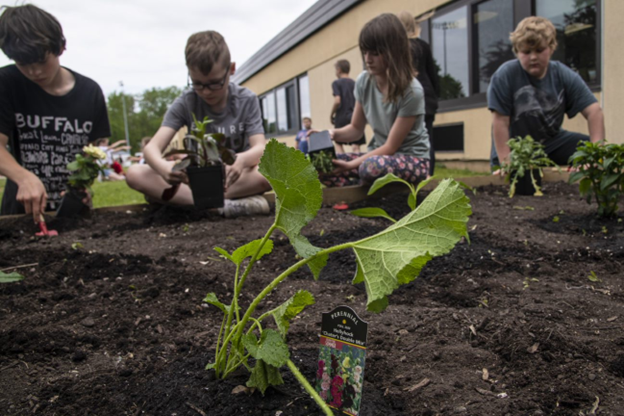 Congratulations to the newest cohort of Patrick Leahy Farm to School Grant Program grantees! In July, USDA Secretary Tom Vilsack announced $14.3 million in Patrick Leahy Farm to School Grants was being awarded to 154 projects including 21 in the Midwest Region. Across the country, these investments will help 1.9 million children in 43 states, the District of Columbia, Guam and Puerto Rico eat more tasty, nutritious foods, while supporting farmers and producers in their local and regional communities.
Farm to school opens opportunities for children to learn about nutrition and agriculture through hands-on experiences, such as planting, watering, and harvesting fruits, vegetables, and herbs. The program can also provide a pathway for more children to achieve nutrition security, which is the consistent and equitable access to healthy, safe, and affordable food essential to optimal health and well-being. Since the inception of the Patrick Leahy Farm to School Grant Program in 2013, USDA has awarded more than $98 million through Farm to School Grants across all 50 states, the District of Columbia, the U.S. Virgin Islands, Guam, and Puerto Rico, with the projects reaching over 28 million students in more than 67,000 schools.
Advancing Racial Equity in Farm to School Programs
Students, parents, educators, and other farm to school partners are asking questions about the foods served in schools, early childcare programs, and summer meal sites. They want to know who grew it, where it was grown, who prepares and serves it, and who gets to eat it. These questions are part of a growing focus on equity. The farm to school community wants to see farm to school positively impact community health, economics, and the environment. Furthermore, they want to see farm to school benefit everyone touched by the food system. Click to read more: Advancing Racial Equity in Farm to School Programs (govdelivery.com)
|
 |
In August and September, kids head back to school with new school meal menu items to try. And in October, farmers and school kids will celebrate Farm to School Month with farm field trips, veggie taste tests and corn shucking contests. There are so many events on the horizon. We’d like to hear what events YOU have planned. So, if you have something in the works, please let us know by emailing us at FNMWRO.PA@usda.gov. And of course, if there is anything we can do to amplify your communication efforts or support your event, don’t be shy - ask us for a quote for your press release or to attend an event or both! Lastly, we would love to highlight your events in our November issue of our At the Table newsletter so please share photos and stories with us.
Back to School
|

Midwest Great Apple Crunch 🍎
An annual celebration of fresh, local apples that supports local farmers and encourages healthy eating. The Great Apple Crunch is an annual celebration of fresh, local apples on the second Thursday of October, during National Farm to School Month. See how Illinois is celebrating: Midwest Great Apple Crunch - Illinois Farm to School Network The Illinois Crunch is part of the Midwest Great Apple Crunch, which is also celebrated in the neighboring states of Iowa, Indiana, Michigan, Minnesota, Ohio, and Wisconsin. Schools, early child care facilities, and other child education programs across Illinois can participate by serving local apples on the lunch tray or in the classroom, and ‘crunch’-ing into them together all at the same time. The Illinois Farm to School Network helps participants locate local orchards and provides promotional tools and educational supplements that teach students all about Illinois apples.
|
October is Farm to School Month
Celebrate food education, school gardens, and lunch trays filled with healthy, local ingredients.
This year’s National Farm to School Month theme, From Soil to Sea: Nourishing People and Planet. Dedicated farmers, ranchers and fishers' work and expertise lay the foundation for a thriving farm to school movement.
Learn what Indiana Grown for Schools has on the Farm to School horizon: Events & Webinars ・ Indiana Grown for Schools (ingrown4schools.com)
We encourage all of our partners, stakeholder and program supporters to celebrate the week and school meals through events, media engagement, newsletter articles, and social media posts.
|

National School Lunch Week is October 14-18, 2024
President John F. Kennedy created National School Lunch Week (NSLW) in 1962 to promote the importance of a healthy school lunch in a child's life and the impact it has inside and outside of the classroom. We encourage all of our partners, stakeholder and program supporters to celebrate the week and school meals through events, media engagement, newsletter articles, and social media posts. Use #NSLW24 in y our social media that week. For resources to help you celebrate visit: National School Lunch Week - School Nutrition Association
|
WIC 50th Anniversary
Join the celebration in honoring the countless stories of resilience and compassion that have defined WIC’s legacy. 2024 marks the 50th anniversary of WIC! Check out this site 50th Anniversary of WIC | WIC Works Resource System (usda.gov) for newly added WIC 50th content and celebrate with us by sharing our featured resources, including new social media posts, a new page with 50 Fun Facts About WIC, and more!
|
|