FNS Allocates FDPIR Administrative Funds for Nutrition Education
The FY 2022 budget provided an additional $4M in FDPIR administrative funds to use for nutrition education. All tribes were offered a base allocation of $17,500 to conduct nutrition education, with the opportunity to request additional funds for projects that exceed the base allocation. As of January 25th, over $2 million was requested by 71 tribal partners for implementing and enhancing nutrition education in their communities.
Based on the nutrition education plans received so far, tribes are planning to utilize their funds in many ways. This includes, planning grocery store tours, hosting cooking demonstrations, hiring nutrition educators, creating nutrition education tools and resources (posters, handouts, etc.), collaborating with community partners like University extension and SNAP-Ed, purchasing nutrition education reinforcement materials to provide to participants (measuring cups, cutting boards, etc.), traveling to nutrition education trainings and conferences, creating videos, hosting recipe taste testing events, and creating materials to market nutrition education in their communities.
FNS will continue to award funds as additional nutrition education plans and requests are submitted.
|
FDPIR Tribal Consultation
USDA invites Tribal Leaders to participate in an upcoming Food Distribution Program on Indian Reservations (FDPIR) consultation with the FDPIR Tribal Leader Consultation Work Group.
This consultation will be held on Wednesday, February 22, 2023, and will be held in person at the USDA, Jamie L. Whitten Building, 1400 Independence Ave SW, Washington, DC 20250. There is also a virtual option for attendance.
FNS Regional Offices provided the invitation letter and a draft proxy form on Friday, January 20th.
- Please register here by February 20, 2023. All attendees, including those attending in person, must register. After registering, Zoom will send a confirmation email with information on how to connect to the meeting.
- If you experience technical difficulties registering through Zoom, please contact Jimmy Nguyen at jimmy.nguyen@usda.gov.
- Tribal Leaders who cannot attend and wish to send a proxy should notify the USDA’s Office of Tribal Relations (OTR) by February 20, 2023.
Please contact your FNS Regional Office with any questions and/or to request a proxy form.
 Simple Food Safety Steps at Home Can Prevent Foodborne Illness
More than 200 diseases are linked to eating food contaminated with bacteria, viruses, parasites or chemical substances. Each year, an estimated 600 million people worldwide get sick from foodborne infection, leading to an estimated 420,000 deaths, according to the World Health Organization.
Here is another important fact: foodborne illness is preventable, and consumers can take steps to reduce the risk of getting sick.
Tribes and tribal communities have long held traditional practices that take food safety into account, such as dehydrating meat which removes enough moisture that bacteria does not grow. However, over the years, as food systems have grown more complex and the microbiological landscape has shifted, communities have addressed food safety in different ways. These are some best practices to consider when you handle and prepare food.
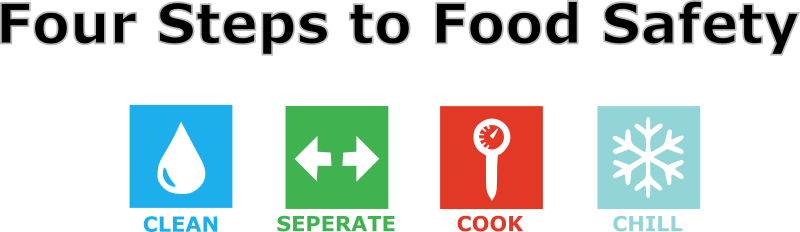
Clean: Wash your hands for 20 seconds before and after handling raw meat and poultry. If soap and water are not available, use hand sanitizer that contains at least 60 percent alcohol. Clean surfaces and utensils with soap and water before cooking and after contact with raw meat and poultry. After cleaning surfaces that raw meat and poultry have touched, apply a commercial or homemade sanitizing solution (1 tablespoon of liquid chlorine bleach per gallon of water).
Separate: Use separate cutting boards, plates and utensils to avoid cross-contamination between raw meat or poultry and foods that are ready-to-eat.
Cook: Confirm foods are cooked to a safe internal temperature by using a food thermometer: meat (whole cuts or intact cuts of beef, pork and lamb) 145° F with a 3-minute rest time; ground meats 160° F; poultry (ground and whole) 165° F; eggs 160° F; fish and shellfish 145° F; and leftovers and casseroles 165° F. Don’t have a food thermometer? Call 1-888-MPHotline to request a free one.
Chill: Chill foods promptly if not consuming immediately after cooking. Do not leave food at room temperature for longer than two hours.
Have a question about food safety? Contact the USDA’s Meat and Poultry Hotline from 10 a.m. to 6 p.m. Eastern Time, Monday through Friday:
For more information, visit www.fsis.usda.gov.
New Nutrition Education Resources from the USDA Indigenous Food Sovereignty Initiative
Through the USDA Indigenous Food Sovereignty Initiative, the USDA is partnering with tribal-serving organizations on projects to reimagine federal food and agriculture programs from an Indigenous perspective.
A variety of recipes and videos have been created that focus on how to use foraged and Indigenous foods along with those available through FDPIR. Learn how to make huckleberry smoothies, wild rice bowls, bison meatballs, and much more. In partnership with the North American Traditional Indigenous Food Systems (NATIFS), the videos feature award-winning chefs and restaurateurs Chefs Sean Sherman (Oglala Sioux) and Crystal Wahpepah (Kickapoo Tribe of Oklahoma).
There are also videos and guides focused on foraging and harvesting indigenous and wild plants. Learn foraging basics with ethnobotany experts Linda Black Elk, Lisa Iron Cloud (Oglala Sioux), and Addelina Lucero (Taos Pueblo/Yaqui). Discover how common plants such as nettles, wild onion, milkweed, and mint can be harvested and transformed into delicious dishes and teas. The videos and guides highlight how sustainable foraging practices can increase nutrition security, promote Indigenous foods, and encourage more sustainable land conservation practices.
Please visit the USDA Indigenous Food Sovereignty Initiative webpage for more information.
Chef Sean Sherman making bison meatballs with dandelion tomato sauce and pasta
Affordable Connectivity Program (ACP)
The Affordable Connectivity Program (ACP) provides eligible low-income households a subsidy of up to $30 per month on internet service plans offered by participating internet service providers and up to $75 per month for eligible households on Tribal lands. Eligible households can also receive a one-time discount of up to $100 to purchase a laptop, desktop computer, or tablet from participating providers if the household contributes more than $10 and less than $50 toward the purchase price.
Households with income at or below 200% of the poverty level are eligible for the subsidy—about 30 million households, or one in four of all households in the US. However, households are also automatically eligible for the ACP—without the need to prove their income—if at least one member of the household is receiving benefits from certain government assistance programs, including FDPIR.
The Biden-Harris Administration has secured commitments from many of the nation’s top internet service providers to offer high-speed internet plans to ACP-eligible households for $30 or less, with no other fees and no data caps. ACP-eligible households that choose to pair the ACP subsidy with one of these plans will be able to obtain high-speed internet with no out-of-pocket costs—meaning millions of low-income households will be able to obtain high-speed internet at no cost.
Learn more at GetInternet.Gov
Social Security Administration Cost of Living Adjustment (COLA) for 2023 and the Impact on FDPIR
USDA’s Food and Nutrition Service (FNS) has received questions in recent months related to the Social Security Administration's (SSA’s) announcement of an 8.7 percent benefit increase for 2023 and how this may impact FDPIR. To address these questions, we are sharing some information on the change and how it will impact households.
Supplemental Security Income (SSI) Payment Increases for 2023 and Impact on FDPIR
Beginning on December 30, 2022, Supplemental Security Income (SSI) maximum monthly payments for individuals will increase by $73 and for couples will increase by $110:
- Individuals: from $841 per month (2022) to $914 per month (2023).
- Couples: from $1,261 per month (2022) to $1,371 per month (2023).
Households in which all members are included in a federal public assistance or SSI grant automatically meet income eligibility requirements for FDPIR. See FNS Handbook 501, Chapter 4, Section 4300. Therefore, the ITO/State agency will not test any of the incomes of the households against Exhibit M FY 2023 Net Monthly Income Standards.
For non-categorically eligible households, increases in gross monthly income of more than $100 must be reported within 10 days of the date that the change becomes known to the household. See FNS Handbook 501, Chapter 5, Section 5141.
- The SSI increase for an individual in the amount of $73 would not require the household to report this change in income.
- The SSI increase for a couple in the amount of $110 would require the household to report the change in income.
You can read more about the changes to other types of Social Security benefits in the “2023 Social Security Changes Fact Sheet” provided by SSA.
Retirement of Automated Inventory System (AIS)
FNS plans to retire the Automated Inventory System (AIS) in 2023.
Tribes who currently use AIS should plan their transition to another system; options include:
- Integrated Food Management System (IFMS), or
- An alternative system such as Sygnal
In October at the National Association of Food Distribution Programs on Indian Reservations (NAFDPIR) Conference, FNS and Sygnal Partners provided demonstrations and hands-on labs of IFMS and Sygnal. In December, FNS Regional Offices reached out to Tribes that are still using AIS to discuss their transition to another system.
Tribes who are considering an alternative system like Sygnal should contact their FNS Regional Office to request the FDPIR Alternative System Checklist and complete Appendix A. ITOs may also request administrative funds for implementation and annual operating costs for an alternative system, including hardware, annual costs for operations and maintenance, and implementation costs to make the transition to the system.
Tribes who have questions about the transition to IFMS or an alternative system should reach out to their FNS Regional Office.
IFMS Certification Module
The Certification Module is scheduled to launch in February 2023. Training sessions will begin the week of January 16, 2023. Multiple training sessions are planned over several days to allow for participation by all staff members. The Transition Team will send out calendar invites and meeting reminders in early January. Questions? Contact the Transition Team.
With this tool, users will be able to determine FDPIR participant eligibility by:
- Conducting income calculations by income type (earned and unearned),
- Calculating net income (income minus deductions),
- Generating certification notices, and
- Assigning certification statuses such as expedited/pending and categorically eligible.
IFMS Mobile App
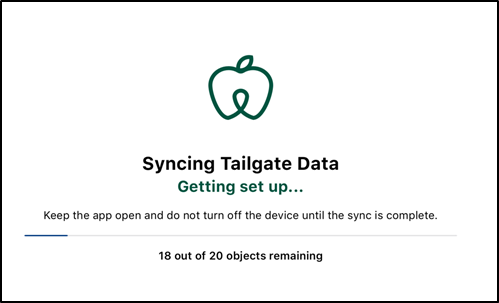
The USDA IFMS mobile app is a streamlined version of IFMS intended to efficiently conduct food distribution at tailgate sites where there is no internet connection. Users transfer IFMS inventory from the main warehouse to the mobile app for a tailgating event. Upon return, mobile transactions are synced with the IFMS web application, and unused inventory is restored to the main warehouse.
Figure 1: In the mobile app, users can sync data with IFMS web before and after a tailgate operation.
In November, Eight Northern Indian Pueblos Council, Inc. (ENIPC, Inc.) and the Nevada Department of Agriculture participated in a soft launch of the mobile app. The Transition Team has received positive feedback from these early adopters.
The IFMS mobile app is now live. If you are interested in learning more about the app, please reach out to the Transition Team to find out if the app is right for your FDPIR operations.
System Releases & Announcements
- 1/8/2023 – FFAVORS 4.1 Release
- 1/26/2023 – WBSCM 2023R4.0.01 Release
- 2/10/2023 – IFMS 2.1.0 Release & Certification Module
- 2/23/2023 – WBSCM 2023R4.0.02 Release
- 3/1/2023 – AIS 03.2023 Release
- 3/30/2023 – WBSCM 2023R4.0.03 Release
- 4/2/2023 – FFAVORS 4.2 Release
Planned dates for system activities are subject to change.
USDA will be participating in these upcoming meetings in 2023. We look forward to meeting you and hope to see you there!
- FDPIR Food Package Review Workgroup in-person meeting: March 21-22, 2023, in/around Phoenix, AZ.
|