|
September 1, 2015 | Volume 4, Issue 21
Feature
School orchard brings community together
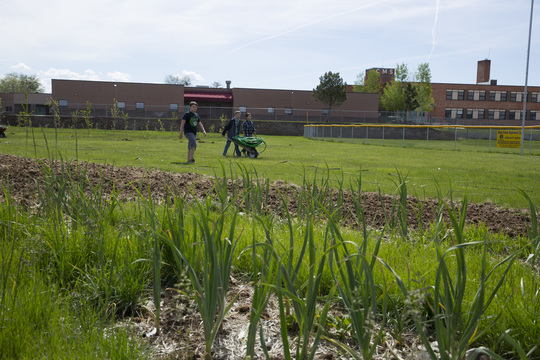 School garden and orchard at Cortez Middle School in Cortez, Colorado
This farm to school story comes from the Montezuma School
to Farm Project, located in southwestern Colorado. Thanks to Sarah Syverson,
the Montezuma School to Farm Project Director, for this story.
The Montezuma School to Farm Project has a thriving school
heritage orchard as part of our school garden program, thanks in part to a 2015
USDA Farm to School Grant to the Mancos Conservation District serving Montezuma
and La Plata counties. The orchard has been grafted and planted by students at
the Cortez Middle School over the past several years; it is a point of pride for
students and community members alike, and will eventually provide the school
with more than 50,000 pounds of fruit annually.
Unfortunately,
this past summer the orchard was vandalized. Nearly all of the 75 fruit trees were
uprooted and flung around the orchard. In some cases, trees were snapped in
half or broken at the base. Montezuma School to Farm Project staff and students
came in the next morning and discovered the vandalism. Staff, students, and the
community were deeply affected by this event.
It was a
tough moment, but it made us stronger. As an experiential education program, we
acknowledged our collective grief, sadness and anger. Then we utilized the experience
as a teachable moment: we rolled up our sleeves and as we replanted as many of
the trees as we could, we talked with one another about how it felt, what we
would say to the those that had tried to destroy the orchard, and the
gratefulness we felt for the resiliency of the young trees. The lesson was
powerful for all of us. The community responded with donations to replace
trees, letters of support for the work that we are doing, and promises to
watchdog our community asset. It was remarkable.
We
learned that difficult things happen, but that we are resilient and passionate.
We also learned that there are more people that support our work than we knew!
The trees, plants, and their fruits teach us daily what it means to care for one
another and for the planet, and what it feels like when we don’t.

Notes from the Field
Strengthening farm to school purchasing in the Mid-Atlantic region
Are you in the
Mid-Atlantic region and interested in connecting with others doing innovative farm to
school work? Good news, The Food Trust is convening a conference just for you! The Field
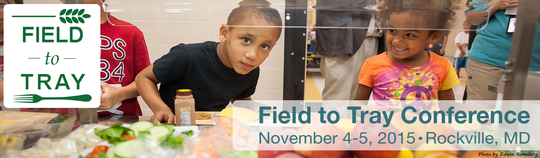
to Tray Conference: Strengthening Farm to School Purchasing in the Mid-Atlantic will bring together farmers, food
service directors, suppliers and other stakeholders from the
region for a day of digging in to local food procurement strategies, and is supported
by a 2015 USDA Farm to School Grant. The conference will be November 4-5, 2015 in Rockville, Maryland.
The
Mid-Atlantic region has experienced significant growth in farm to school
practices over the past several years, including the creation of training
modules to support farm to school across Pennsylvania, the emergence of
innovative strategies to move local food to schools in rural West Virginia, and
the creation of strong policies supporting farm to school practices in New
Jersey and the District of Columbia. This conference will be a sharing,
learning and networking opportunity for key farm to school players in the region.
Find
information on registration, the agenda, and logistics by clicking below. Sign
up by September 18 for an early-bird discount!

Webinars
Nutrition Education
in the Classroom and Beyond: Tips for Educators
Hosted by USDA's Team Nutrition
Wednesday, September 16, 3:00-4:00 pm EDT
Go back to
school with tools and resources that support healthy learning! This webinar will discuss innovative ways
elementary and middle school educators can integrate nutrition education into
core subjects like math, language arts, and science. New teaching resources
available from Team Nutrition for the 2015-2016 School Year will be shared.
Audience: Educators, administrators, parents, dietitians, school nutrition professionals
– and anyone else who is interested in student wellness and success!

Kids Eat Real Food ‒ Marketing and Lunchroom Education
Hosted by The Lunch Box
Thursday, September 24, 2:00-3:00 pm EDT
Join Curry Rosato, Farm to School and Events Coordinator
and Chef Ann Cooper, Director of Boulder Valley School District, Boulder,
CO to learn the techniques that have brought Boulder’s kids back to the lunch
program and raised participation every year since 2009. Learn marketing
best practices and turn your students into “real food” aficionados.

The Numbers ‒ Financial Management and Data Tracking
Hosted by The Lunch Box
Thursday, October 22nd, 4:00-5:00 pm
EDT
Join Nancy Howatt, The Lunch Box expert on Fiscal Management
in school food programs. With over two decades of school district
administration experience, Nancy will guide you through the critical areas for
fiscally managing your program while taking on new challenges of scratch
cooking, facility acquisition and improvement, assessing revenue opportunities
and more. The Lunch Box fiscal tools were developed to provide you with
information to make good management decisions while not adding significant time
to your work load.

Bits from Blogs
Posted
by Christina Conell and Carolyn Smalkowski, USDA Food and Nutrition
Service
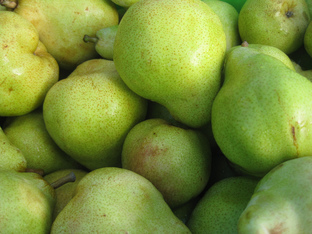
Fruits and vegetables are at the top of USDA’s back to school list, and just
in time for the new school year, the Pilot
Project for Procurement of Unprocessed Fruits and Vegetables is making it
easier for schools in eight states to purchase them. The 2014 Farm Bill
authorizes the pilot in not more than eight states participating in the National
School Lunch Program, and provides them with an opportunity to better
access nutritious foods. The pilot also helps create and expand market
opportunities for our nation’s fruit and vegetable producers, opening the door
for a variety of vendors, small growers, food hubs and distributors to supply
unprocessed fruits and vegetables to participating schools.
|

|