|
 Issue III- 2024
|
|
|
Dec 12, 2024: CDER Establishes New Center for Real-World Evidence Innovation
The U.S. Food and Drug Administration’s Center for Drug Evaluation and Research (CDER) announced the new CDER Center for Real-World Evidence Innovation (CCRI), which aims to coordinate, advance, and promote the use of real-world data (RWD) and real-world evidence (RWE) in regulatory decision-making across CDER. FDA envisions CCRI as a collaborative core for innovation and a focal point to ensure CDER promotes consistency and transparency on topics related to RWD and RWE. Learn more.
Nov 1, , 2024: FDA Voices: FDA Takes Exciting Steps Toward Establishing the Rare Disease Innovation Hub
FDA has published the FDA Voices: “FDA Takes Exciting Steps Toward Establishing the Rare Disease Innovation Hub,” by Patrizia Cavazzoni, M.D., director of the FDA’s Center for Drug Evaluation and Research (CDER) and Peter Marks, M.D., Ph.D., director of the FDA’s Center for Biologics Evaluation and Research (CBER). The FDA Rare Disease Innovation Hub (the Hub) is an FDA cross-center program that will act as the single point of engagement and connection with outside parties for drug and biological product development and as a forum for CBER and CDER to collaborate on cross-cutting rare disease-related issues. Through the Hub, FDA plans to foster a community at the FDA for open dialogue and knowledge sharing to identify new approaches to drug and biologic development and overcome hurdles that have traditionally impeded progress for rare disease treatments.
October 15, 2024: 2024 Accelerating Rare disease Cures (ARC) Program Annual Report
FDA’s Center for Drug Evaluation and Research (CDER) has released the 2024 Accelerating Rare disease Cures (ARC) Program Annual Report. Since its launch in 2022, CDER’s ARC Program has become a key resource for the rare disease community and a driver of innovation in rare disease drug treatments. Having built a strong foundation, the ARC Program is enthusiastic about the upcoming year as it continues to strengthen collaboration to accomplish even more progress in rare disease drug development.
September 16, 17, 2024: FDA publishes three guidances related to the conduct of clinical trials
- The draft guidance Considerations for Generating Clinical Evidence From Oncology Multiregional Clinical Development Programs, when finalized, will provide sponsors with recommendations for conducting multiregional clinical trials (MRCT) in support of applications for drugs intended to treat cancer.
SPOTLIGHT ON CDER SCIENCE

Using Machine Learning to Identify a Suitable Patient Population for Anakinra for the Treatment of COVID-19
CDER has used artificial intelligence/machine learning (AI/ML) to develop a method to identify patients who will likely benefit from a drug therapy. In 2022, FDA issued an Emergency Use Authorization (EUA) for anakinra (Kineret) for the treatment of COVID-19 in hospitalized adults with pneumonia requiring supplemental oxygen (low- or high-flow oxygen) who are at risk of progressing to severe respiratory failure and likely to have an elevated plasma soluble urokinase plasminogen activator receptor (suPAR). However, an approved suPAR commercial test is not available in the U.S., which created a challenge during CDER’s review of the EUA application when identifying the patient population most likely to benefit from anakinra. To overcome this challenge, the CDER review team used AI/ML to facilitate the identification of patients who could receive the drug under the EUA making this the first time that CDER used AI/ML for a regulatory decision. Learn more.
|
|
|

Bumetanide as a Model NDSRI Substrate: N-nitrosobumetanide Impurity Formation and its Inhibition in Bumetanide Tablets
CDER researchers conducted a study to evaluate pH adjustment and addition of antioxidants in tablet formulations using bumetanide (BMT) as a model drug product to mitigate the formation of N-nitrosobumetanide (NBMT). NBMT is a known nitrosamine drug substance-related impurity (NDSRI) that may form in BMT. Two approaches previously recommended by CDER to mitigate small-molecule nitrosamine formation in drug products during formulation include the use of antioxidants (inhibitors) or increasing the pH of the product formulation. But limited research on these control strategies exists for NDSRIs. This research helped support CDER’s Control of Nitrosamine Impurities in Human Drugs guidance by providing manufacturers with potential approaches to drug formulation to mitigate or prevent formation of NDSRIs in solid state (tablet) drug products. Learn more.
|
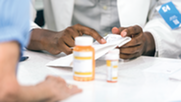
Prescriber Perceptions of Boxed Warnings: A Qualitative study
CDER and outside researchers conducted a qualitative study to explore how health care providers (HCPs) consider a boxed warning (BW) when they are making treatment decisions for their patients, and how HCPs communicate with patients about BW information. While BWs are an important risk management tool, little is known about their intended – and potentially unintended—impacts on HCP prescribing or patients’ use of medicines that have a BW. Interviews with HCPs in this study revealed that a BW in labeling for a prescription medicine is only one of several factors that can influence providers’ treatment decisions, and that the potential influence of the BW depends on the context. Learn more.
|

Healthcare Providers’ Use of a Concise Summary to Prescribe for Lactating Patients
In prescribing information (PI) included in prescription drug labeling, there is a balance between providing relevant information necessary for clinical decision-making and being concise. This is particularly evident for lactation data, where animal data may be available, but clinical (human) lactation data are limited or absent. To that end, CDER collaborated with CBER and outside researchers to conduct a study to explore if adding a concise summary of risk information would more succinctly communicate drug safety information to busy healthcare providers (HCPs), and, in combination with the Lactation subsection narrative in PI, support HCP clinical decision-making for lactating patients. This research advances CDER’s efforts to understand how HCPs interpret the Lactation subsection of the PI and how the PI can be improved to better communicate information to HCPs about the safety of prescription drugs used during lactation. Learn more.
|
REGULATORY SCIENCE IMPACT STORIES
|
|
Determining topical product bioequivalence with with simulated Raman scattering microscopy |
|

Historically, for topical drug products applied to the skin, bioequivalence (BE) has often been established based on comparative clinical endpoint BE studies. However, such studies are expensive and time-consuming, potentially involving hundreds to thousands of patients in studies with endpoints that take many weeks to months to manifest. To assess more innovative and cost efficient scientifically valid approaches for BE studies of topical drug products, researchers at FDA’s Center for Drug Evaluation and Research (CDER) and researchers at Massachusetts General Hospital, Harvard Medical School, and Massachusetts Institute of Technology conducted a first-of-its-kind study that evaluated the use of noninvasive stimulated Raman scattering microscopy (SRS) to assess topical product bioavailability and BE. The study established both initial feasibility and methodologies to improve reliability and specificity when implementing SRS for assessment of topical product bioavailability and BE measurements. Learn more.
|
Streamlining analysis of ion channels invitro assays to support clinical cardiac safety decision making
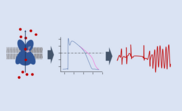
Until recently, it was necessary for most new drugs to conduct a separate clinical study of the drug’s effect on the QT interval as observed on the electrocardiogram to demonstrate that the new drug was not likely to cause a potentially fatal arrythmia called torsade de pointes. Such studies were costly and may have led to discontinuation of promising candidate drugs that did not cause dangerous arrythmias. Developers now have the option of submitting clinical data that is collected during the proposed new drug’s first in human clinical testing together with nonclinical data in which a drug’s effects on cardiac ion channels that control the heart’s rhythm are tested vitro. However, the complex electronic data on ion channel activity submitted to FDA are obtained using multiple experimental approaches and received by the agency in many proprietary formats. In this Impact Story, CDER investigators report on recent progress in developing (in collaboration with the Health and Environmental Sciences Institute) an open data format and an automated analysis and reporting pipeline that streamline and enhance the analysis and interpretation of electrophysiologic data to support clinical cardiac safety decision making. Learn more.
|
PODCAST
|
CDER Small Business and Industry Assistance Chronicles Podcast
In an interview with Dr. Ellicia Weber, Tina Wang and Dr. Paul Schuette describe a risked based approach to centralized statistical monitoring of clinical trial data submitted to the FDA. They explain the motivations for a recently developed centralized statistical monitoring tool and their recent experience using its software, which applies a battery of standard statistical tests to electronic data from various trial sites to identify potential anomalies for follow-up. Dr Schuette is the Deputy Director of the Division of Analytics and Informatics in the Office of Biostatistics in CDER’s Office of Translational Sciences, where Tina Wang serves as a statistician. Learn more.
|
|
 |
|
|

This section provides highlights of select CDER research recently published in scientific journals.
|
Harnessing large language models' zero-shot and few-shot learning capabilities for regulatory research
CDER researchers discuss their recent experience with the implementation of a series open-source large language models within a secure local network and assess their performance on specific tasks involving extracting relevant clinical pharmacology information from regulatory drug labels.
Evaluation of In Vitro Metabolism- and Transporter-Based Drug Interactions with Sunscreen Active Ingredients
CDER’s investigation of the interactions of sunscreen active ingredients with cytochrome P450 proteins involved in drug metabolism and with drug uptake transporters provides evidence to suggest that it is unlikely that the presence of these ingredients in sunscreen products will inhibit either metabolism or transport of co-administered drugs in consumers.
Public and health care provider attitudes, understanding, and behaviors regarding emergency use authorizations: a scoping literature review
CDER investigators and collaborators conducted a review of available studies of the public’s and health care provider’s attitudes, understanding, and behaviors with regard to products authorized under emergency use authorizations (EUAs). They found important knowledge gaps and concerns about safety or the lack of full FDA approval. The review suggests that these factors may contribute to decreased willingness to receive treatments and vaccines that are made available under EUA authority.
Consideration for open-label trials: design, conduct and analysis
CDER authors review how best to design, conduct, and analyze open-label trials to ensure the highest level of study integrity and the reliability of the study conclusions when it is not feasible or ethical to conduct fully blinded trials.
Bayesian Hierarchical Models for Subgroup Analysis
CDER statisticians show how to apply Bayesian Hierarchical Models (BHM) using summary-level statistics and patient-level data for subgroup analysis. They present case studies based on four new drug applications for different kinds of clinical endpoints. The case studies illustrated subgroup treatment effects derived from BHMs are more precise and less heterogenous compared to estimates from traditional subgroup analysis.
|
|
|
FDA’s Regulatory Science
Regulatory Science is the science of developing new tools, standards, and approaches to assess the safety, efficacy, quality, and performance of all FDA-regulated products. Learn more .
FDA: Overview of our Role Regulating and Approving Drugs | Video Series: FDA oversees prescription, generic, biosimilars, and over-the-counter drugs. Learn more.
CDER’s Regulatory Science Program Areas. CDER’s diverse research programs address a wide variety of critical areas that affect drug safety and manufacturing quality. Learn more at https://www.fda.gov/drugs/science-and-research-drugs/cders-regulatory-science-program-areas.
Office of New Drugs- Regulatory Science Research. The Office of New Drugs (OND)-led regulatory science research projects are designed to address knowledge gaps identified during regulatory review of investigational or new drug applications. Learn more.
Office of Generic Drugs- Science and Research. The Office of Research and Standards within the FDA's Office of Generic Drugs (OGD) supports the Science and Research program established under the Generic Drug User Fee Amendments (GDUFA). In collaboration with industry and the public, FDA creates an annual list of its regulatory science initiatives on generic drugs. Learn more.
Research Tools and Resources
Developing and sharing knowledge and scientific resources with researchers in the public and private sectors is at the heart of what CDER scientists do. Learn more about scientific tools and resources at CDER/FDA at https://www.fda.gov/drugs/science-and-research-drugs/research-tools-and-resources.
CDER- Training and Education
Information on learning opportunities for healthcare professionals, researchers in industry and academia, students, and consumers can be accessed at https://www.fda.gov/Training/ForHealthProfessionals/default.htm.
The 2024 OND ORISE Newsletter. This Newsletter is intended to increase awareness of the projects, people, and professional development opportunities associated with the Office of New Drug’s ORISE Summer Fellowship Program. This year’s newsletter focuses on the Indigenous Knowledge Summer pilot program as well as perspectives from fellows who were recruited via the Workforce Recruitment Program.
|
|
|
Information on upcoming meetings, conferences, and workshops sponsored or co-sponsored by CDER, click here.
Some of the events are listed below:
January 22, 2025: BsUFA III Regulatory Science Pilot Program: Program Updates
The U.S. Food and Drug Administration Biosimilar User Fee Act (BsUFA) III Regulatory Science Pilot program is hosting its second virtual event from 1:00 PM - 3:00 PM, ET. The agenda includes a recap of the activities of the pilot program from the last engagement in October, 2023; a status update on the program’s current research portfolio as it relates to the BsUFA III commitments; and presentations and panel discussions by FDA staff. FDA staff will also present the next steps planned for the BsUFA III regulatory science program. There will be an opportunity for feedback and discussion. Learn more.
January 28-29, 2025: Virtual Conference: Knowledge Management and Modernization of Regulatory Quality Assessment and Submissions at FDA
FDA’s Knowledge-aided Assessment and Structured Application (KASA) captures and manages knowledge during the lifecycle of a drug product; establishes rules and algorithms to facilitate risk identification, mitigation, and communication; performs computer-aided analyses of applications for comparison of standards and quality risk for approved drug products and facilities; and provides a structured assessment that minimizes text-based narratives and summarization of information in applications. Intended audience: regulatory science and regulatory affairs professionals and consultants; clinical research coordinators working on clinical trial application filings; and foreign regulators involved in assessment of quality sections in drug submissions. Topics to be discussed: KASA; revision of the ICH M4Q guideline; and pharmaceutical quality chemistry manufacturing and control (PQ/CMC) electronic data standards. Learn more.
April 9 - 10, 2025: Generic Drugs Forum
The annual Generic Drugs Forum is designed to facilitate the development and approval of safe, effective, and high-quality generic medicines. This two-day event brings together FDA subject matter experts from every aspect of the pre-ANDA and ANDA assessment programs, offering unparalleled insights and guidance. Attendees will gain practical regulatory knowledge to enhance their applications, streamline the assessment process, and reduce cycles. The forum's primary goal is to support prospective and current applicants in submitting complete and high-quality submissions, ultimately ensuring timely access to affordable medications that benefit public health. Learn more.
|
|
Employment
FDA continues to recruit and retain a world-class workforce dedicated to protecting and promoting public health. Information on job vacancies, employment events, and hiring programs can be found by following @FDAJobs on Twitter and by visiting FDA’s LinkedIn page, Jobs at CDER, or the Career Opportunities at CDER webpage. In addition, you can contact OTS directly at CDEROTSHires@fda.hhs.gov. Help us spread the news through your social media networks!
FDA-NCATS Translational Science Interagency Fellowship (TSIF)- Submission deadline FEBRUARY 3, 2025
The Translational Science Interagency Fellowship (TSIF) program is jointly sponsored by NCATS and the U.S. Food and Drug Administration (FDA) and aims to provide training in both translational science and regulatory science. The 2025 application window is now open. For information on the available projects, click here. Applications and references are due by 11:59 p.m. EST, February 3, 2025. Click here for more information.
Scientific internships and fellowships
FDA continues to recruit and retain a world-class workforce dedicated to protecting and promoting public health. Information on job vacancies, employment events, and hiring programs can be found by following @FDAJobs on Twitter and by visiting FDA’s LinkedIn page, Jobs at CDER, or the Career Opportunities at CDER webpage. In addition, you can contact OTS directly at CDEROTSHires@fda.hhs.gov. Help us spread the news through your social media networks!
|
|
|
For more information, please visit the FDA In Brief Webpage.
Scientific Internships and Fellowships / Trainees and Non-U.S. Citizens
Whether you’re an undergraduate looking to pursue a career in science, a graduate student seeking experience in regulatory science, a postgraduate looking for fellowship opportunities, or a senior scientist pursuing research experience in your field of expertise, FDA offers you many paths to learning about the exciting field of regulatory science. Click here for more information.
|
|
|
|
|