|
 
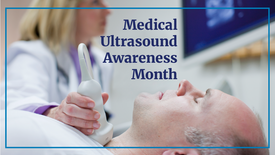
Ultrasound procedures can be used to evaluate, diagnose, or treat a medical condition. Did you know that this form of medical imaging has been used for decades, and it has an excellent safety record?
In observance of Medical Ultrasound Awareness Month, the FDA’s Center for Devices and Radiological Health (CDRH) would like to share some facts about ultrasound imaging (sonography) and remind you of the benefits.
Did you know?
- Ultrasound imaging uses high-frequency sound waves to view inside the body. Because ultrasound images are captured in real-time, they can also show movement of the body's internal organs as well as blood flowing through the blood vessels.
- Ultrasound is the most widely used medical imaging method for viewing and examining the fetus during pregnancy.
Some benefits include:
- There is no ionizing radiation exposure associated with ultrasound imaging, unlike X-rays or other types of imaging.
- Ultrasound can be used to guide the collection of tissue in the body for examination, also known as a biopsy.
- In fetal ultrasound, three-dimensional (3D) ultrasound allows the visualization of some facial features and possibly other parts such as fingers and toes of the fetus.
|
As part of FDA’s ongoing efforts to reduce unnecessary radiation exposure from medical imaging and promote safe use of medical imaging devices, CDRH also studies the biological effects of radiation-emitting products and their potential risks to health. The FDA recommends that you talk with your doctors about the benefits and risks of medical imaging and learn more about examinations that use little or no ionizing radiation exposure, such as ultrasound or magnetic resonance imaging (MRI).
Questions?
If you have questions about ultrasound or other medical imaging, please contact the Division of Industry and Consumer Education.
To receive email alerts and updates on topics related to medical devices and radiation-emitting products, subscribe to CDRH emails.
|
|
|
|