The latest from FDA
Public health emergency response and other updates from FDA since our last email update include:
- November 29, 2022: FDA Roundup including a December 8 Grand Rounds lecture on wastewater surveillance for SARS-CoV-2 variants
- November 28, 2022: FDA approved a new indication (PDF) for Udenyca (pegfilgrastim-cbqv) to increase survival of adult and pediatric patients acutely exposed to myelosuppressive doses of radiation (Hematopoietic Syndrome of Acute Radiation Syndrome, or H-ARS) as could occur after a radiological or nuclear event. Udenyca is the fifth FDA-approved medical countermeasure and first biosimilar that is indicated to increase survival in patients exposed to myelosuppressive doses of radiation.
- November 23, 2022: New video: What does the future hold for FDA’s efforts to address COVID? (YouTube)
- November 22, 2022: FDA Roundup including authorization of a test that detects COVID-19 and influenza at the point-of-care
Quick links: COVID-19 updates from FDA, FDA Monkeypox Response
|
COVID-19 diagnostic updates
FDA authorizes Lucira COVID-19 and Flu Test
FDA issued an EUA (PDF) for the Lucira COVID-19 and Flu Test for use in a point-of-care (POC) setting, following collaboration with the National Institutes of Health (NIH) Independent Test Assessment Program (ITAP).
“This authorization demonstrates our continued commitment to expand the availability of multiplex tests for COVID-19 and flu and provide a streamlined approach to developers to increase the availability of these types of tests,” said Jeff Shuren, M.D., J.D., director of the FDA’s Center for Devices and Radiological Health. “We will continue to work with developers and our government colleagues to ensure the public has access to appropriately accurate and reliable tests they can count on and we stand ready to authorize additional multi-analyte tests, including at-home tests, to meet current public health testing needs.”
The Lucira COVID-19 and Flu Test is a single use molecular test intended for detection of both the SARS-CoV-2 virus and influenza (A or B) if a patient is suspected of respiratory viral infection consistent with COVID-19. The test can be used in persons aged two years or older and is collected by nasal swab by a health care provider in a POC setting. Negative test results should be confirmed with another FDA-authorized molecular test. Negative test results must be combined with clinical observations, patient history and epidemiological information. (November 22, 2022)
FDA authorizes new COVID-19 OTC at-home antigen tests
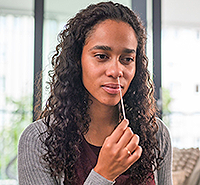
On November 21, 2022, FDA authorized (PDF) the Fastep COVID-19 Antigen Home Test (manufactured by Azure Biotech Inc.), an over-the-counter (OTC) COVID-19 antigen diagnostic test that shows results in 15 minutes. The test can be used as a serial test for people within the first 5 days of symptom onset or for people who do not have symptoms. The Fastep test was validated with data that was gathered through the FDA’s collaboration with the NIH ITAP.
On November 21, 2022, FDA also authorized (PDF) the CorDx COVID-19 Ag Test (manufactured by CorDx, Inc.), an OTC COVID-19 antigen diagnostic test that shows results in 10 minutes. The test can be used as a serial test for people within the first 7 days of symptom onset or for people who do not have symptoms.
These tests should always be repeated if a negative result is found – at least 2 times over 3 days with at least 48 hours between tests if the person has symptoms, or at least 3 times over 5 days with at least 48 hours between tests if the person does not have symptoms.
These tests can be used for people:
- Age 14 years or older with a self-collected nasal swab sample.
- Age 2 years or older when an adult collects the nasal swab sample.
|
 Advanced manufacturing update
FDA & NIST to benchmark and profile mAb and large biomolecule stability
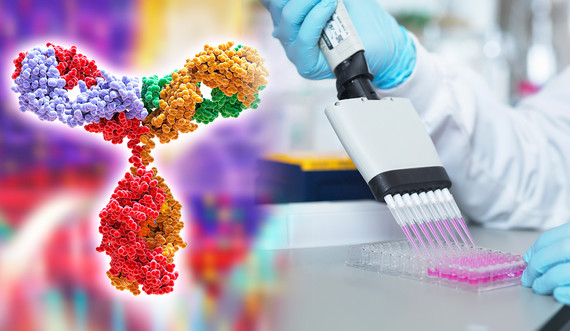
FDA and the National Institute of Standards and Technology (NIST) are collaborating on a project to develop and harmonize methods to standardize the description of the temperature sensitivity and stability of monoclonal antibodies (mAbs) and other large molecules used for vaccines and therapeutics.
When new mAbs and other large biomolecules for drugs and vaccines are developed, they often must be stored in very cold temperatures to ensure their quality and efficacy. This puts a large burden on the supply chain to maintain these freezing temperatures. Testing to reduce cold storage requirements takes time, and there is often not enough information about these biomolecules to predict their temperature sensitivity.
This effort aims to help product developers and the FDA understand molecule stability at different temperatures. This could help simplify test design and reduce testing to more quickly reduce the burden on cold storage supply chains, and help facilitate the distribution of mAbs and other biomolecules during public health emergencies.
This project was funded by the Office of Counterterrorism and Emerging Threats OCET Advanced Manufacturing Program, in the FDA Office of the Chief Scientist.
 Regulatory science funding
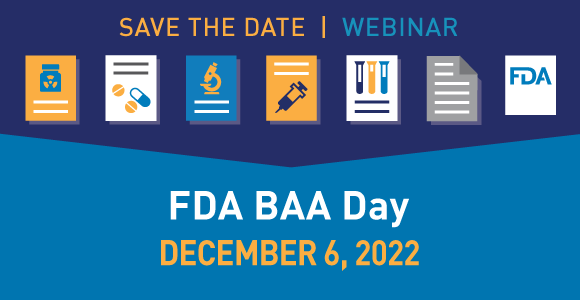
Last chance to register for FDA Broad Agency Announcement (BAA) Day
In November 2022, FDA posted the FY23 FDA Broad Agency Announcement (BAA) for Advanced Research and Development of Regulatory Science. For more information and areas of interest, including medical countermeasures and advanced manufacturing, see the full BAA PDF (788 KB).
We invite interested applicants to join us for FDA BAA Day on December 6, 2022, to learn more about the application process. A draft agenda is now available.
 Events
-
November 30, 2022: Virtual Town Hall Series - Test Development and Validation During Public Health Emergencies (COVID-19 and Monkeypox) (12:05 - 1:00 p.m. ET) - No registration required. There will be an opportunity to ask questions live on the call, and questions may also be submitted in advance by emailing CDRHWebinars@fda.hhs.gov. FDA will hold an additional event in this series on December 14, 2022.
-
December 6, 2022: Register now for FDA Broad Agency Announcement Day (webinar) to learn more about how FDA funds research, the types of projects we’re looking for to support regulatory science and innovation, and how you can apply.
-
December 7-8, 2022: FDA Clinical Investigator Training Course (CITC) 2022 (webinar) - To promote professionalism in the clinical trial industry for individuals involved with FDA submissions (Investigational New Drug (IND) Application, New Drug Application (NDA), Biologic License Application (BLA), and Investigational Device Exemption (IDE)), and to familiarize stakeholders with the regulatory and scientific issues involved in the development and approval of medical products.
-
December 7-8, 2022: The Drug Supply Chain Security Act (DSCSA) Implementation and Readiness Efforts for 2023 (virtual public workshop) - To provide members of the pharmaceutical distribution supply chain and other interested stakeholders an opportunity to share their perspectives on DSCSA implementation.
-
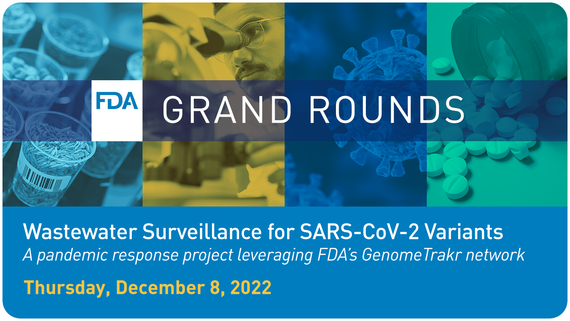
New! December 8, 2022: FDA Grand Rounds: Wastewater Surveillance for SARS-CoV-2 Variants: a pandemic response project leveraging FDA’s GenomeTrakr network - With funding from the American Rescue Plan Act, FDA scientists leveraged an existing laboratory network normally tasked for foodborne pathogen surveillance to start sequencing SARS-CoV-2 from regional wastewater treatment plants across the U.S. New laboratory and analysis methods, public database structures, and FDA dashboard summarizing data collected were developed for this project.
-
December 8, 2022: Blood Products Advisory Committee meeting (virtual) - The committee will meet in open session to hear an overview of the research programs of the Laboratory of Emerging Pathogens and the Laboratory of Molecular Virology, Division of Emerging and Transfusion Transmitted Diseases, Office of Blood Research and Review, Center for Biologics Evaluation and Research.
-
New! December 16, 2022: Machine Learning in Distributed Data Networks like the FDA Sentinel System: Opportunities, Challenges, and Considerations (12:30 - 1:30 p.m. ET, virtual).
In case you missed it
Update your antibodies
The virus that causes COVID-19 changes over time. Get your updated COVID-19 vaccine to help protect against COVID’s worst outcomes. Search in your zip code to find a location where a bivalent COVID-19 vaccine booster dose is available near you. |
|
 |
It's a good time to get your flu vaccine
Influenza (flu) viruses typically spread in fall and winter, with activity peaking between December and February. Getting vaccinated now can lower your chances of getting the flu. Find a flu shot near you. (Tip: You can get your updated COVID-19 vaccine booster at the same time!) |
|
 |
List of hand sanitizers consumers should not use
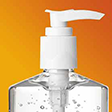
Some hand sanitizers have been recalled and there are more than 280 hand sanitizers the FDA recommends you stop using right away. Bookmark www.fda.gov/handsanitizerlist for the latest, and use our step-by-step search guide to find out if your product is on the list. |
|
 |
Find additional updates on our website and in the Medical Countermeasures Initiative newsletter.
Visit the FDA OMHHE website and follow us on Twitter at @FDAHealthEquity
"Creating a world where health equity is a reality for all." www.fda.gov/healthequity

|