|
|
EPA Region 8 Wyoming Drinking Water
Monthly Newsletter
September and October, 2026
|
|
|

|
Photo Credit: Lucien Gassie, Wyoming Sanitary Survey Rule Manager. Photo taken near Big Horn National Forest, Wyoming.
|
|
|
Lead and Copper Rule Improvements (LCRI) Timeline
Over the past few years, water systems have been focused on new Lead and Copper Rule Revision (LCRR) requirements. On November 1, 2027, the Lead and Copper Rule Improvements (LCRI) will go into implementation. To give you the big picture, please take a look at the LCRI timeline on our website.
By the November 1, 2027, compliance date, water systems will need to:
- Submit an updated Baseline service line inventory with connector information.
- Calculate the replacement pool from the Baseline Inventory.
- Submit a LSL and GRR replacement plan including a plan for verifying remaining unknowns.
- Submit a new tap sampling plan according to the new tiering structure.
- Submit a list of licensed schools and childcares served by your water system.
 Following the November 1, 2027, compliance date, there are additional regulatory requirements including a lower Lead Action Level (reduced to 10 parts per billion), annual service line inventory updates, lead service line replacement, mitigation measures following LSL/GRR/UNK disturbance, new lead tap sampling, new tap sample site plans, new school and childcare sampling, and additional corrosion control requirements. It’s a lot, and EPA will be working with you over the next several years on meeting these new requirements.
For more information, here are some key web links:
LCRI Contacts:
|
|
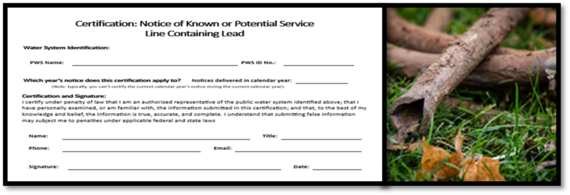
Lead and Copper Rule (LCR) Lead Action Level Exceedance Tier 1 Public Notice
Water systems on reduced annual and triennial monitoring with samples due in 2026 were required to collect their samples by the end of October.
If you collect your samples and receive lead results indicating that your system’s 90th percentile is above the action level of 0.015 mg/L, your system may have an Action Level Exceedance (ALE). If your system has a lead ALE, you are required to do a Tier 1 Public Notice (PN) within 24 hours of receiving your results. You should notify the ALE rule manager, Chelsea Ransom, at ransom.chelsea@epa.gov or 303-312-6876 immediately and proceed forward with issuing your Tier 1 PN. Note you are required to do the Tier 1 PN even if you are unable to get in touch with EPA.
To issue a Tier 1 PN, follow the instructions for filling out and distributing it. The instructions, a template, and certification form can be found on our website in word and pdf formats in English and Spanish.
Due to the tight time constraint, EPA does not need to pre-approve the Tier 1 PN template before it is distributed. Please send your completed Public Notice and certification to EPA as soon as possible after distribution. Note that if a system fails to do the Tier 1 PN within 24 hours of learning of the ALE, EPA is required to issue the public notification on behalf of the water system. EPA Region 8 would do this as a public service announcement in the media.
|
|
EPA Releases New Guidance to Reduce Lead Exposure in Drinking Water, Protect American Children
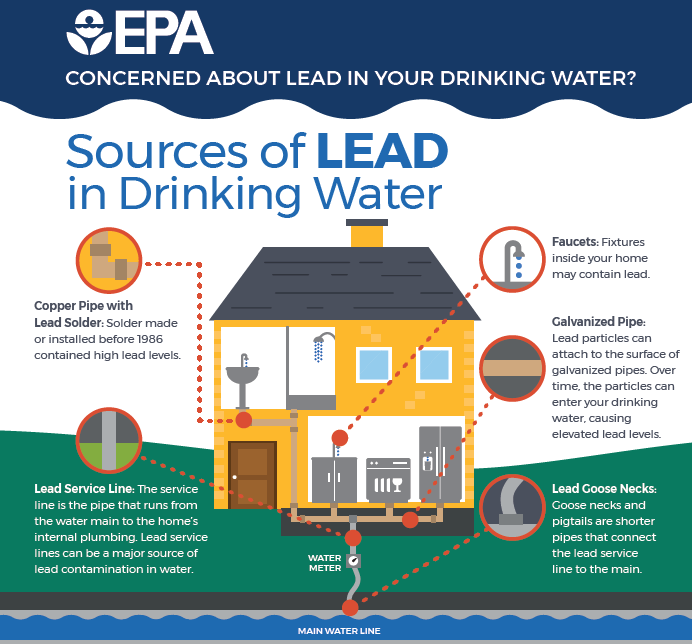
On August 21, 2026, EPA released guidance to help drinking water systems that are working to keep their communities safe from lead. This guidance advances the agency’s commitment to clear and plain language communication while sharing information, definitions, and useful examples to help water systems comply with lead pipe replacement requirements of the Lead and Copper Rule. Reducing exposure to lead—a powerful neurotoxin that is especially dangerous to children—advances the Trump EPA’s commitment to Making America Healthy Again.
“The agency’s efforts to reduce lead in drinking water started under the first Trump Administration and continue today under Administrator Zeldin’s leadership,” said EPA Assistant Administrator for Water Jess Kramer. “EPA is committed to supporting local water systems as they identify and remove lead pipes. Today, we are providing practical, clear, and plain language guidance clarifying existing federal requirements. This action complements federal funding and technical assistance in a holistic approach.”
EPA is releasing two documents, Access Tips and Service Line Inventory Tips, to provide practical information to help water systems and states implement the Lead and Copper Rule Improvements (LCRI). In April 2026, EPA sought the public’s input on these two Tips documents and EPA considered the comments received in the development of these final resources.
|
|
Innovative Water Infrastructure Workforce Development Program
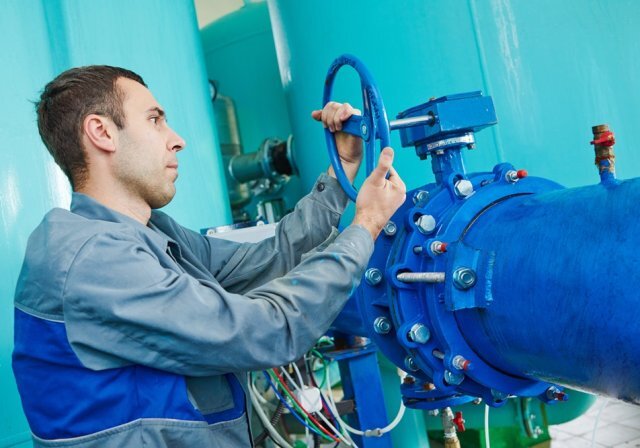
On August 19, 2026, EPA announced the availability of $10.8 million in grant funding to support training for workers in the water sector. These essential workers play a key role in treating our nation’s drinking water and providing wastewater services that protect human health and the environment.
Enhancing recruitment and training for the water sector workforce is more important than ever in light of anticipated retirements, aging water infrastructure, evolving technologies used in the sector, and emerging risks like cyberattacks. This grant builds on the agency’s recent roundtable discussing how to help recruit and retain individuals into meaningful careers in water and to identify opportunities where EPA can help reduce barriers and improve interstate coordination.
|
|
EPA Launches Scientific Study to Strengthen Nation’s Understanding of Potential Pollutants
On September 9, 2026, EPA announced a new scientific study using cutting-edge methods to improve the agency’s understanding of what pollutants may be present in drinking water. This groundbreaking new research by EPA scientists goes beyond traditional testing methods to screen for a broad array of pollutants, including pharmaceuticals, PFAS, and more than 1,000 potential contaminants. This action advances EPA’s commitment to help Make America Healthy Again while following gold standard science.
“We have heard loud and clear that Americans are concerned about potential unknown pollutants lurking in their drinking water. The Trump EPA is committed to getting to the bottom of this, so that Americans can feel confident about the safety of their drinking water,” said EPA Administrator Lee Zeldin. “EPA’s state-of-the-art study will shed light on this issue and complement the actions we are already taking under the Safe Drinking Water Act. What we learn will provide clarity and peace of mind while guiding the agency’s continued efforts to Make America Healthy Again.”
|
|
Free Technical Assistance and Upcoming Webinar for Water Sector Utilities on Natural Hazard Resilience
EPA’s Strengthening Water Infrastructure for Tomorrow (SWIFT) Initiative offers free natural hazard risk assessment technical assistance and webinars to support drinking water, wastewater, and stormwater utilities in building resilience to natural hazards and disasters.
SWIFT technical assistance includes:
- Development of or updates to Risk and Resilience Assessments (RRAs) and Emergency Response Plans (ERPs), which certain community water systems are required to conduct under section 1433 of the Safe Drinking Water Act (SDWA).
- Identification of vulnerable infrastructure assets and estimation of damage likelihoods;
-
Natural hazards data to support risk assessments and RRAs;
- Identification of options for infrastructure and operational changes to increase resilience;
-
Assessments of risk including impacts to public and environmental health;
-
Preliminary business case for investments based on estimated costs and risk reduction; and
- Information on potential sources of funding for investments in resilience building.
If you are a utility interested in learning more about free, direct, technical assistance to complete a Natural Hazard Risk Assessment, click the button below to connect with SWIFT.

|
|
Public Water System Facility and Contact Changes
Please contact EPA Region 8 Drinking Water Program if your system has a change in the treatment process; you add or remove a water source; there is a change in the number of people served or the number of water connections; or different contact information becomes available for your water system. This allows us to keep you up to date on monitoring requirements and keeps our inventory current. Failure to notify EPA about water source or treatment changes may result in a violation.
|
|
|
EPA Region 8 Drinking Water Program Contacts
- Kyle St Clair, Wyoming Liaison – 303-312-6791 – stclair.kyle@epa.gov
- Rob Parker, Field Services and Tribal Section Supervisor – 303-312-6664 – parker.robert@epa.gov
- Seth Tourney, Rule Implementation Section Supervisor – 303-312-6579 – tourney.seth@epa.gov
- Ándie Trujillo Guajardo, Partnerships and Data Section Supervisor – 303-312-6454 – guajardo.andrea@epa.gov
- If there is an after-hours or holiday emergency, please call 303-312-6327.
Questions related to a specific newsletter article, please contact:
|
|
|
|
|
|