|
EPA Region 8 Wyoming Drinking Water
Monthly Newsletter
July, 2026
|
|
|
|
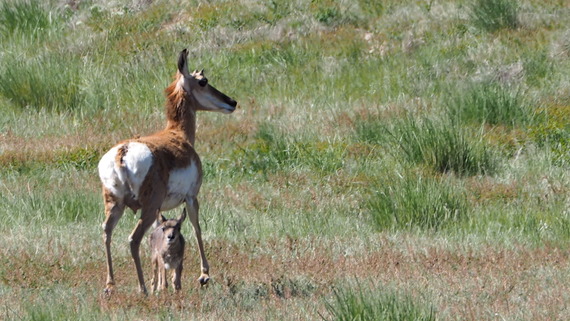
Photo Credit: Lucien Gassie, Wyoming Sanitary Survey Rule Manager. Photo taken near Rolling Hills, Wyoming.
|
|
|
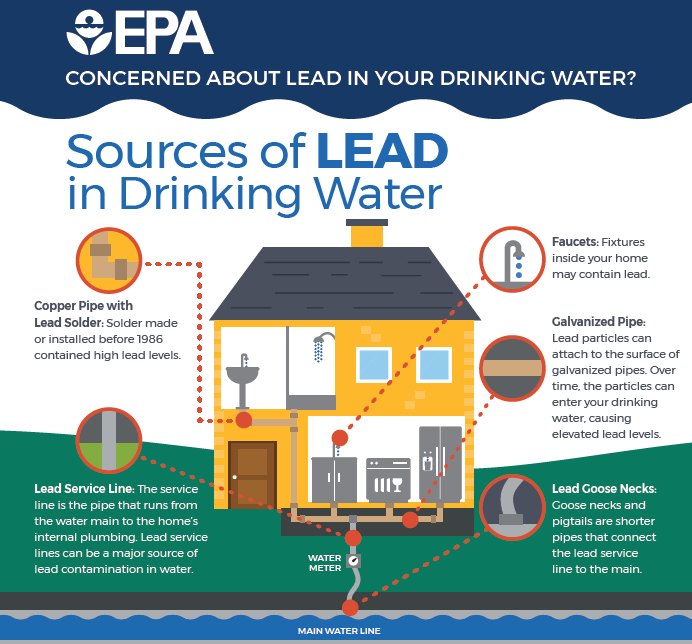
Lead and Copper Rule Lead Action Level Exceedance Tier 1 Public Notice
It’s that time of year again! Systems on reduced annual and triennial monitoring with samples due in 2026 are required to collect their samples between now and the end of September. If you are unsure where to collect your samples, please reach out to Bolor Bertelmann at bertelmann.bolor@epa.gov.
If you collect your samples and receive lead results indicating that your system’s 90th percentile is above the action level of 0.015 mg/L, your system may have an Action Level Exceedance (ALE). If your system has a lead ALE, you are required to do a Tier 1 Public Notice (PN) within 24 hours of receiving your results. You should notify the ALE rule manager, Chelsea Ransom, at ransom.chelsea@epa.gov or 303-312-6876 immediately and proceed forward with issuing your Tier 1 PN. Note you are required to do the Tier 1 PN even if you are unable to get in touch with EPA.
To issue a Tier 1 PN, follow the instructions for filling out and distributing it. The instructions, a template, and certification form can be found on our website in word and pdf formats in English and Spanish.
Due to the tight time constraint, EPA does not need to pre-approve the Tier 1 PN template before it is distributed. Please send your completed Public Notice and certification to EPA as soon as possible after distribution. Note that if a system fails to do the Tier 1 PN within 24 hours of learning of the ALE, EPA is required to issue the public notification on behalf of the water system. EPA Region 8 would do this as a public service announcement in the media.
|
|
EPA announces $800,000 for Small Businesses Developing Environmental Technologies in Wyoming
U.S. Environmental Protection Agency (EPA) recently announced $800,000 in funding to two recipients to develop and commercialize environmental technologies through EPA’s Small Business Innovation Research (SBIR) program. EPA is one of 11 federal agencies participating in the SBIR program, which is a competitive, award-based initiative that helps small businesses explore technological solutions with the goal of bringing successful innovations to market. These awards will support solutions to complex environmental challenges, including monitoring water quality, addressing PFAS contamination, reducing indoor air toxins and pathogens, enhancing recycling systems, and developing safer chemicals.
“Congratulations to these small businesses for their dedication to driving innovation and tackling today’s environmental challenges. Their groundbreaking ideas not only address critical needs but also pave the way for a healthier planet and a stronger, more sustainable economy,” said Teresa Booeshaghi, Associate Administrator for EPA’s Office of Applied Science and Environmental Solutions.
“Small businesses are driving the next generation of environmental technologies, and these Region 8 awardees are leading that effort,” said Regional Administrator Cyrus Western. “These grants recognize innovation and help advance technologies that address real-world environmental challenges while supporting jobs, American ingenuity and long-term economic growth throughout our region.”
|
|

Keep Water Flowing: Free Cybersecurity Training
Cybersecurity 102 Training
Wednesday, August 5, 2026 11:00 am - 12:30 pm MDT
This training builds on EPA’s Cybersecurity 101 Training for Water Systems and provides deeper insight into cybersecurity for those with basic knowledge, with an emphasis on operational technology (OT). Whether you are an information technology (IT) professional or simply interested in protecting yourself online, this training offers practical skills for navigating today’s digital threats.
Cybersecurity 103 Training
Wednesday, August 12, 2026 11:00 am - 12:30 pm MDT
This training builds on Cybersecurity 102 and provides additional information on threats facing the water sector. Participants will learn about state-sponsored threats, risks to industrial control systems (ICS) and supervisory control and data acquisition (SCADA) systems, malware, vulnerabilities in human-machine interfaces (HMIs), incident reporting, and available cybersecurity resources
Cybersecurity Refresher Training
Wednesday, August 19, 2026 11:00 am - 12:00 pm MDT
This refresher training for water and wastewater utilities reinforces foundational cybersecurity concepts covered in Cybersecurity 101, 102, and 103.
Water Cybersecurity Assessment Tool Training
Wednesday, August 26, 2026 11:00 am - 12:30 pm MDT
EPA will demonstrate how to use the Water Cybersecurity Assessment Tool (WCAT) to conduct cybersecurity assessments at water and wastewater systems.
Cybersecurity Procurement Checklist Tool Training
Thursday, August 27, 2026 11:00 am - 12:30 pm MDT
EPA will demonstrate how to use the Cybersecurity Procurement Evaluation Checklist for Drinking Water and Wastewater Systems to assess and compare cybersecurity vendors.

|
|
Emergency Response Planning Support for Water Sector Utilities
Strengthen you utility’s resilience with free support from EPA’s Strengthening Water Infrastructure for Tomorrow (SWIFT) Initiative. SWIFT offers natural hazard risk assessment technical assistance and webinars to support drinking water, wastewater, and stormwater utilities.
SWIFT technical assistance can support the development of or updates to Emergency Response Plans (ERPs) required under section 1433 of the Safe Drinking Water Act (SDWA) for community water systems (CWSs) serving over 3,300 people. Based on the findings of risk and resilience assessments, SWIFT can help to incorporate the following into an ERP[1]:
-
Strategies and resources to improve the resilience of the system, including the physical security and cybersecurity of the system;
-
Procedures that can be implemented in the event of a malevolent act or natural hazard;
-
Actions, procedures and equipment which can lessen the impact of a malevolent act or natural hazard on the supply of drinking water; and
-
Strategies that can be used to aid in the detection of malevolent acts or natural hazards.
If your utility is interested in learning more about free, direct, technical assistance to complete an ERP, click the button below to connect with SWIFT.
|
|
Public Water System Facility and Contact Changes
Please contact EPA Region 8 Drinking Water Program if your system has a change in the treatment process; you add or remove a water source; there is a change in the number of people served or the number of water connections; or different contact information becomes available for your water system. This allows us to keep you up to date on monitoring requirements and keeps our inventory current. Failure to notify EPA about water source or treatment changes may result in a violation.
|
|
|
EPA Region 8 Drinking Water Program Contacts
- Kyle St Clair, Wyoming Liaison – 303-312-6791 – stclair.kyle@epa.gov
- Rob Parker, Field Services and Tribal Section Supervisor – 303-312-6664 – parker.robert@epa.gov
- Seth Tourney, Rule Implementation Section Supervisor – 303-312-6579 – tourney.seth@epa.gov
- Ándie Trujillo Guajardo, Partnerships and Data Section Supervisor – 303-312-6454 – guajardo.andrea@epa.gov
- If there is an after-hours or holiday emergency, please call 303-312-6327.
Questions related to a specific newsletter article, please contact:
|
|
|
|
|
|