|
EPA Region 8 Wyoming Drinking Water
Monthly Newsletter
May, 2026
|
|
|

|
Photo Credit: Lucien Gassie, Wyoming Sanitary Survey Rule Manager. Photo taken near Rolling Hills, Wyoming.
|
|
|
Sanitary Survey Tech Tips: New and Improved!
If you haven’t bookmarked the Drinking Water System Operations in Wyoming and on Tribal Lands in EPA Region 8 webpage yet - it is a great go-to resource for drinking water system operation. Under the “Operations and Assistance” heading, we are excited to announce that we have updated our Sanitary Survey Tech Tips for a quick, easy, and informative way for you to check and make sure that your public water system facilities are in compliance with EPA Region 8 policies. These tech tips will help systems avoid significant deficiencies during a sanitary survey and are geared towards preventing openings into water system facilities which can allow animals and other contamination entry points into the drinking water.
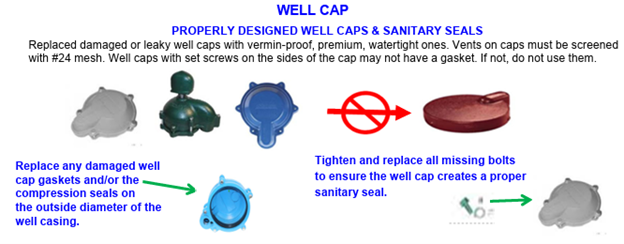
The most common issue identified with ground water wells when conducting a sanitary survey is lack of proper sealing – either because of defective/lacking well cap sanitary seals, or openings at the air vents and electrical connections. The Simple Fixes for Wellheads Tech Tip shows which well caps are acceptable and how to ensure proper screening and sealing.
Water storage is often necessary to guarantee a complete and uninterrupted supply. One of the weakest sanitary links in any drinking water system is storage. When water is at atmospheric pressure in a storage tank, openings into tanks can be difficult or impossible to detect without frequent and thorough inspections. Drinking water storage also means a change in its quality, since chemical, physical, and microbiological processes take place in storage.
To prevent water quality problems, attention must be paid to storage tank construction, positioning, design, operation, and maintenance, with the aim of complete water mixing, short residence times, and minimal temperature changes. Storage tanks should be sealed off from contamination at all points of opening. EPA Region 8 has tech tips for each storage tank component:
A common sanitary survey finding is a tank opening that is not covered with non-corrodible #24-mesh screen. Our Sanitary Protection of Drinking Water Storage Tanks: #24-Mesh Non-corrodible Screen Tech Tip will help you with the whys and hows of installing that screen.
Polyethylene and other plastic storage tanks are becoming popular. Like concrete, fiberglass, and steel tanks, these plastic tanks must have properly configured hatches, air vents, and overflows, and preferably drains. For all types of tanks, plastic or other material, that are located in a fully enclosed indoor environment, we have a separate Indoor Storage Tanks Tech Tip. Plastic tanks that are located outdoors are subject to all outdoor tank requirements.
EPA Region 8 is also starting to design tech tips to help with the increasingly common threats to your public water system – things like flooding, wildfire, and cyber-attacks. Our Flooding Mitigation Tech Tip is now available. Wildfire and cybersecurity tech tips are in development.
The regulations that these tech tips cover are based on scientific principles to reduce the public health risks of drinking water systems. EPA Region 8 has created these tips to make regulatory compliance in operating your public water system a little clearer, and hopefully a little easier. We encourage you to explore these updated resources and ensure your water system facilities meet requirements outlined in the tech tips.
Contact: Lucienne Gassie, gassie.lucien@epa.gov with any questions or comments on the Sanitary Survey Tech Tips.
|
|
EPA Region 8 Service Line Replacement Plan – PWS Instructional Worksheet
All water systems with one or more lead, galvanized requiring replacement (GRR), or lead status unknown service lines in their service line inventory must create a service line replacement plan and submit it to EPA Region 8 by November 1, 2027. The service line replacement plan must be sufficiently detailed to ensure a system is able to comply with the service line inventory and replacement requirements of 40 CFR 141.84.
To assist water systems within Wyoming and on Tribal Lands in EPA Region 8, EPA Region 8 has created a fillable instructional worksheet - a guidance tool provided by the Primacy Agency (EPA Region 8) - to assist public water systems in Wyoming and Region 8 Indian Country in creating a Service Line Replacement Plan. This worksheet can be found near the top of our Lead Service Line Inventories in Wyoming and on Tribal Lands in EPA Region 8 webpage, and at the link below.
Note that there are two files: 1) Service Line Replacement Plan - PWS Instructional Worksheet and 2) Appendix to the EPA Region 8 Service Line Replacement Plan.
Creating a clear actionable service line replacement plan: Why details matter
A strong plan is essential for identifying, removing and replacing all lead and GRR service lines in the distribution system to protect public health from exposure to lead in drinking water. It lays out how your water system will accomplish a successful lead service line replacement program that identifies the material of unknown service lines, validates the accuracy and reliability of records used to classify non-lead service lines, and replaces all lead and GRR service lines in the distribution system in 10 years or less.
The replacement plan puts into motion the continuous improvement model of identifying service line materials, evaluating reliability of records, conducting investigations, replacing lead service lines, and updating information in the inventory until the inventory is complete with all non-lead service lines. With clear steps, you can set steady goals, keep crews busy, control costs, and protect customers.
The EPA Region 8 Service Line Replacement Plan Instructional Worksheet and Appendix provides water systems with a template and guidance for creating a replacement plan that includes all required sections. This plan must be sufficiently detailed to ensure a system is able to comply with all of the service line inventory and replacement requirements of 40 CFR 141.84. Critical elements that should be well defined and described in your Service Line Replacement Plan include, but are not limited to, the following:
- How you will verify unknown service lines: Describe which methods you will use (records checks, meter pit checks, small test digs, inside point‑of‑entry checks), where and when each method will be used, and how results will be documented.
- How you will replace lead and GRR service lines: Explain full replacement from main to house, approved pipe materials, how crews work on both sides, and how you avoid partial jobs. Include site restoration and safety steps.
- Timeline goal setting: How will the system meet the cumulative average replacement rate, complete validation by the required deadline, and identify all unknowns by the required deadline.
- Customer contact: Describe how and when you will notify customers, get permission to work on private property, and distribute information on mitigation steps.
- Paying for the work: Show how you will fund the replacement work (rates, fees, grants, loans, cost‑share, aid for low‑income customers) and, if customers will be charged the cost of replacement, whether and how the system plans to assist customers who are unable to pay.
- People, contracts, and schedule: Note who does the work (staff vs. contractors), when bids go out, crew capacity, and how jobs can be bundled to meet schedules.
- Prioritization of the work: Start where risk is highest (older homes, places with past lead finds, schools and childcare facilities) while keeping work efficient.
Bottom line: A clear, detailed plan helps you identify unknowns efficiently, replace faster, spend wisely, and keep your community safe and informed.
Contact: Erica Wenzel, wenzel.erica@epa.gov, Lead Service Line Inventories and Replacement
|
|
Free Technical Assistance and Today's Webinar for Water Sector Utilities on Natural Hazard Resilience
 EPA’s Strengthening Water Infrastructure for Tomorrow (SWIFT) Initiative offers free natural hazard risk assessment technical assistance and webinars to support drinking water, wastewater, and stormwater utilities in building resilience to natural hazards and disasters.
SWIFT technical assistance includes:
- Development of or updates to Risk and Resilience Assessments (RRAs), which certain CWSs are required to conduct under Section 1433 of the Safe Drinking Water Act (SDWA) [1].
- Identification of vulnerable infrastructure assets and estimation of damage likelihoods;
-
Natural hazards data to support risk assessments and RRAs;
- Identification of options for infrastructure and operational changes to increase resilience;
-
Assessments of risk including impacts to public and environmental health;
-
Preliminary business case for investments based on estimated costs and risk reduction; and
- Information on potential sources of funding for investments in resilience building.
If you are a utility interested in learning more about free, direct, technical assistance to complete a Natural Hazard Risk Assessment, click the button below to connect with SWIFT.
Hear directly from utility representatives that have engaged in SWIFT TA to build system resilience to natural hazards in the upcoming webinar.
Webinar Details
Date: Today, Wednesday May 20, 2026
Time: 11:00 a.m. – 12:00 p.m. Mountain Daylight Time
|
|
Free EPA Safe Drinking Water Act Section 1433 Webinar
Safe Drinking Water Act (SDWA) section 1433, which was revised by America's Water Infrastructure Act (AWIA) section 2013, requires community water systems (CWS) serving over 3,300 people to prepare (or revise) and certify risk and resilience assessments (RRAs) and emergency response plans (ERPs) to the U.S. Environmental Protection Agency (EPA) every five years. Recertification deadlines are coming up for many CWSs in 2026. EPA is offering the following webinar to help CWSs understand the requirements and prepare for upcoming deadlines.
Addressing Power Outages in RRAs and ERPs Webinar
Power outages are common across many hazards. Maintaining power is critical to continued water service. This webinar will share practical ways water systems could address loss of power in their RRA and ERP.
Webinar Details
Date: Wednesday May 27, 2026
Time: 12:00 p.m. – 1:00 p.m. Mountain Daylight Time
|
|
|
Free Innovative Financing for Capital Projects Webinar
Capital improvement projects are critical to delivering public services, supporting economic development and improving quality of life. Well-maintained streets, dependable water infrastructure, and quality open space strengthen communities and attract businesses and new residents. Yet many communities struggle to fund these investments.
This webinar brings together experienced practitioners to share how their communities have leveraged private-sector investment to deliver infrastructure improvements including nature-based solution, without undermining affordability. Panelists will discuss innovative approaches, lessons learned from public-private partnerships, and practical steps for structuring financing for clean water. Whether you oversee capital improvement programs or municipal budgets, you’ll leave with ideas for setting up stormwater projects and thinking creatively about long-term funding.
No CEU or PE credits will be given. This webinar will be recorded.
Webinar Details
Date: Tuesday June 2, 2026
Time: 11:00 p.m. – 12:30 p.m. Mountain Daylight Time
|
|
Free Building Water Sector Natural Hazard Resilience in Montana and Neighboring States Workshop
US EPA’s Strengthening Water Infrastructure for Tomorrow (SWIFT) initiative is hosting a free workshop highlighting the availability of no-cost technical assistance support through EPA SWIFT, natural hazard resilience, watershed health, and funding opportunities for drinking water, wastewater, and stormwater (water sector) utilities in Montana and neighboring states.
Attendees can register to attend either the full-day, in-person workshop or abbreviated online option. Continuing education units (CEUs) will be available for Montana, Idaho, and Wyoming drinking water and wastewater utility operators that attend in-person only. However, upon request, certificates of attendance and other supporting documentation can be provided for virtual attendees who wish to individually pursue CEUs from their certifying organization.
Workshop Details
Date: Wednesday, July 8, 2026
In Person Option: 9:00 AM – 3:00 PM Mountain Daylight Time (Montana Wild; Helena, MT)
Online Option: 9:00 AM – 12:00 PM Mountain Daylight Time (Zoom)
|
|
Public Water System Facility and Contact Changes
Please contact EPA Region 8 Drinking Water Program if your system has a change in the treatment process; you add or remove a water source; there is a change in the number of people served or the number of water connections; or different contact information becomes available for your water system. This allows us to keep you up to date on monitoring requirements and keeps our inventory current. Failure to notify EPA about water source or treatment changes may result in a violation.
|
|
|
EPA Region 8 Drinking Water Program Contacts
- Kyle St Clair, Wyoming Liaison – 303-312-6791 – stclair.kyle@epa.gov
- Rob Parker, Field Services and Tribal Section Supervisor – 303-312-6664 – parker.robert@epa.gov
- Seth Tourney, Rule Implementation Section Supervisor – 303-312-6579 – tourney.seth@epa.gov
- Ándie Trujillo Guajardo, Partnerships and Data Section Supervisor – 303-312-6454 – guajardo.andrea@epa.gov
- If there is an after-hours or holiday emergency, please call 303-312-6327.
Questions related to a specific newsletter article, please contact:
|
|
|
|
|
|