|
EPA Region 8 Wyoming Drinking Water
Monthly Newsletter
April, 2026
|
|
|
|
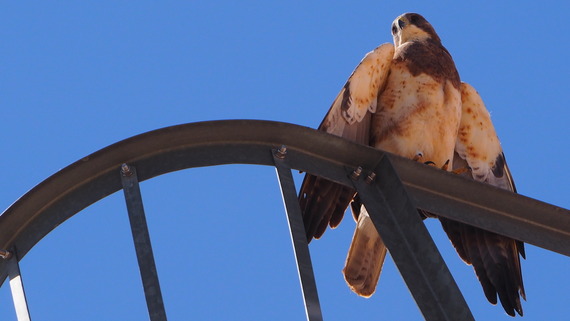
Photo Credit: Lucien Gassie, Wyoming Sanitary Survey Rule Manager. Photo taken near Laramie, Wyoming.
|
|
|
EPA Region 8 Service Line Replacement Plan – PWS Instructional Worksheet
All water systems with one or more lead, galvanized requiring replacement (GRR), or lead status unknown service lines in their service line inventory must create a service line replacement plan and submit it to EPA Region 8 by November 1, 2027. The service line replacement plan must be sufficiently detailed to ensure a system is able to comply with the service line inventory and replacement requirements of 40 CFR 141.84.
To assist water systems within Wyoming and on Tribal Lands in EPA Region 8, EPA Region 8 has created a fillable instructional worksheet - a guidance tool provided by the Primacy Agency (EPA Region 8) - to assist public water systems in Wyoming and Region 8 Indian Country in creating a Service Line Replacement Plan. This worksheet can be found near the top of our Lead Service Line Inventories in Wyoming and on Tribal Lands in EPA Region 8 webpage, and at the link below.
Note that there are two files: 1) Service Line Replacement Plan - PWS Instructional Worksheet and 2) Appendix to the EPA Region 8 Service Line Replacement Plan.
Creating a clear actionable service line replacement plan: Why details matter
A strong plan is essential for identifying, removing and replacing all lead and GRR service lines in the distribution system to protect public health from exposure to lead in drinking water. It lays out how your water system will accomplish a successful lead service line replacement program that identifies the material of unknown service lines, validates the accuracy and reliability of records used to classify non-lead service lines, and replaces all lead and GRR service lines in the distribution system in 10 years or less. The replacement plan puts into motion the continuous improvement model of identifying service line materials, evaluating reliability of records, conducting investigations, replacing lead service lines, and updating information in the inventory until the inventory is complete with all non-lead service lines. With clear steps, you can set steady goals, keep crews busy, control costs, and protect customers.
The EPA Region 8 Service Line Replacement Plan Instructional Worksheet and Appendix provides water systems with a template and guidance for creating a replacement plan that includes all required sections. This plan must be sufficiently detailed to ensure a system is able to comply with all of the service line inventory and replacement requirements of 40 CFR 141.84. Critical elements that should be well defined and described in your Service Line Replacement Plan include, but are not limited to, the following:
- How you will verify unknown service lines: Describe which methods you will use (records checks, meter pit checks, small test digs, inside point‑of‑entry checks), where and when each method will be used, and how results will be documented.
- How you will replace lead and GRR service lines: Explain full replacement from main to house, approved pipe materials, how crews work on both sides, and how you avoid partial jobs. Include site restoration and safety steps.
- Timeline goal setting: How will the system meet the cumulative average replacement rate, complete validation by the required deadline, and identify all unknowns by the required deadline.
- Customer contact: Describe how and when you will notify customers, get permission to work on private property, and distribute information on mitigation steps.
- Paying for the work: Show how you will fund the replacement work (rates, fees, grants, loans, cost‑share, aid for low‑income customers) and, if customers will be charged the cost of replacement, whether and how the system plans to assist customers who are unable to pay.
- People, contracts, and schedule: Note who does the work (staff vs. contractors), when bids go out, crew capacity, and how jobs can be bundled to meet schedules.
- Prioritization of the work: Start where risk is highest (older homes, places with past lead finds, schools and childcare facilities) while keeping work efficient.
Bottom line: A clear, detailed plan helps you identify unknowns efficiently, replace faster, spend wisely, and keep your community safe and informed.
Contact: Erica Wenzel, wenzel.erica@epa.gov, Lead Service Line Inventories and Replacement
|
|
EPA Announces Next Step in Gold Standard Review of Fluoride to Inform Protective Recommendations
On January, 22, 2026, U.S. Environmental Protection Agency (EPA) announced the next step in the agency’s accelerated review of public health risks from fluoride in drinking water: the agency’s release of the “Review of Science on Fluoride in Drinking Water: Preliminary Assessment Plan and Literature Survey.” This fast-track effort marks a critical step in Administrator Zeldin’s April 2025 directive to expedite EPA’s next fluoride health assessment under the Safe Drinking Water Act schedule, while adhering to gold-standard scientific methods and radical transparency. This action utilizes data sharing, peer review, and interagency collaboration as the agency supports a whole-of-government approach to address public concerns with fluoride, particularly those outcomes related to childhood development and maternal and infant health.
|
|
EPA Takes Bold Action to Ensure Drinking Water is Safe from Microplastics, Pharmaceuticals, and Potential Hidden Contaminants
On April 2, 2026, at an event with Department of Health and Human Services Secretary Robert F. Kennedy Jr., U.S. Environmental Protection Agency (EPA) Administrator Lee Zeldin announced a landmark set of actions to safeguard the nation's drinking water from microplastics, pharmaceuticals, forever chemicals, and dozens of other contaminants —delivering on the Trump administration’s promise to Make America Healthy Again (MAHA). At the heart of this announcement is EPA's draft Sixth Contaminant Candidate List (CCL 6), which the agency is releasing for public comment, and is a critical tool under the Safe Drinking Water Act (SDWA) that drives research, funding, and future decisions on regulating emerging threats in public water systems.
|
|

Joint Cybersecurity Advisory: Iranian-Affiliated Cyber Actors Exploit Programmable Logic Controllers Across US Critical Infrastructure to Cause Disruption
Overview
The Federal Bureau of Investigation (FBI), Cybersecurity and Infrastructure Security Agency (CISA), National Security Agency (NSA), and Environmental Protection Agency (EPA) are urgently warning U.S. organizations of ongoing cyber exploitation of internet-connected operational technology (OT) devices, including Rockwell Automation/Allen-Bradley-manufactured programmable logic controllers (PLCs), across multiple U.S. critical infrastructure sectors.
Recommended Actions
EPA recommends water and wastewater systems review the tactics, techniques, and procedures (TTPs) and indicators of compromise (IOCs) in this advisory for indications of current or historical activity on their networks, and apply the recommended immediate steps to prevent the attack:
- Limit PLC exposure to the public-internet
- Ensure PLCs are in run mode to prevent remote modification
- Replace all default passwords on PLCs and OT with strong, unique passwords
Water systems are encouraged to review and implement the additional follow-up steps included in the advisory to further strengthen their cybersecurity posture.
Technical Assistance
If you have questions about any of the information in this alert, including assistance with the mitigation steps, submit a request to EPA’s Cybersecurity Technical Assistance Program for the Water Sector.
Report an Incident
Organizations are encouraged to report information concerning suspicious or criminal activity to FBI Internet Crime Complaint Center (IC3) at IC3.gov or to CISA via CISA’s Incident Reporting System.
|
|
Power Resilience Webinar for Water Utilities
Please join the U.S. Environmental Protection Agency (EPA), Georgia Rural Water Association (GRWA), and Florida Rural Water Association (FRWA) for a free, one-hour webinar on how water utilities can prepare for and respond to power outages, including information on generator readiness and how to use FRWA’s Water Tracker, a tool that supports responses to power outages and other emergencies.
Webinar Details
Date: Friday April 17, 2026
Time: 12:00 p.m. – 1:00 p.m. Mountain Standard Time

|
|
How Water Sector Utilities are Building Resilience to Natural Hazards: Utilities Recount their Engagement with EPA SWIFT Technical Assistance Webinar
EPA’s Strengthening Water Infrastructure for Tomorrow (SWIFT) technical assistance is tailored to meet the needs of each utility request, from improving the understanding of natural hazard impacts to their system to quantifying the potential reductions in risk that specific projects can deliver. Learn how water sector utilities are benefitting from SWIFT technical assistance. Hear directly from utility representatives across the country that have engaged in the process to build system resilience to various natural hazards.
Webinar Details
Date: Wednesday May 20, 2026
Time: 11:00 a.m. – 12:00 p.m. Mountain Standard Time
|
|
Safe Drinking Water Act Section 1433 Webinars
Safe Drinking Water Act (SDWA) section 1433, which was revised by America's Water Infrastructure Act (AWIA) section 2013, requires community water systems (CWS) serving over 3,300 people to prepare (or revise) and certify risk and resilience assessments (RRAs) and emergency response plans (ERPs) to the U.S. Environmental Protection Agency (EPA) every five years. Recertification deadlines are coming up for many CWSs in 2026.
EPA is offering webinars to help CWSs understand the requirements and prepare for upcoming deadlines. Each webinar will include an overview of SDWA section 1433, followed by topic specific information to demonstrate how to use EPA's SDWA 1433 tools and resources to develop a RRA and ERP.
RRAs and ERPs must address risks from natural hazards and malevolent acts. Cybersecurity, a malevolent act, is specifically required in both. This webinar will highlight EPA resources that water systems could use to cover cybersecurity in their RRA and ERP.
Webinar Details
Date: Thursday April 23, 2026
Time: 9:00 a.m. – 10:00 a.m. Mountain Standard Time
Power outages are common across many hazards. Maintaining power is critical to continued water service. This webinar will share practical ways water systems could address loss of power in their RRA and ERP.
Webinar Details
Date: Wednesday May 27, 2026
Time: 12:00 p.m. – 1:00 p.m. Mountain Standard Time
|
|
EPA Wetland Program Development Grants
EPA Region 8 is now accepting applications for the Wetland Program Development Grants. Apply on Grants.gov by April 20, 2026, at 9:59 P.M. MT
Wetland Program Development Grants (WPDGs) assist state, Tribal, territory (Insular Areas), local government agencies, and interstate or intertribal entities in developing or refining state, Tribal, territory or local programs that protect, manage and restore wetlands. The goals of the EPA’s wetland program include increasing the quantity and quality of wetlands in the U.S. by conserving and restoring wetland acreage and improving wetland condition. In pursuing these goals, the EPA seeks to develop the capacity of all levels of government to develop and/or refine effective, comprehensive programs for wetland protection and management. This is done using the Core Elements of a Wetlands Program, the Wetlands Program Core Elements Framework and, for states and Tribes, the development of Wetland Program Plans (WPP).
Questions about this Notice of Funding Opportunity must be submitted via e-mail to R8 Contacts: barbakova.tamara@epa.gov and moore.estella@epa.gov. Written responses to frequently asked or general questions will be posted at our main Wetland grants website.

|
|
Public Water System Facility and Contact Changes
Please contact EPA Region 8 Drinking Water Program if your system has a change in the treatment process; you add or remove a water source; there is a change in the number of people served or the number of water connections; or different contact information becomes available for your water system. This allows us to keep you up to date on monitoring requirements and keeps our inventory current. Failure to notify EPA about water source or treatment changes may result in a violation.
|
|
|
EPA Region 8 Drinking Water Program Contacts
- Kyle St Clair, Wyoming Liaison – 303-312-6791 – stclair.kyle@epa.gov
- Rob Parker, Field Services and Tribal Section Supervisor – 303-312-6664 – parker.robert@epa.gov
- Seth Tourney, Rule Implementation Section Supervisor – 303-312-6579 – tourney.seth@epa.gov
- Ándie Trujillo Guajardo, Partnerships and Data Section Supervisor – 303-312-6454 – guajardo.andrea@epa.gov
- If there is an after-hours or holiday emergency, please call 303-312-6327.
Questions related to a specific newsletter article, please contact:
|
|
|
|
|
|