EPA Research Updates
Earth Day is April 22. Explore EnviroAtlas and learn more about how our health and well-being are closely tied to the environment, which provides benefits such as clean water, clean air, and protection from natural hazards. Check out the stories below to see how EPA researchers are confronting some of our biggest environmental challenges.
The climate crisis is making weather patterns less predictable with more heat waves and increased storm severity. EPA scientists are studying precipitation data taken over the past century and using models to determine what rainfall events might look like in the future. This research will helps states, cities, and communities better prepare for increases in precipitation and reduce potential public health and environmental impacts of climate change.
The places we live can change us—in many cases, down to the molecular level. Two recent EPA studies are among the first to link these biological indicators of accelerated aging, called molecular biomarkers, to both the quality of the environment and environmental health risks.
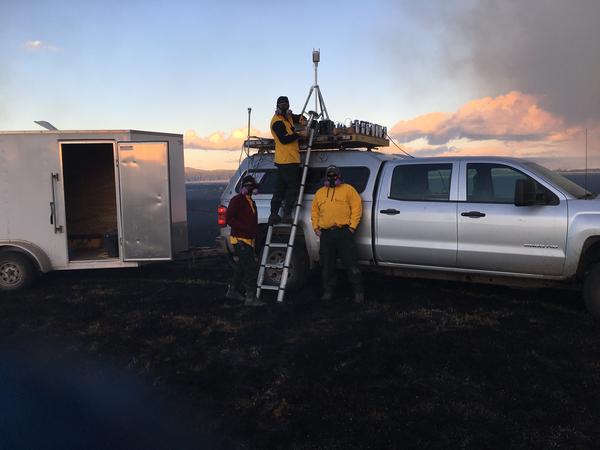
States have observed unexplained increases in ozone from monitors near active wildfires or prescribed burns. To find out why this was occurring, EPA researchers investigated and evaluated a popular ozone monitoring method during fires in Kansas, Oregon, and Montana. Their research will help state, tribal and local monitoring agencies interpret ozone data collected during wildland fire smoke events.
Green infrastructure reduces stress on wastewater systems, decreases sewer overflows, and improves watershed health—but how does it impact groundwater quality? EPA recently completed a comprehensive multi-year study to find out. The data collected can be used by state and local agencies to make decisions about implementing green infrastructure in their communities.
EPA announced $2,499,229 in awards to 24 U.S. small businesses to develop innovative technologies that help support EPA’s mission of protecting human health and the environment. Proposals include methods to reduce virus transmission on frequently touched surfaces; a mobile, rapid freeze-drying system to prevent food waste; and a system to produce recycled plastic lumber products from locally collected plastic ocean waste.
Meet Our Researchers

Meet EPA Researcher Emily Eisenhauer, Ph.D.
Emily Eisenhauer is a sociologist and works on community resilience, social vulnerability, and environmental justice. Emily is also the co-chair of the U.S. Global Change Research Program's Social Sciences Coordinating Committee, working on integrating social sciences more fully in the National Climate Assessment. Learn more about Emily's work.
|
Events
Science Matters is produced by the U.S. Environmental Protection Agency, Office of Research and Development. All content is copyright free and can be reprinted without permission.
Questions or comments? Send us an email.
EPA Research | EPA Science Matters
|