EPA Research Updates
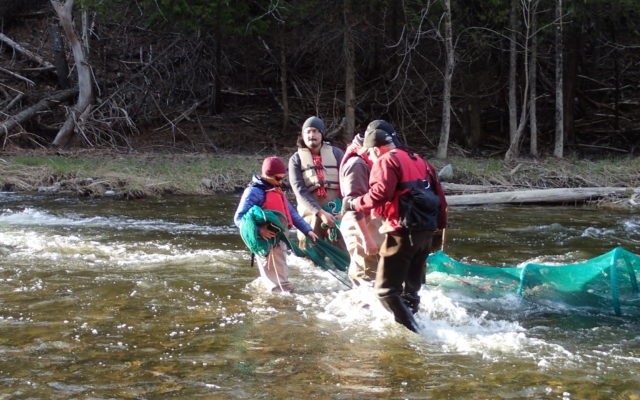
EPA researchers are supporting fishery restoration efforts in northern Maine with Tribal partners. EPA is collaborating with tribal, state, federal, and international partners to develop a cloud-based population diversity database of Atlantic salmon DNA as part of biodiversity and sustenance fishing restoration efforts of the Houlton Band of Maliseet Indians tribal waterways in Northern Maine.
How are air and water quality connected to agriculture and the nitrogen cycle? EPA scientists developed a modeling system which combines agricultural, atmospheric, and hydrological components to look more closely at how air and water pollution are produced through large-scale agricultural operations, particularly related to grain crops and livestock.
Join us in celebrating Women's History Month! Learn about some of the EPA women working to protect the environment and check out their advice for people interested in environmental careers.
EPA’s network of regional laboratories recently assisted Texas in the aftermath of Winter Storm Uri. EPA dispatched three mobile drinking water labs into areas in San Antonio, Fort Worth, and Houston to provide bacteriological analysis of drinking water samples. EPA also ensured Superfund sites were secure following the storm, assisted public drinking water systems with rapid assessments and analyses, and helped coordinate emergency response activities with Texas, and other federal agencies.
EPA signed an extension to reaffirm a partnership between EPA, the Environmental Council of the States and the Association of State and Territorial Health Officials to advance cooperative initiatives in pursuit of environmental health. Over the past five years, the partnership has helped EPA work directly with state environmental health experts to identify emerging environmental challenges, strategically design projects aimed directly at those challenges, and deliver research that the states need.
Meet Our Researchers

Meet EPA Scientist Katherine Ratliff, Ph.D.
Dr. Katherine Ratliff researches how contamination moves around in the environment and what types of decontamination practices are most effective for cleaning up that contamination. She is currently evaluating different types of technologies and methods aimed at reducing the risk of exposure to SARS-CoV-2, the virus that causes COVID-19. This includes assessing different types of air treatment technologies that have been proposed for use to reduce airborne virus concentrations, as well as testing devices that are designed to inactivate viruses and other pathogens on surfaces. Learn more about her work.
|
Events
Science Matters is produced by the U.S. Environmental Protection Agency, Office of Research and Development. All content is copyright free and can be reprinted without permission.
Questions or comments? Send us an email.
EPA Research | EPA Science Matters
|