EPA Research Updates
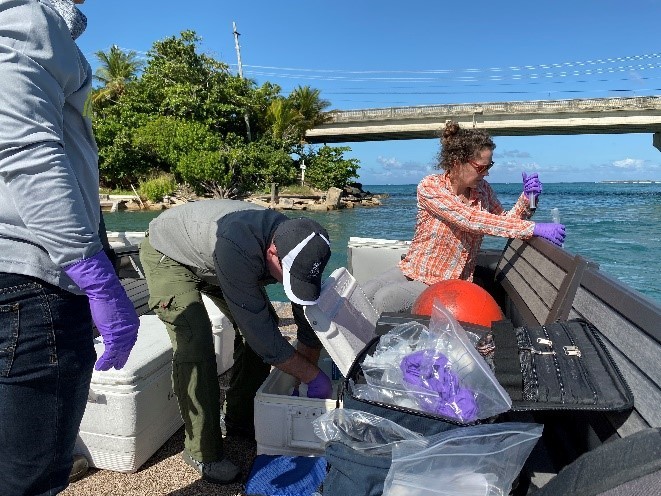
The Caño Martín Peña in San Juan, Puerto Rico, has developed a clog. The largely working-class communities near the Caño Martín Peña experience frequent flooding that results in water-filled streets, homes and schools. EPA researchers are working with local partners to ensure the health, safety and well-being of communities in the region.
The Rubbertown industrial area of Louisville, Kentucky, is home to over 10 industrial sources of air pollutants. To help understand how the emissions from these sources impact people living nearby, EPA collaborated with the City of Louisville Metro Air Pollution Control District to measure hazardous air pollutants in the area.
In the summer of 2018, EPA and partners collected air quality data to investigate ozone formation over the ocean and transport across Long Island Sound. Now, EPA scientists are using this data to improve air quality models. These improvements will create a more accurate picture of ozone pollution in the regions surrounding Long Island Sound as well as how ozone forms and moves across the region.
It’s important to consider the entire life cycle of electricity to identify where energy production, use, and waste from electricity generation are occurring. EPA researchers worked with partners to develop a tool that creates electricity life cycle models to track the generation, consumption, and distribution of electricity to end users across the country by region.
Meet Our Researchers

Meet EPA Researcher Mussie Beyene, Ph.D.
Mussie Beyene studies how wildland fires impact the water quality of streams in the western United States. Mussie’s research helps shape the EPA’s larger investigation into the impact of wildland fires on water resources. Learn more about his work.
|
Events
Science Matters is produced by the U.S. Environmental Protection Agency, Office of Research and Development. All content is copyright free and can be reprinted without permission.
Questions or comments? Send us an email.
EPA Research | EPA Science Matters
|