EPA Research Updates
EPA researchers are working with partners in Cincinnati, Ohio, to develop methods for detecting SARS-CoV-2 in wastewater. Preliminary research indicates that monitoring wastewater for the presence of the genetic marker of SARS-CoV-2 may be useful as a sensitive early indicator of low levels of infections in the community. Having an early warning system to alert public health officials about infection could be helpful to direct resources to the communities that might need it most.
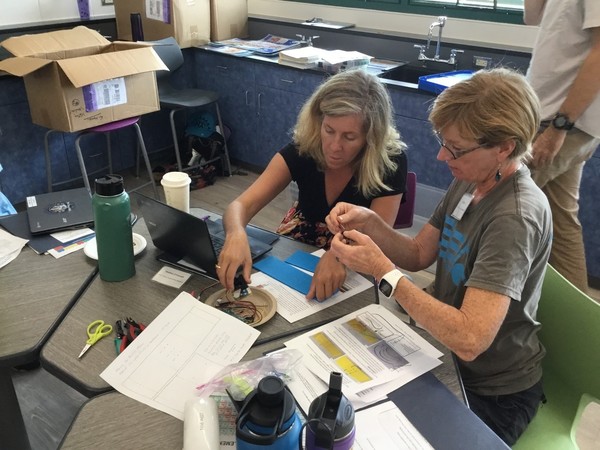
Educators at Massachusetts Institute of Technology (MIT) created a new version of a particle meter to help teachers in Hawai'i teach students about air quality and engineering. The sensor kit and its assembly instructions grew out of a larger, EPA-funded STAR grant project led by MIT and local community partner The Kohala Center, an independent community-based research center on Hawai'i’s Big Island, to monitor harmful pollutants emitting from Hawai'i’s Kīlauea volcano.
Researchers, risk assessors, and regulators need quick access to reliable and up-to-date information about how chemicals affect ecologically relevant species. The latest version of EPA’s ECOTOX database makes it easier than ever to navigate and explore chemical environmental toxicity data for over 12,000 chemicals and species, including aquatic life, terrestrial plants, and wildlife.
The United States continues to be a leader in clean air progress, reducing the six criteria air pollutants by 74 percent over the last 50 years. EPA scientists have provided critical research over the years on how air pollution affects health and the environment.
Areas like Southeast Florida are considered especially vulnerable to the effects of sea level rise. The Southeast Florida Regional Climate Change Compact aims to assist communities within the southeast Florida region with their resilience planning challenges. EPA scientists assisted the group with hosting resilience planning workshops focused on guiding the development of action plans to combat the community’s risks and fears.
EPA announced $3 million in funding for nine small businesses to further develop and commercialize technologies to protect the environment. The funded technologies are focused on clean and safe water, air quality monitoring, land revitalization, sustainable materials management, and safer chemicals.
Meet Our Researchers

Joel Hoffman is a research biologist interested in how human-caused changes to the environment influence aquatic ecosystem processes, aquatic habitat, and fish population success. Learn more about his work.
|
Events
Science Matters is produced by the U.S. Environmental Protection Agency, Office of Research and Development. All content is copyright free and can be reprinted without permission.
Questions or comments? Send us an email.
EPA Research | EPA Science Matters
|