EPA Research Updates
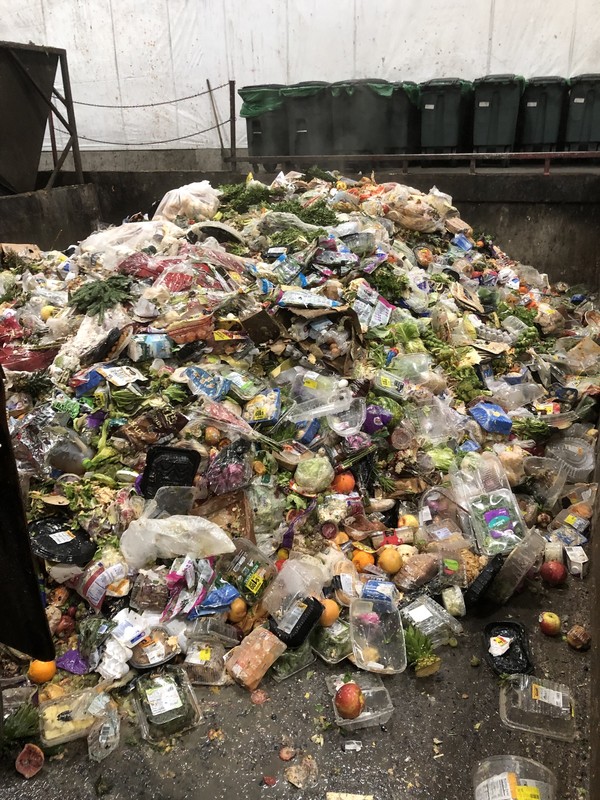
Food waste is the single largest component of our daily trash, adding up to 133 billion pounds of food at the retail and consumer levels in the United States that go uneaten. EPA is addressing this issue through the interactive Excess Food Opportunities Map, which identifies and displays information about potential generators and recipients of excess food. The map inspired Brett Reinford, a second-generation farmer in Pennsylvania, to build a digester for his family farm that turns waste into energy.
Environmental Health Assessments (EHAs) are used to better understand the range of possible effects of environmental factors on a community’s health and wellbeing. These assessments are even more effective when researchers involve the community through citizen science. Using decades of experience conducting citizen science-based EHAs, EPA scientists have recently published a paper on advice and frequently asked questions to help other communities conduct these assessments.
What constitutes an oil spill, what effects can spills have, and how do responders clean them up? EPA researcher Robyn Conmy and on-scene coordinators Jeff Kimble and Jon Gulch joined ISGP's The Forum podcast to answer these questions and more.
EPA has awarded GreenTechnologies, LLC, with the Administrator’s Award for Outstanding Accomplishments by a Small Business. With the support of EPA’s Small Business Innovation Research (SBIR) program, GreenTechnologies successfully developed and commercialized a sustainable and innovative treatment and nutrient recovery process for wastewater. Their processes recover nutrients such as phosphorus, carbon and nitrogen in wastewater and convert the excess nutrients into sustainable slow-release fertilizers.
EPA is announcing a new Science to Achieve Results funding opportunity titled Chemical Mechanisms to Address New Challenges in Air Quality Modeling. Applications will be accepted through June 24, 2019. The funded research activities under this announcement are intended to improve the chemical mechanism component of air quality models relevant for ozone, particulate matter, and air toxics and ultimately advance the science underpinning air quality management strategies.
Meet Our Researchers
Meet EPA Scientist Jeff Yang, Ph.D.
Dr. Jeff Yang has extensive practical and hands-on water and environmental engineering experience in the U.S. and overseas. He holds a patent for detecting water contamination along with three other EPA scientists, and he recently provided assistance on bilateral scientific collaboration between the US and China to protect the environment. Learn more about his work.
|
Events
Science Matters is produced by the U.S. Environmental Protection Agency, Office of Research and Development. All content is copyright free and can be reprinted without permission.
Questions or comments? Send us an email.
EPA Research | EPA Science Matters
You can view or update your subscriptions or e-mail address at any time on your Subscriber Preferences Page. All you will need is your e-mail address. If you have any questions or problems e-mail subscriberhelp.govdelivery.com for assistance.
This service is provided to you at no charge by U.S. Environmental Protection Agency.
|