EPA Research Updates
We know we can reduce how much water we use, but what about reusing and recycling it? EPA is working with San Francisco and other state and local governments around the country to make sure we can do that safely. Researchers are currently modeling exposure risks to create a regulatory risk-based framework so that water can be recycled and reused safely.
Wildfires are increasing in intensity and size, contributing to impaired air quality for people living near or downwind of the fires. In a new article, EPA researcher Wayne Cascio provides insights into the state of knowledge about the health effects of smoke from wildfires and describes needed research.
EPA is committed to advancing the cleanup of contaminated sites. EPA researcher Dale Werkema and collaborators at the U.S. Geological Survey recently released an easy-to-use, spreadsheet-based tool to help site managers and others explore the value of using electrical resistivity imaging before investing time and money into the technique to guide cleanup activities.
Stormwater runoff is one of the fastest growing sources of pollution. In areas with more rooftops and roads than natural surfaces, a big storm can mean flooding and increased pollution reaching our waterways. EPA's National Stormwater Calculator, a tool to help reduce runoff using low-impact development tools, is now available as a web application that can be used on desktop and mobile devices.
Meet Our Researchers
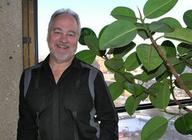 Meet EPA Scientist Jay Garland, Ph.D.
The challenges to long-duration space travel are enormous. EPA scientist Jay Garland spent twenty years at NASA trying to figure out how astronauts could stay in outer space for a long time without needing more supplies. Now he is bringing the same concepts of reusing and recovering resources to his research at EPA. Learn about his work.
|
Events
Webinar: Alternative Disinfection: Dichlor and Trichlor
Tuesday, January 30, 2018 | 2:00 PM ET
Since 2001, chlorinated cyanurate chemicals have been registered by EPA through the Federal Insecticide, Fungicide, and Rodenticide Act for routine treatment of drinking water. Registration includes products commonly referred to as Dichlor (sodium dichloroisocyanurate or sodium dichloroisocyanurate dihydrate) and Trichlor (trichloroisocyanuric acid). This webinar will include presentations on the water chemistry implications of Dichlor and Trichlor, and the state of Utah’s perspectives on handling Dichlor and Trichlor facilities.
Register here.
Water Research Webinar: National Stormwater Calculator
Wednesday, January 31, 2018 | 2:00 PM ET
EPA’s National Stormwater Calculator is a software application that estimates the annual amount of rainwater and frequency of runoff from a specific site. This webinar will introduce the newest features of the Calculator, which is now available as a mobile web application and can be used on smartphones and tablets. EPA has also added a cost estimation module that allows planners and managers to evaluate green infrastructure practices based on comparison of regional and national project planning level cost estimates and predicted performance.
Register here.
Webinar: Village Blue Project
Wednesday, February 28, 2018 | 2:00 PM ET
EPA and the U.S. Geological Survey initiated the Village Blue project to increase public awareness about local water quality in the Baltimore Harbor and the Chesapeake Bay. Village Blue is a demonstration project providing real-time sensor-based water quality monitoring data to the Baltimore community and complements work already being done toward the Waterfront Partnership of Baltimore's goal of making Baltimore Harbor swimmable and fishable by 2020. This webinar will present the Village Blue research project and demonstrate how to access the application and explore the real-time water quality data.
Register here.
2018
EPA International Decontamination Research and Development Conference
May
8 – 10, 2018
Join
researchers, engineers, homeland security experts, emergency managers, first
responders, and other experts to learn more about decontamination technologies,
best practices, and research and development at this year’s International
Decontamination Research & Development Conference held at EPA’s Research
Triangle Park, NC, campus.
Since
2005, EPA has hosted an international conference on decontamination
research and development. Decontamination is one of the critical challenges
that the United States and EPA would face in recovering from a major chemical,
biological, or radiological incident. This conference is designed to
facilitate presentation, discussion, and further collaboration on research and
development focused on an all-hazards approach to cleaning up contaminated
buildings (both interior and exterior), infrastructure, and other
areas/materials.
Register
here.
Science Matters is produced by the U.S. Environmental Protection Agency, Office of Research and Development. All content is copyright free and can be reprinted without permission.
Questions or comments? Send us an email.
EPA Research | EPA Science Matters
You can view or update your subscriptions or e-mail address at any time on your Subscriber Preferences Page. All you will need is your e-mail address. If you have any questions or problems e-mail subscriberhelp.govdelivery.com for assistance.
This service is provided to you at no charge by U.S. Environmental Protection Agency.
|