|
EPA Releases Version 2.0 of the Recycling Infrastructure and Market Opportunities Map
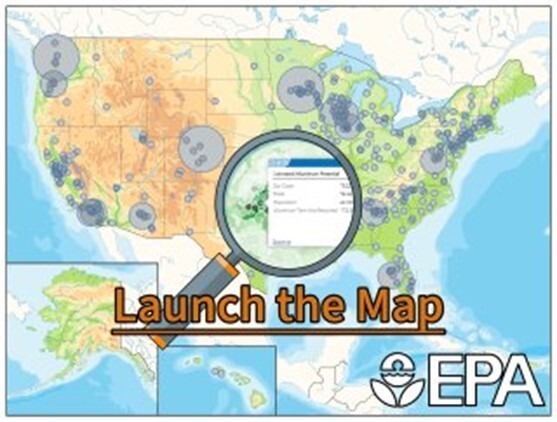 The second version of the Recycling Infrastructure and Market Opportunities Map is now available. This version is based on feedback received during the public comment period from May 12 through June 26, 2023. The map highlights existing infrastructure, per capita generation and recycling of post-consumer material, and other relevant market factors.
Updates in this version include:
- A brand-new map user interface and layout, allowing users to more easily view the breadth of available data.
Reduced loading time by changing the host platform to ArcGIS Online Experience Builder, a cloud-based software capable of hosting and loading large datasets.
A consolidated web-storage location for the Recycling Map’s underlying data with additional detailed instructions for accessing and downloading these files.
Learn more about the map and how to access it here.
|
|
Three Organizations Partnered Together to Develop Model Promoting Community Composting
 The Natural Resources Defense Council (NRDC), the Environmental Law Institute (ELI), and the Institute for Local Self-Reliance (ILSR) have released a Model Municipal Ordinance on Advancing Community Composting, which provides legal language municipalities can adopt to reduce regulatory barriers to, and provide opportunities for, community composting. The intent of the model is to remove or reduce the burden community composters face in complying with requirements such as permit conditions that were never intended to apply to relatively small, community-centric operations. Find the model – along with commentaries, a background memorandum, and a slide deck – on their webpage.
|
|
NRDC Releases Updated Version of a Food Waste Toolkit
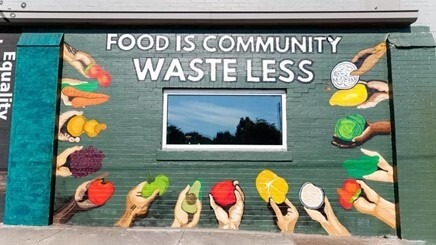 The Natural Resources Defense Council (NRDC) also released an updated version of their Tackling Food Waste in Cities: A Policy & Program Toolkit, a resource for reducing food waste in cities. This toolkit highlights tested, impactful strategies that can be tailored to local needs and help cities launch or further food waste reduction programs for long-term progress and impact. This includes 13 strategies for U.S. cities to prevent food from being wasted, increase food donation, and recycle food scraps.
|
|
Harvard Law School Launches Food Loss and Waste Resources Hub Online
 The Harvard Law School Food Law and Policy Clinic has launched a new Food Loss and Waste Policy Hub website. This hub brings together cutting-edge legal research, policy innovations, and tools to help explore and implement effective food loss and waste reduction strategies. The website highlights four key areas of prevention, recovery, recycling, and comprehensive strategies. It also highlights important resources.
|
|
Myth Busting - Food Loss and Waste Reduction
 July 23, 11am ET
In this session hosted by the Catalyst Communities Initiative, Danielle Todd, Executive Director of Make Food Not Waste, will address common misconceptions in food loss and waste reduction (FLWR) including myths around sources of food waste; food consumption; food donation and rescue; food in landfills; and composting. This session will include discussion on overcoming barriers to FLWR and provide information on how you can help reduce food waste in your community.
Click here to register (free).
|
|
CREF Research Project Webinar: Soil Growth & Water Impacts from Compost & Biochar
 August 8, 1-2:30pm ET
This session, presented by the Compost Research & Education Foundation, will review the doctoral research findings of Sai Thejaswini Pamuru, a postdoctoral research associate in the Department of Civil and Environmental Engineering at Duke University. Sai's study explores the use of biochar to regulate compost amendments and mitigate nutrient runoff, reducing the risk of eutrophication.
Click here to register (free).
|
|
Restoring Soil with Compost: Lessons from the LA Wildfires & More
 August 14, 12-1:30pm ET
Hosted by the Institute for Local Self-Reliance, this webinar will explore post-fire soil contaminants of concern, the basics of microscopy to assess soil health, how to interpret soil test results, and the role of compost in bioremediation.
Click here to learn more and register ($20 registration; free registration available for government, farmers, K-12 schools, and Community Composter Coalition members).
|
|
Commission for Environmental Cooperation Seeks Proposals Aimed at Food Waste Awareness and Outreach - Apply by July 25
 The Commission for Environmental Cooperation (CEC) is requesting proposals from prospective consultants, in collaboration with governmental and expert advisors, to develop and promote outreach materials to raise awareness of wasted food through large-scale events, including the 2026 FIFA World Cup (FWC26) taking place in North America. These materials will provide local governments, communities, and other key actors with the tools to design and implement social marketing campaigns that promote sustainable management of food during large-scale public events. The maximum budget for this activity is expected to be C$360,000 (Canadian dollars).
The application is currently open, and all proposals must be received by the CEC Secretariat by 5:00 PM ET on July 25, 2025. Find more information and the Request for Proposals form on their webpage.
|
|
Mention of or referral to commercial products or services, and/or links to non-EPA sites does not imply official EPA endorsement of or responsibility for the opinions, ideas, data, or products presented at those locations, or guarantee the validity of the information provided. Mention of commercial products/services on non-EPA websites is provided solely as a pointer to information on topics related to environmental protection that may be useful to EPA staff and the public. |
|
|
By subscribing to the newsletter, you will receive periodic announcements about resources, events, webinars, funding opportunities, and more from EPA and our partners. Topics include circular economy, reduce/reuse/recycle, food loss and waste, electronics, plastics, municipal solid waste, and the built environment.
|
|
|
|
|