|
|
May 22, 2025
|
This e-newsletter delivers announcements from EPA's Office of Resource Conservation and Recovery on rulemakings, guidance documents, reports, research, upcoming webinars, and more.
|
|
|
EPA to Host Webinar on Large Format Battery Labeling and Collection for Recycling
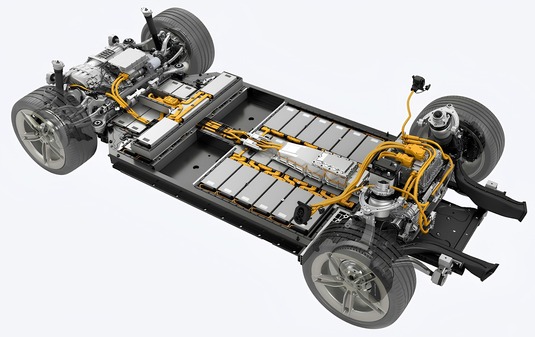
On June 17, 2025, EPA will host a virtual working session to improve battery labeling and develop best practices for the collection of rechargeable large format batteries over 25 pounds or more than 2,000 watt-hours. This includes batteries often used in electric, hybrid, and internal combustion engine vehicles; other motorized equipment; and stationary energy storage systems. This session will cover the end-of-life management of large format batteries, including recycling and refurbishment. Register today.
|
|
EPA Proposes Approval of North Dakota Coal Ash Permit Program
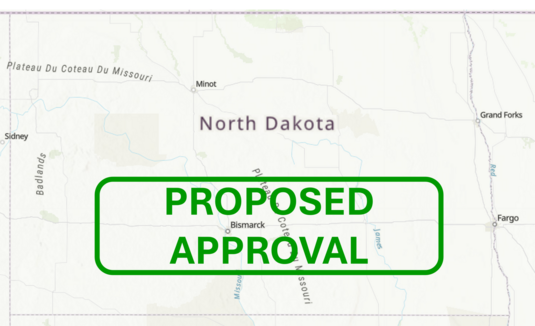
On May 12, 2025, EPA announced a proposal to approve the application submitted by North Dakota Department of Environmental Quality (ND DEQ) to allow the ND DEQ coal combustion residuals (CCR or coal ash) permit program to operate in lieu of the federal CCR program. EPA preliminarily determined that the North Dakota CCR permit program meets the standard for approval under the Resource Conservation and Recovery Act. EPA will accept comments on this proposal through July 15, 2025. Read more on our website.
|
|
EPA Publishes New and Updated Modules in the Resource Conservation and Recovery Act Model Permit
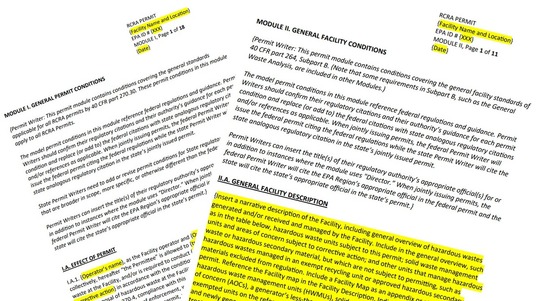
On May 14, 2025, EPA published the third module in the RCRA Model Permit titled “General Facility Conditions Applicable to All RCRA Permits.” This new permit module contains conditions covering the general facility standards in Title 40 of the Code of Federal Regulations part 264, Subpart B applicable to all RCRA permits. EPA also updated the "General Permit Conditions Applicable to All RCRA Permits" module. Access the new and updated modules of the Model Permit.
The Model Permit is a guide to help permit writers draft and review permit conditions for incorporation into a RCRA hazardous waste permit. Using language that is based on best example language from actual permits that has been vetted by subject matter experts, including legal and enforcement experts, should reduce the time to issue permits, promote national consistency, and result in clearer, more readily implementable, enforceable permit conditions.
|
|
EPA Updates the Treatment Storage and Disposal Facility (TSDF) Toolkit
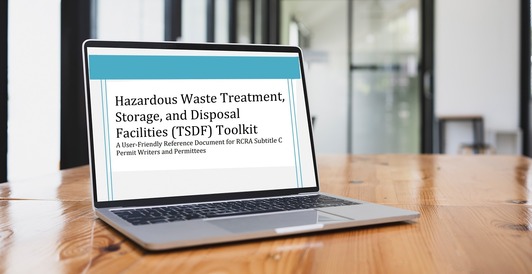
On May 9, 2025, EPA updated a reference document for requirements related to hazardous waste TSDFs and related information. This “TSDF Toolkit” gathers, in one place, the main publicly available hazardous waste permitting resources so that the permittees, the public, and state permitting authorities (including permit writers) can easily access them. The resources include flow charts of the permitting process, guidance, training modules, Federal Register rulemaking notices, permit appeals, example permits, and links to state and federal resources.
|
|
EPA Develops Tables of Hazardous Waste Permitting Federal Register Notices (from 1978 to present)
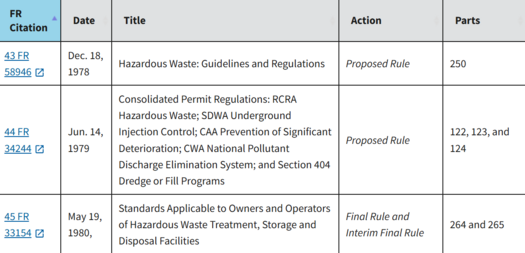
On May 9, 2025, EPA created a new webpage with nearly 300 Federal Register Notices for rulemakings related to hazardous waste, TSDFs, and permitting. The table is searchable and sortable to make searching for what government officials, the regulated community, and others are looking for quicker and easier. The Federal Register notices are useful for researching the preamble and the regulations at the time of each proposed and final rule.
|
|
EPA Revamps the Disaster Debris Mitigation and Planning
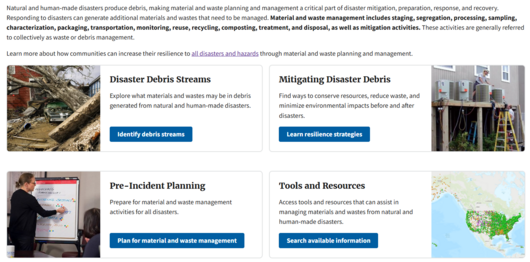
On May 8, 2025, EPA updated the disaster debris mitigation and planning web content (formerly referred to as “homeland security waste”) to help communities more easily find information and resources related to disaster debris to help them prepare for future disasters they may face. The new web content:
-
Focuses on actionable and practical measures that communities can start doing today.
-
Includes a reorganized, more user-friendly landing page.
-
Consolidates debris management resources and makes tools easier to find.
-
Brings more attention to actions that communities can take to reduce the amount of disaster debris generated by disasters from homes, businesses, and other buildings, known as mitigation.
-
Encourages communities to view disaster debris as a potential resource that can be reused or recycled to remain within the economy.
Communities tend to view disaster debris as waste, but our new web content communicates that disaster debris can be sorted into different waste and material categories to increase the amount of debris that is recycled and managed more sustainably. Check out the updated web content.
|
|
|
|
|