|
|
April 22, 2025
This e-newsletter delivers announcements from EPA's Office of Resource Conservation and Recovery on rulemakings, guidance documents, reports, research, upcoming webinars, and more.
|
|
EPA Celebrates Earth Day
Today, on Earth Day, EPA celebrates America's beautiful environment and those that help us protect it every day! Thanks to everyone who works tirelessly beside us to ensure clean air, land, and water for everyone in America!
One way to further help our planet is by safely handling and disposing of batteries. Batteries can help strengthen America’s energy grid, keep America connected, and power our lives. However, batteries can contain metals such as mercury, lead, cadmium, nickel and silver, which can pose a threat to human health or the environment when improperly managed at the end of their service life. Learn about the different types of batteries and what to do with them when you no longer need them on our website.
Keep an eye out for lithium and lithium-ion (li-ion) batteries in your electronics, toys, e-cigarettes, power tools, appliances, and more. These batteries can cause fires, so they and devices containing them should not go in your household garbage or recycling bin. To prevent fires, tape the terminals of each of the batteries or place them in separate plastic bags. Learn more and find a location to recycle these batteries on our website.
By recycling batteries, you’ll be keeping critical minerals out of our landfills and helping put them back into the essential products we use and rely on every day.
|
|
|
EPA to Host Webinars on Large Format Battery Labeling and Collection for Recycling
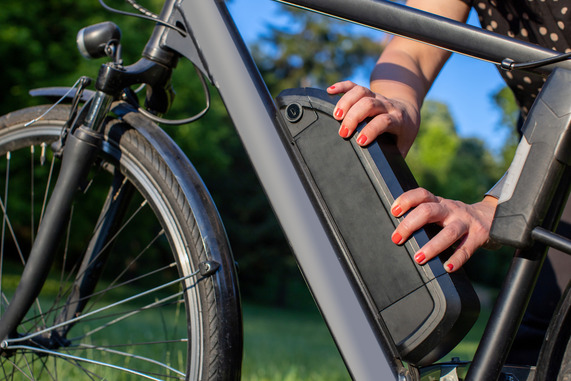
EPA is hosting two virtual working sessions to improve battery labeling and develop best practices for the collection of rechargeable large format batteries over 25 pounds or more than 2,000 watt-hours. This includes batteries often used in electric, hybrid, and internal combustion engine vehicles; other motorized equipment; and stationary energy storage systems.
-
April 24, 2025: Current Standards and Practices for Large Format Batteries. Register today.
-
June 17, 2025: Expanding End of Life Management for Large Format Batteries–Recycling and Refurbishing Webinar. Register today.
|
|
EPA Releases New Report: “Estimating the Cost of Food Waste to American Consumers”
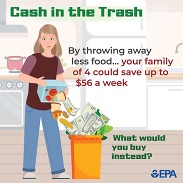
On April 4, 2025, EPA announced the release of a new report, “Estimating the Cost of Food Waste to American Consumers.” This report estimates the cost savings available to Americans by reducing food waste. EPA’s research shows that, on average, a family of four spends almost $3,000 per year on food that never gets eaten.
Throwing away food wastes:
- The labor and other resources spent to produce, package, transport, and sell uneaten food.
- The nutrients in the uneaten food.
- The money households spent on food they did not consume.
That wasted money, about $56 per week for a family of four, could be spent on many other things — a family trip to the movies, a gym membership, or a tank of gas, to name a few examples. For more information, check out the new report, appendices, and graphic.
|
|
|
|
|
|