Stay cool and stay safe!
Prepare for extreme heat and power outages
As summer approaches, now is the time to prepare your home and your family for extreme heat. High temperatures can quickly make indoor spaces unsafe, especially during power outages, when systems for cooling and cleaning indoor air may stop working. Planning ahead can help protect your health and maintain good indoor air quality.
Keep your home cool and your air clean
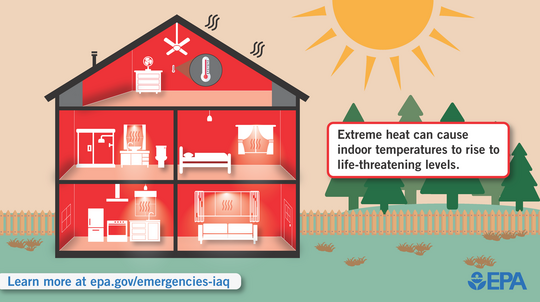
Extreme heat can cause dangerous illnesses such as heat exhaustion and heat stroke. Indoor temperatures can rise rapidly, especially in homes without air conditioning or during a power outage. A few simple steps can make a big difference:
If you do not have air conditioning:
- Plan in advance where you can go to stay cool during extreme heat—public cooling centers, libraries, malls, or community centers may provide relief.
- Use ventilation and shading to help moderate indoor temperatures:
- Cover sun‑exposed windows with blinds, curtains, or outdoor shading devices (e.g., exterior awnings or louvers) to keep indoor temperatures down.
- When outdoor air is cooler than indoor air, open windows to cool the indoor air. Otherwise, keep windows closed to maintain cooler indoor conditions.
If you have air conditioning:
- Make sure your unit is cleaned and serviced before hot weather arrives. Regular maintenance helps your system work efficiently when you need it most.
- Position fans to exhaust hot air from rooms or draw in cooler air. Do not use an electric fan in a closed room or for cooling when the room temperature is in the mid-90s or higher. When it is that hot, electric fans are just moving very hot air across your skin, which will not prevent heat-related illness.
Be ready for power outages
Power outages during extreme heat can increase the risk of indoor air quality problems. Be prepared:
- Know how you will stay cool if your AC stops working.
- Identify safe places outside your home where you can go to cool down (e.g., public cooling centers).
-
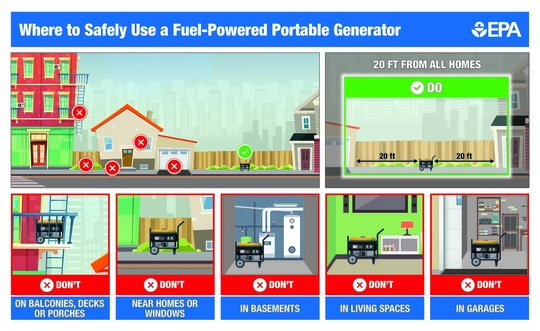
Use fuel‑powered generators safely: If you choose to use a fuel-powered portable generator, never use it inside your home, garage, basement, or near windows and doors. Generator exhaust contains carbon monoxide, which can be deadly. Place generators at least 20 feet away from buildings.
 Learn more about how to safely provide power during a power outage.
|