Carbon Monoxide Poisoning
Learn the Facts!
Protect Your Family and Yourself

Carbon monoxide (CO) is an odorless, colorless and toxic gas. The effects of CO exposure can vary greatly from person to person depending on age, overall health, length of exposure and the concentration of CO to which the person is exposed.
Know the symptoms of carbon monoxide poisoning!
Carbon monoxide symptoms can be flu-like (generally without fever) or may look like other health problems.
Carbon monoxide exposure can cause:
- Headaches
- Dizziness
- Weakness
- Nausea
- Shortness of breath
- Confusion or fainting
At high levels, carbon monoxide can be deadly.
Sources of carbon monoxide inside the home
Any fuel-fired appliances not properly installed, maintained or operated, including without adequate ventilation, can be a source of carbon monoxide. Some common indoor sources include:
- Fuel-fired heating and cooking appliances, like unvented kerosene heaters, gas space heaters, gas stoves, gas or charcoal grills
- Gas water heaters
- Wood stoves
- Improperly vented fireplaces
- Leaking chimneys and furnaces
Actions you can take to reduce exposure
- Vent fuel-fired combustion appliances to the outdoors, including stoves, heaters and furnaces.
- Avoid the use of unvented stoves, fireplaces or space heaters indoors, if possible. If you must use unvented appliances indoors, follow the manufacturer's instructions, especially related to ventilation.
- Install and use an exhaust fan vented to the outdoors over gas stoves.
- Open flue dampers when using fireplaces.
-
Choose properly sized woodstoves for the space you'll be heating, and make sure the stove is certified to meet EPA emission standards.
- Have a trained professional inspect, clean and tune-up central heating systems (furnace, flues and chimneys) annually. Repair any leaks properly.
-
Never use gas or charcoal grills indoors – only use them outside.
Run vehicles outside your garage
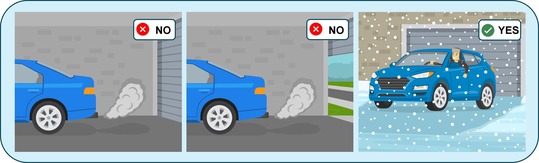 Never run a vehicle inside a garage, not even with the garage door open. If you need to warm up your vehicle, remove it from the garage immediately after starting it.
Run fuel-powered, portable generators outdoors
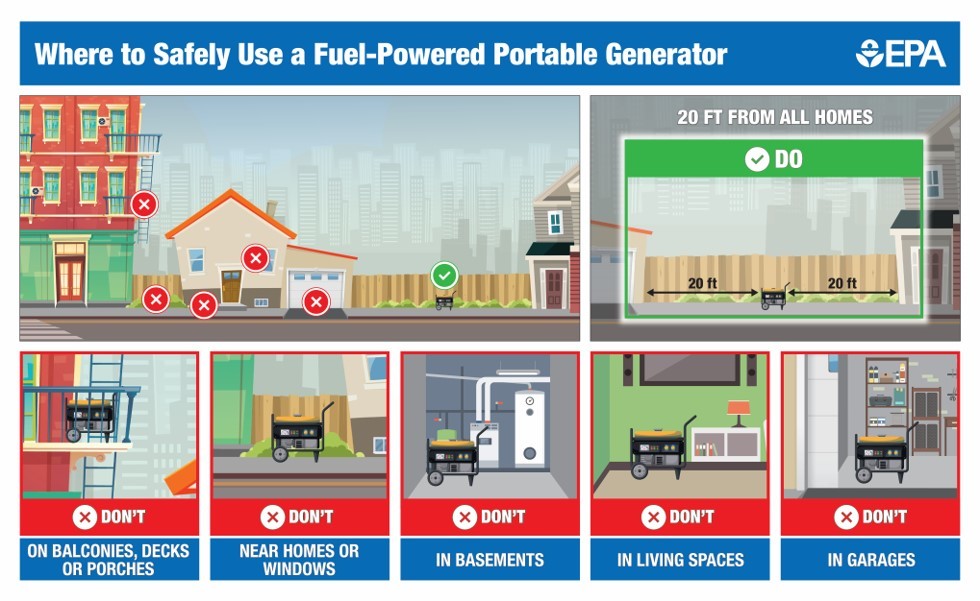 Never use fuel-powered portable generators indoors.
- Use portable generators outside and at least 20 feet away from buildings.
- Consider using portable generators powered by batteries or solar power stations to power small appliances, lights and fans.
Install carbon monoxide alarms in your home
 |
|
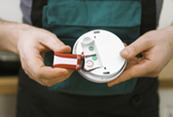
Install carbon monoxide alarms to prevent CO poisoning. Ensure they are working properly, and check or replace the battery at least once a year.
|
- CO alarms should be installed in a central location outside each sleeping area and on every level of the home and in other locations where required by applicable laws, codes or standards. For the best protection, interconnect all CO alarms throughout the home. When one sounds, they all sound.
- Follow the manufacturer’s instructions for placement and mounting height.
- Choose a CO alarm that has the label of a recognized testing laboratory.
- Test CO alarms at least once a month; and replace them according to the manufacturer’s instructions.
|