|
The EPA Releases Updated Ventilation and Respiratory Virus Guidance
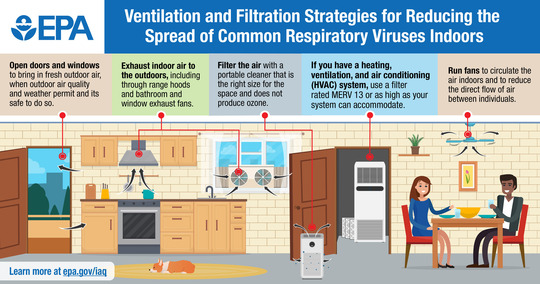
The EPA has released updated guidance on indoor air quality strategies for preventing the spread of common respiratory viruses in homes, schools, offices and commercial buildings. In addition to the virus that causes COVID-19, there are many other types of airborne respiratory viruses, including influenza and respiratory syncytial virus, that can spread more easily indoors than outdoors since their concentration can build up indoors and people are often closer to each other. IAQ strategies that help to prevent the spread of respiratory viruses indoors include ensuring proper ventilation indoors, filtering particles from the air, and providing supplemental air cleaning and air treatment. The updated guidance reflects the latest, best available science regarding IAQ strategies and its role in promoting good IAQ and helping to reduce the spread of common respiratory viruses indoors.
Visit the EPA’s New Webpages

|
|
|
“This updated guidance will be a valuable tool in protecting against the spread of common airborne respiratory viruses indoors,” said Joe Goffman, Assistant Administrator for the EPA’s Office of Air and Radiation. Considering people spend approximately 90% of their time indoors, indoor air quality affects everyone, especially the most vulnerable – including children, the elderly, and people with health conditions like asthma and heart disease. In addition to staying up to date on immunizations, practicing good hygiene, and other core preventive measures, it is imperative that we also encourage communities to take actions to promote healthier indoor air quality to prevent the spread of respiratory viruses indoors.”
For more information, see the EPA's Press Release.
|
|
|
|