EPA and Partners Establish a Plan to Eliminate Preventable Lung Cancer Deaths from Radon
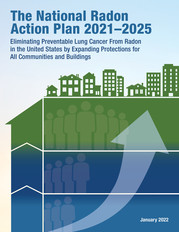
Fourteen organizations representing the Federal government, states, Tribes, industry and non-profit sectors have announced a new plan to protect public health and reduce the risks of radon, “The National Radon Action Plan (NRAP) 2021–2025.” The NRAP is a public-private partnership spearheaded by the U.S. Environmental Protection Agency (EPA) and the American Lung Association with a shared goal of preventing 3,500 deaths annually from radon-induced lung cancer.
“Exposure to radon is a persistent threat to public health, causing thousands of lung cancer deaths each year,” said EPA Administrator Michael S. Regan. “The National Radon Action Plan announced today will help us better protect the health and wellbeing of communities across the nation by providing the tools and training to prevent radon-induced lung cancer.”
Please see EPA’s recent press release for additional details and enthusiastic statements from NRAP partners.
What NRAP Does
NRAP 2021–25 sets a goal for the nation to find, fix and prevent high indoor radon levels in 8 million buildings by 2025 and prevent at least 3,500 lung cancer deaths per year. The plan revolves around actions that will save lives by fixing existing buildings, constructing new buildings with radon-resistant features, and expand the certified, professional radon workforce. It also spotlights addressing radon as a health equity challenge and prioritizes new strategies to reduce radon risk in underserved communities, particularly low-income populations and communities of color. |
|
 |
The NRAP 2021–25 is the third installment of a strategy to increase action on radon. It began with the Federal Radon Action Plan 2010–15, which led to protections from radon in approximately 100,000 multi-family homes annually, among other federal actions. The Federal Radon Action Plan was expanded in 2015 to include eight non-governmental organizations through the NRAP 2015–20, which resulted in actions that are saving nearly 2,000 lives annually.
What is Radon?
Radon is a radioactive gas that can seep up from the soil into homes, schools and other buildings. Since radon is invisible and odorless, dangerous levels can exist indoors without occupants knowing.
Testing is the only way to determine the indoor radon level in a building. Exposure to radon causes an estimated 21,000 lung cancer deaths annually in the United States. Fortunately, straightforward and effective approaches are available for reducing indoor radon and when used properly, they can prevent radon-induced lung cancer and save lives.
Read more about the impacts of the NRAP 2015-20 at Reflection on the National Radon Action Plan’s (NRAP) Progress, 2015-2020.
|