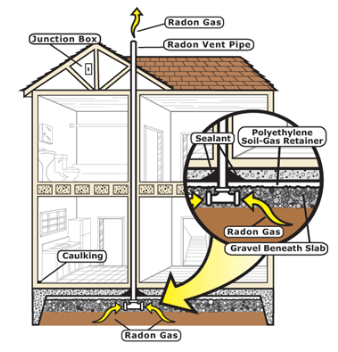
January is National Radon Action Month
Protect Your Family from Lung Cancer
How to Test and Treat Your Home for Radon
Radon is a naturally occurring radioactive gas that that can seep into homes from the ground. Consistent exposure to elevated levels of radon causes lung cancer. In fact, radon is the second leading cause of lung cancer in the U.S.
How Radon Enters the Home
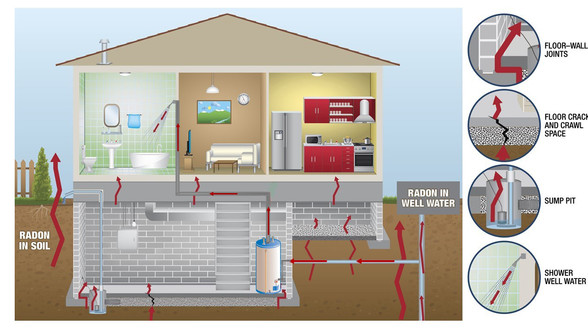 Radon can enter the home in many ways including cracks in solid floors, construction joints, cracks in walls, gaps in suspended floors, gaps around service pipes, cavities inside walls, and the water supply.
DIY: How to Test Your Home for Radon
Testing for radon is quick, easy, and inexpensive. It can be as simple as stopping by your local home improvement store to pick up a do-it-yourself testing kit, often found for less than $20. Test kits can also be purchased online, or individuals can hire a qualified professional to conduct a radon test. Contact your state or tribal radon program for advice.
The EPA recommends that you should fix your home if your radon level is 4 picocuries per liter (pCi/L) or higher and consider fixing your home if your radon level is between 2 and 4 pCi/L.
If after testing you do find elevated radon levels, you may consider selecting a qualified radon mitigation contractor to reduce the radon levels in your home or determine an appropriate radon reduction method. For more instruction see: EPA’s Consumer’s Guide to Radon Reduction: How to Fix Your Home.
How to Fix Your Home's Radon Level
EPA recommends that you have a qualified radon mitigation contractor fix your home. Lowering high radon levels requires specific technical knowledge, special skills, and without the proper equipment or technical knowledge, you could increase your radon level or create other potential hazards and additional costs. However, if you decide to do the work yourself, get information on appropriate training courses from your state radon office.
Your state radon office can provide information on how to locate a qualified radon professional.
|