|

Welcome back to the Supply Chain Sentinel, a monthly collection of all things Critical Minerals, Materials, and Manufacturing (CM3). This issue contains recently funded project selections, funding opportunities, upcoming application deadlines, and newly announced national strategies and initiatives. Estimated read time: 5 minutes
|
|
|
 CM3 has spent October celebrating the people who keep American manufacturing moving. But there's more to manufacturing than what happens on the factory floor. From mining and materials science to advanced technologies, a skilled workforce is essential to every step of the supply chain.
This month, we have taken a closer look at what makes America's manufacturing workforce so important—and what it will take to build its next generation.

|
|
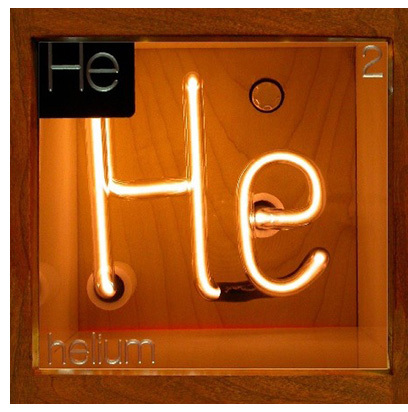
Did you know: Helium plays an essential role in some of America’s most advanced technologies, from semiconductor manufacturing and quantum computing to natural gas infrastructure and aerospace technologies? Recognizing its importance to U.S. industry and national security, Energy Secretary Chris Wright recently designated helium as a critical material under the Energy Act of 2020. The new designation highlights the importance of expanding domestic helium production and reducing supply chain vulnerabilities as global demand continues to rise.
|
|
|
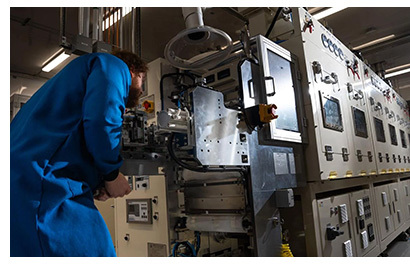
A major push to advance American battery innovation and manufacturing is underway. DOE just unveiled a new national strategy to strengthen domestic battery supply chains and expand U.S. manufacturing capabilities. In that same breath, CM3 announced the Battery Manufacturing Accelerator (BattMan) alongside four DOE National Laboratories. This program aims to advance promising battery technologies from lab development to commercial production and industry deployment. Learn more about BattMan.
Pictured: A researcher in front of a new battery production line at Pacific Northwest National Laboratory (PNNL). Photo courtesy of PNNL
|
|
|

Through DOE’s Providing Opportunities for Specialized Education in Critical Technologies (PROSPECT) Planning Prize, 16 universities have each received $1 million to develop new education and training programs aimed at increasing the number of graduates and credentialed workers entering the fields of mining, material science, and critical minerals and materials. The universities’ innovative plans will help develop the skilled workforce needed for the domestic production, processing, recovery, and recycling of critical minerals. Learn more about the 16 winners of the PROSPECT Planning Prize.
|
|
|

What will the future of American mining look like? From robotic mining systems to SI-powered exploration, new technologies are changing the way we find, extract, and process critical minerals. Through CM3’s Mine of the Future Initiative, 17 newly selected research projects at DOE National Laboratories will help bring promising mining innovations closer to real-world application. Take a closer look at the technologies that will help shape the next generation of American mining.
|
|
|
|
DOE’s Critical Materials Innovation Hub (CMI) is preparing its eighth Leadership Academy cohort, with the mission of supporting early-career researchers and professionals in the field of critical materials as they build the skills to lead within in their organizations and across multi-institutional, multidisciplinary research environments. Eligible nominees must currently be professionals at a CMI member organization and actively working on CMI-affiliated projects.
|
|
If you are an energy entrepreneur or startup looking to bring innovative technology to market, this is your chance to work alongside experts at DOE’s National Laboratories. LEEP Fellows gain access to technical resources and lab facilities, professional mentorship, and capital support needed to turn promising ideas into commercial energy solutions. Submit your application today.
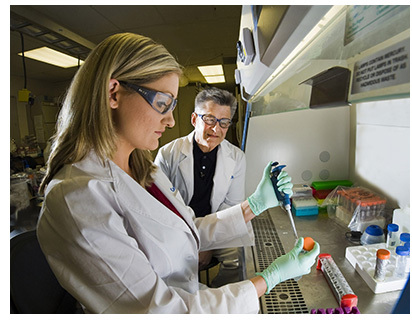
Pictured: Sandia post-doctoral fellow Carlee Ashley introduces a buffer into a protocell solution to dilute it as Sandia researcher and University of New Mexico professor Jeff Brinker watches. Photo courtesy of Randy Montoya
|
|
|
|
Applications are now open for universities interested in establishing or continuing operations with DOE’s Industrial Training and Assessment Centers program. Through free technical assessments, manufacturers receive recommendations to improve operational performance, while students gain hands-on training and valuable industry experience before graduating. The latest opportunity also introduces a new focus on mining and mineral processing, extending the program’s reach across domestic supply chains. Applications are due Oct. 30, 2026.
|
|
|
Have a promising technology or business idea? DOE’s Cradle to Commerce (C2C) Program is now accepting applications from entrepreneurs, startups, and innovators looking to turn breakthrough technologies into commercial products. C2C connects participants with expertise, facilities, funding opportunities, and intellectual property from DOE's National Laboratories, with a focus on areas including critical minerals, advanced manufacturing, nuclear energy, and SI. Pre-applications are open through Nov. 15, 2026.
|
|
The CMC Corner
|
|
|
Turning groundbreaking research into market-ready technologies takes more than scientific expertise. DOE’s Energy I-Corps program helps National Laboratory researchers develop the entrepreneurial skills needed to bring their innovations to market. The spring 2027 lab call offers training and funding opportunities for researchers at DOE National Laboratories, plants, and sites. Applications are due Nov. 4, 2026.
NSF Research Centers Advance U.S. Materials Science and Engineering
The National Science Foundation (NSF) is supporting innovative research in materials science and engineering through two new science and technology centers: Center for Integration of Modern Optoelectronic Materials on Demand (IMOD) and Center for Complex Particle Systems (COMPASS). These centers bring together researchers from across disciplines to explore advanced materials and develop new technologies with applications across the advanced manufacturing industry.
|
|

DOE has consolidated all instances of its Funding Opportunity Exchange (eXCHANGE) system into a single, centralized platform. No action is needed by existing users. Funding opportunities and account information from have been migrated to the consolidated eXCHANGE platform.
|
|
|
|
|