|
|
Welcome to The Water Wire, a snapshot of all water power funding opportunities, upcoming events, and recent news. This month’s newsletter takes approximately 5 minutes to read.
Reach out to the U.S. Department of Energy’s (DOE’s) Hydropower and Hydrokinetic Office (H2O) at with any inquiries or suggestions. Follow the Office of Critical Minerals and Energy Innovation’s (CMEI) X, Facebook, and LinkedIn channels for news, announcements, and water power content. Connect with CMEI's Energy Technology Pillar through its LinkedIn account.
|
|
Did You Know?
The Pacific Northwest National Laboratory’s (PNNL’s) Triton project team published a new webpage that explains marine energy. The page covers the history, types, and basics of marine energy while highlighting recent deployments in the United States.
|
|
Water Power Announcements and Features |
|
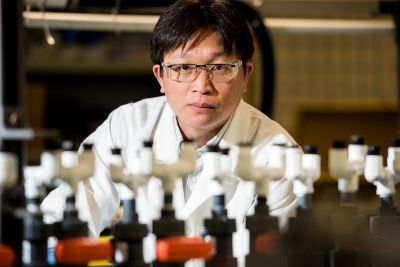
DOE and H2O announced 14 projects that will begin negotiations to test their technologies through the Hydropower Testing Network (HyTN). Working with HyTN’s 21 testing facilities, hydropower technology developers will advance the readiness of their technologies. Now in its second round, HyTN offers access to over 65 specialized physical testing and modeling capabilities ranging from hydraulic and biological testing to techno-economic analysis. Assistant Secretary of Energy Audrey Robertson the selections in Pennsylvania on Oct. 5, 2026.
|
OTC Opens Applications for Three Programs to Accelerate American Energy Innovation
Energy I-Corps – This program helps equip DOE researchers with the skills and perspective needed to move promising technologies closer to market. The lab call includes three topic areas that focus on expanding commercialization knowledge and skills across the DOE enterprise, preparing researchers to better understand potential markets, and helping promising technologies move toward private-sector adoption. Applications for the spring 2027 program are due by Oct. 30, 2026.
LEEP – Run by OTC with co-funding from various DOE offices, LEEP provides innovators who have early-stage energy startups and/or emerging technologies with the support needed to develop and transition their ideas into the market. The 2027 program includes a Water Power and Energy-Water Technologies topic area funded by H2O that seeks entrepreneurs ready to disrupt the water power space. Applications for the 2027 program year are due by Oct. 30, 2026.
CLIMR – With the goal of connecting companies and other potential partners with DOE National Laboratories, CLIMR released $41 million to advance the commercialization of promising technologies in five priority areas including CMEI. National Laboratory concept papers are due by Nov. 3, 2026.
DOE is accepting applications for coastal, remote, and island communities looking to improve the affordability, reliability, and security of their energy systems through ETIPP. The program helps local leaders pursue energy goals through technical analysis and planning support from energy experts at National Laboratories and from regional partner organizations that understand the local energy landscape. Applications for ETIPP are due by Nov. 18, 2026
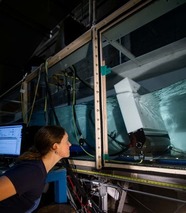
The U.S. Testing Expertise and Access to Marine Energy Research (TEAMER) program announced the approval of 30 projects through its 18th request for technical support, reflecting a total of $4.7 million. The technical support recipients will gain access to testing expertise as well as numerical modeling, testing, and commercialization assistance within the growing TEAMER facility network.
|
Oak Ridge National Laboratory (ORNL) and Smith-Root Inc. partnered to develop new materials that can deliver improved performance of Smith-Root’s backpack-style environmental DNA (eDNA) sampling device, allowing users to quickly and easily collect and analyze eDNA from bodies of water. The materials used to improve the eDNA device can be sourced entirely within the U.S., reducing supply chain risks while boosting domestic manufacturing.
PNNL’s Sensor Fish Suite, integrated with the Hydropower Biological Evaluation Toolset (HBET), is a finalist for the 2026 R&D 100 Awards. The Fish Suite and HBET are designed to make water infrastructure safer for aquatic life by helping hydropower stakeholders improve facilities, compare operating scenarios, and reduce the need for live-animal testing.
|
The Small Underwater Research Flap Wave Energy Converter (SURF-WEC) was recently deployed off the Makai Research Pier in Oahu, Hawaii by the National Laboratory of the Rockies (NLR) in partnership with the University of Hawaii. SURF-WEC was created and deployed to help close information gaps that currently exist in the marine energy industry.
|
|
|
November 12, 2-3 p.m. ET, Virtual
Join representatives from H2O's Energy-Water Resources (EWR) program to learn how research insights are helping shape the program’s priorities and activities. In fall 2025, the EWR team invited national laboratories to submit white papers addressing integrated energy and water research and development needs. The resulting collection of over 100 publicly available papers provided a broad view of challenges, opportunities, and potential solutions across the energy-water landscape.
During this webinar, the EWR team will discuss how it synthesized those insights, translated them into program priorities, and is using them to support research and innovation that respond to stakeholder needs. Presenters will also highlight emerging areas of focus and share what is next for the program.
|
|
|
Researchers at H2O and ORNL released a new report highlighting key developments across multiple sectors of the hydropower industry. The U.S. Hydropower Market Report combines the latest data from public and commercial sources, as well as research findings from other DOE research and development projects, to provide a comprehensive picture of developments in the U.S. hydropower and PSH fleet and industry trends.
An NLR report outlined a study by marine energy researchers that examines existing power-electronic systems for wave energy converters. The researchers used WEC-Sim, an open-source wave energy modeling tool developed by NLR, to simulate different converter configurations under varying wave conditions. The report provides a roadmap for how marine energy stakeholders can make wave energy converters more effective and resilient across changing ocean conditions.
A report from ORNL assesses opportunities to generate electricity from water already flowing through industrial facilities, such as manufacturing plants, power plants, and mines. Industrial conduit hydropower opportunities represent a potentially fruitful pathway for America to generate more affordable and reliable energy with resources already available. The report examines existing projects, potential applications, development considerations, and research needs across the United States.
|
|
|
|
|