|
|
Welcome to The Water Wire, a snapshot of all water power funding opportunities, upcoming events, and recent news. This month’s newsletter takes approximately 5 minutes to read.
Reach out to the U.S. Department of Energy’s (DOE’s) Hydropower and Hydrokinetic Office (H2O) at with any inquiries or suggestions. Follow the Office of Critical Minerals and Energy Innovation’s (CMEI) X, Facebook, and LinkedIn channels for news, announcements, and water power content. Connect with CMEI's Energy Technology Pillar through its LinkedIn account.
|
|
Did You Know?
The National Laboratory of the Rockies (NLR) is building an integrated suite of pumped storage hydropower (PSH) tools designed to streamline the journey from site screening to cost and life cycle analysis. Provide input by filling out this 10-minute online form to help shape the future of PSH.
|
|
Water Power Announcements and Features |
|
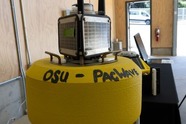
Last month, the PacWave South test facility held a ribbon-cutting ceremony celebrating its official commencement into the Operations Phase after nearly 15 years of planning, permitting, design, and construction. Operated by Oregon State University and supported by H2O, PacWave South is now the first fully operational pre-permitted and grid-connected wave energy test facility in the continental United States
|
LEEP, run by OTC with co-funding from various DOE offices, recruits the best and brightest minds in energy through a national call for a two-year funded fellowship. This program provides innovators who have early-stage energy startups and/or emerging technologies with the support needed to develop and transition their ideas into the market. The 2027 program includes a Water Power and Energy-Water Technologies topic area funded by H2O which seeks entrepreneurs ready to disrupt the water power space. Applications for the 2027 program year are due by Oct. 30, 2026.
DOE has opened the host institution application process for the EIF, a program that offers recent graduates and early-career professionals a valuable educational opportunity to collaborate with critical energy organizations on host-driven projects. Eligible host institutions include cooperative and municipal utilities, grid operators, state public utility commissions, state energy offices across the U.S. and its territories, and Tribal entities. Applications are due by Oct. 2, 2026.
|
H2O announced that 11 projects have been selected as part of a lab call to expedite U.S. hydropower permitting. The lab call, issued earlier in 2026, focused on projects that would develop technologies, datasets, tools, and approaches that reduce regulatory timelines and costs.
To celebrate National Hydropower Day on Aug. 24, 2026, DOE and H2O highlighted how America is working to keep hydropower infrastructure strong so it can continue to provide key support and reliable energy to the grid. The Hydroelectric Incentive program, established so that facilities can continue to operate effectively as they age, announced earlier this year it has resumed negotiations on 293 capital improvement projects across 33 states.
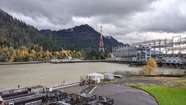
Throughout fiscal year 2025 (October 1, 2025, to September 30, 2026), NLR’s hydropower and marine energy research drew on extensive expertise to validate and accelerate the deployment of water power insights, technologies, and tools. Program highlights include work on more than 85 projects with water power stakeholders, 51 peer-reviewed publications, and two issued patents.
|
|
|
See H2O at These Events
Sept. 21–25, 2026, Phoenix, AZ
Join H2O at Clean Currents, the official water power trade show and conference of the National Hydropower Association. H2O and National Laboratory staff will be available to discuss the latest updates in the hydropower and marine energy industries at the DOE booth located on the main event floor, booth 1337. H2O and National Laboratory staff will also participate in a variety of sessions throughout the conference.
|
|
|
Sandia National Laboratories published a report that details the outcomes from the virtual Advanced Mooring Lines for Marine Energy Workshop. The workshop convened experts from industry, academia, and National Laboratories to identify key challenges associated with the deployment of synthetic mooring lines for marine energy applications. Discussions focused on four technical areas—materials, failure and degradation, testing, and modeling.
According to the U.S. Drought Monitor, the western United States experienced widespread drought conditions in 2025. The Colorado River Basin (CRB) was not spared from the drought and Lake Powell, one of the main water storage reservoirs for the CRB, could fall low enough to stop hydropower generation by December 2026. Argonne National Laboratory studied the drought conditions to determine the likelihood of Lake Powell needing to stop hydropower generation and the impact that would have on the region.
The Mid-Columbia region in the Pacific Northwest includes seven large, cascaded hydropower plants with a combined nameplate capacity of nearly 14,000 megawatts. NLR and the Grant Public Utility District, which owns the final two plants in the cascade of seven, worked together to determine whether it would be beneficial to coordinate the operations of all seven facilities on the river. Researchers found that a fully coordinated Mid-Columbia hydropower system would produce more energy for ratepayers and increase annual revenue for hydropower owners and operators.
|
|
|
|
|