|
Did You Know?
IESO has a new homepage highlighting its integrated approach to energy innovation. IESO brings together research focused on strengthening grid reliability and resilience, advancing American technological leadership, and lowering energy costs for consumers. Explore the site to learn more about IESO’s research, resources, and opportunities.
|
|
|
You are receiving this email because you previously subscribed to communications from the U.S. Department of Energy’s former Solar Energy Technologies Office or Wind Energy Technologies Office. As part of the Office of Critical Minerals and Energy Innovation's (CMEI's) reorganization, these offices have merged to form the new Integrated Energy Systems Office. To update your subscription preferences or unsubscribe from future communications, please use the subscription management link.
This message was sent in accordance with federal email communication requirements.
|
|
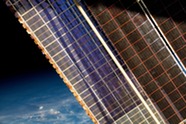
DOE recently announced the Space Photovoltaics (PV) Research and Development funding opportunity to support the advancement of mission-critical space PV capabilities within the United States. Up to $12 million will be awarded to selected research and development projects that address key challenges in durability, performance, cost, and manufacturing throughput for space PV technologies. University and industry research laboratories developing advanced space-applicable PV technologies or specializing in PV characterization and stress testing are encouraged to apply. Industry teams that are advancing near-commercial pilot-scale space PV solutions and have the capability to fly PV prototypes or panels in space should also apply.
Applications must be submitted by 11:59 p.m. ET on Oct. 8, 2026.
|
|
|
|
DOE’s Office of Critical Minerals and Energy Innovation (CMEI) announced a Notice of Intent for up to $100 million to strengthen America’s critical minerals workforce, support U.S. energy dominance, rebuild domestic supply chains, and reduce reliance on foreign adversaries for the materials that power modern energy, manufacturing, and defense technologies. The Providing Opportunities for Specialized Education in Critical Technologies (PROSPECT) initiative will expand educational opportunities and develop the skilled workforce needed to support the domestic production, processing, recovery, and recycling of critical minerals.
DOE announced that applications are open until Nov. 18, 2026, for the Energy Technology Innovation Partnership Project (ETIPP), which helps coastal, remote, and island communities develop more affordable, reliable, and secure energy systems through strategic energy planning and in-depth technical assistance. Through ETIPP, National Laboratory researchers and regional partner organizations collaborate with communities across eight regions in the United States and its territories for up to 24 months to develop strategies for more resilient and affordable energy systems.
DOE's REMADE Institute awarded $4.8 million to 10 projects that will advance promising materials recovery, remanufacturing, and recycling technologies. The selected projects will move these technologies from successful laboratory demonstrations to commercial deployment. By supporting technologies at one of the most challenging stages of development, these projects will reduce technical risk and accelerate the adoption of innovative materials solutions.
Three projects supported by IESO were named finalists for the 64th annual R&D 100 Awards, which highlights advances across laboratories, universities, and industry. Oak Ridge National Laboratory was awarded for their Microgrid Orchestrator, which helps multiple microgrids share power during outages so essential services can continue operating. The National Laboratory of the Rockies (NLR) was awarded for its , which uses photoluminescence and electroluminescence imaging to identify cracks and other faults in solar panels without contact, improving panel verification during research and manufacturing. NLR was also recognized for its ENDURING system, which stores electricity as high temperature heat in silica sand and delivers power when needed over extended periods. These finalists highlight IESO's commitment to strengthening grid resilience, advancing next-generation energy technologies, and driving national innovation.
|
|
Research & Development Spotlight |
|
|
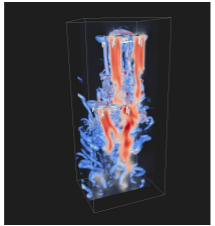
Modeling of the
aerodynamic interaction between
two quadcopter drones. Flow
visualization contours colored by velocity.
(Graphic by Wind Wake Solutions/
Sandia National Laboratories)
Aerial drones are now used by consumers, the military, and even large-scale nighttime drone shows. However, some emerging drone applications require further research and development, and forward-looking stakeholders have identified a key need: the ability of drones to fly safely and efficiently in close formations and near structures.
Building on DOE-funded advanced physics-based modeling tools developed by SNL and NLR, the National Labs are partnering with Wind Wake Solutions to pioneer fidelity-first modeling of drone “proximity effects,” or how nearby vehicles and infrastructure alter aerodynamic forces and control behavior. Simulations include quadcopter drones ingesting the downwash of neighboring drones and providing state-of-the-art resolution of proximity effects. Such resolution will enable physics-informed machine learning to discover complex control laws that are needed to counteract proximity effects but are expensive and time-consuming to learn through field testing alone.
The outcome will advance controller design and optimization for AI-powered drone systems, driving fuel-efficient, high-tempo, safe operations in multiple U.S. industries and helping to sustain American leadership in next-generation energy technologies.
|
|
|
Energy I-Corps Cohort 22 concluded with a capstone event in Washington, D.C., where 18 teams from 11 National Laboratories presented on how customer discovery shaped their commercialization strategies. Teams also participated in a poster session with DOE leadership, instructors, and stakeholders, highlighting innovative technologies spanning critical materials, advanced manufacturing, artificial intelligence, cybersecurity, and more.
|
|
|
DOE announced the selection of 29 innovators and entrepreneurs from 27 startups for the 2026 cohort of its Lab-Embedded Entrepreneurship Program (LEEP). The fellows will participate at one of four National Laboratories, where they will receive mentorship, technical support, entrepreneurial training, and access to world-class facilities to advance next-generation technologies and strengthen America's innovation ecosystem.
AI is transforming the way scientists and engineers tackle complex energy challenges, and nine new projects selected by IESO’s Aeromechanical Energy Systems subprogram will help drive that momentum. The selected Genesis Mission projects span AI-enabled cloud and atmospheric modeling, fluid dynamics and turbulence, flow-induced vibration, generative engineering, and advanced composite manufacturing.
|
|
IESO has selected RadiPulse Solar of Merced, California, and SolMem of Houston, Texas, as two additional finalists for the American-Made Solar Desalination Prize. These finalist teams will receive $750,000 and join four previously announced finalists in the Test Contest, where they will build and field-test solar-powered prototype systems to remove salt and other impurities from water.
Lawrence Berkeley National Laboratory has released the Queued Up: 2026 Edition report, which provides information on the status of power plants seeking transmission interconnection across the United States through the end of 2025. The annual update provides data and analysis to help policymakers, utilities, developers, and grid operators better understand interconnection trends and inform efforts to improve grid planning and reliability.
|
|
|
|
|