|
Did You Know?
electricity demand surges during extreme summer heat, a strong electric grid becomes even more critical. DOE recently took in the U.S. Mid-Atlantic region, underscoring the importance of continued investments in transmission and other infrastructure to reliably deliver electricity from all generation sources, including wind and solar energy.
|
|
|
You are receiving this email because you previously subscribed to communications from the U.S. Department of Energy’s former Solar Energy Technologies Office or Wind Energy Technologies Office. As part of the Office of Critical Minerals and Energy Innovation's (CMEI's) reorganization, these offices have merged to form the new Integrated Energy Systems Office. To update your subscription preferences or unsubscribe from future communications, please use the subscription management link.
This message was sent in accordance with federal email communication requirements.
|
|
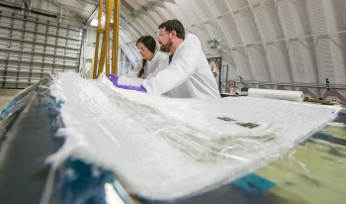
DOE’s National Laboratory of the Rockies (NLR) is accepting applications for the inaugural 2026–2027 Technology Recycling and Repurposing (T-ReX) Collegiate Competition. This opportunity is open to teams from any postsecondary institution looking to and test practical solutions to recycle, repurpose, and recover value from real retired wind turbine materials.
|
|
|
|
Queued Up: 2026 Edition, which provides information on the status of power plants seeking transmission interconnection across the United States through the end of 2025. The annual update provides data and analysis to help policymakers, utilities, developers, and grid operators better understand interconnection trends and inform efforts to improve grid planning and reliability. Although total active queue volume dipped by 10% this past year, 2,060 GW of generation and storage capacity currently waiting to connect is roughly 1.5 times the size of the entire existing U.S. power plant fleet.
is transforming the way scientists and engineers tackle complex energy challenges, and nine new projects selected by Integrated Energy Systems Office’s (IESO) Aeromechanical Energy Systems program will help drive that momentum. The selected Genesis Mission projects span AI-enabled cloud and atmospheric modeling, fluid dynamics and turbulence, flow-induced vibration, generative engineering, and advanced composite manufacturing. Led by universities, National Laboratories, and industry—including Clemson University, The Ohio State University, the University of Southern California, the University of Delaware, GE Vernova, Pacific Northwest National Laboratory, Sandia National Laboratories, and the National Laboratory of the Rockies—the portfolio reflects a broad, collaborative research ecosystem. The projects directly advance IESO’s mission by accelerating innovation, lowering costs, improving predictive modeling and operational reliability, and creating crosscutting AI capabilities that can advance multiple energy sectors. Learn more about the first selected Genesis Mission projects, and sign up to receive updates from this exciting national initiative.
|
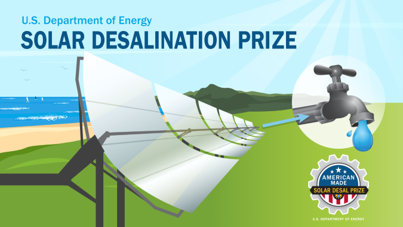
IESO has selected RadiPulse Solar of Merced, California, and SolMem of Houston, Texas, as two additional finalists for the American-Made Solar Desalination Prize. These finalist teams will receive $750,000 and join four previously announced finalists in the Test Contest, where they will build and field-test solar-powered prototype systems to remove salt and other impurities from water. RadiPulse Solar is developing a new solar concentrator that makes solar‑powered desalination simpler and more affordable, helping oil and gas operators lower the cost of treating difficult wastewater. SolMem is creating a solar‑heated water treatment process that can clean salty wastewater from coal‑fired power plants and landfills. Winners of the Test Contest will receive a $1,000,000 grand prize.
|
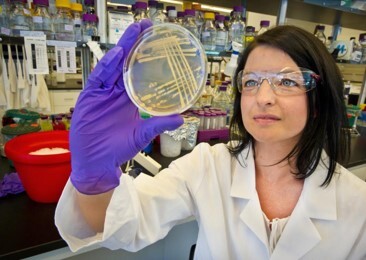
DOE recently announced the selection of 29 innovators and entrepreneurs from 27 startups for the 2026 cohort of its Lab-Embedded Entrepreneurship Program (LEEP). The fellows will participate at one of four National Laboratories, where they will receive mentorship, technical support, entrepreneurial training, and access to world-class facilities to advance next-generation technologies and strengthen America's innovation ecosystem.
|
Energy I-Corps Cohort 22 concluded with a capstone event in Washington, D.C., where 18 teams from 11 National Laboratories presented on how customer discovery shaped their commercialization strategies. Teams also participated in a poster session with DOE leadership, instructors, and stakeholders, highlighting innovative technologies spanning critical materials, advanced manufacturing, artificial intelligence, cybersecurity, and more.
Since 2015, Energy I-Corps has graduated 286 teams. To date, program alumni have secured more than $234 million in post-program funding and executed 99 technology licenses.
Managed by NLR, DOE's Energy Technology Innovation Partnership Project (ETIPP) supports coastal, island, and remote communities seeking to develop more reliable, affordable, and secure energy systems. Communities partner with ETIPP to address intersecting energy challenges, such as frequent power outages, lack of backup infrastructure, and high energy costs. By selecting 38 new projects in 2025, the program expanded its support to over 80 communities nationwide, as outlined in the .
|
|
Research & Development Spotlight
|
|
|
National Laboratories (SNL) has developed an artificial intelligence (AI)-driven distributed energy resource management system (DERMS) that coordinates grid-connected devices to keep voltage stable in real time. Tested in both laboratory and field settings this technology reduces reliance on slower mechanical equipment and helps protect critical infrastructure from power disruptions. Supported by DOE, Sandia’s work advances resilient, intelligent grid controls
|
|
|
NLR announced its upcoming 2026 Competitiveness Improvement Project request for proposals, which will provide funding and technical assistance to help small businesses accelerate the innovation, testing, and certification of distributed wind energy technologies.
|
|
NL successfully tested a prototype solar receiver that heats air to 850 °C using concentrated solar energy, demonstrating the viability of ultra-high-temperature solar thermal technology to power energy-intensive industrial processes, such as critical mineral refining and thermal energy storage.
|
|
Under DOE’s Genesis Mission, Brookhaven National Laboratory partnered with Amazon Web Services to develop GridSearch, an AI-powered tool that accelerates electric grid interconnection for AI data centers, energy generation facilities, and advanced manufacturing plants, helping modernize the U.S. power grid. The tool uses the Grid Foundation Model (GridFM), an AI system that enables significantly faster grid simulations while maintaining accuracy and robustness. |
|
|
|
|