|
Did You Know?
Artificial intelligence (AI) can help improve how energy projects move through environmental review and permitting. Pacific Northwest National Laboratory (PNNL) held a webinar on PermitAI, a tool designed to help users find relevant information more quickly and analyze data more efficiently. Tools like this can support more informed permitting decisions for energy infrastructure, including projects that help bring solar and wind power onto the grid.
|
|
|
You are receiving this email because you previously subscribed to communications from the U.S. Department of Energy’s former Solar Energy Technologies Office or Wind Energy Technologies Office. As part of the Office of Critical Minerals and Energy Innovation's (CMEI's) reorganization, these offices have merged to form the new Integrated Energy Systems Office. To update your subscription preferences or unsubscribe from future communications, please use the subscription management link.
This message was sent in accordance with federal email communication requirements.
|
|
|
Are you a student, researcher, or professional eager to shape the future of energy? You can work with IESO through the Science and Technology Fellowship! Based in Washington, D.C., fellows will develop leadership skills by guiding strategy, designing funding programs, and managing projects that advance resilient, integrated, and affordable energy systems. Direct experience in solar or wind energy is not required. Apply by July 31.
|
|
The National Laboratory of the Rockies (NLR) is gearing up to launch its 2026 Competitiveness Improvement Project (CIP) request for proposals (RFP). This initiative is designed to help small businesses accelerate the innovation of distributed wind energy technologies. Whether you are working on early prototype designs, optimizing turbine efficiency, or testing to national performance and safety standards for certification, CIP can provide funding and technical assistance needed to bring your products to market.
|
|
Research & Development Spotlight |
|
|
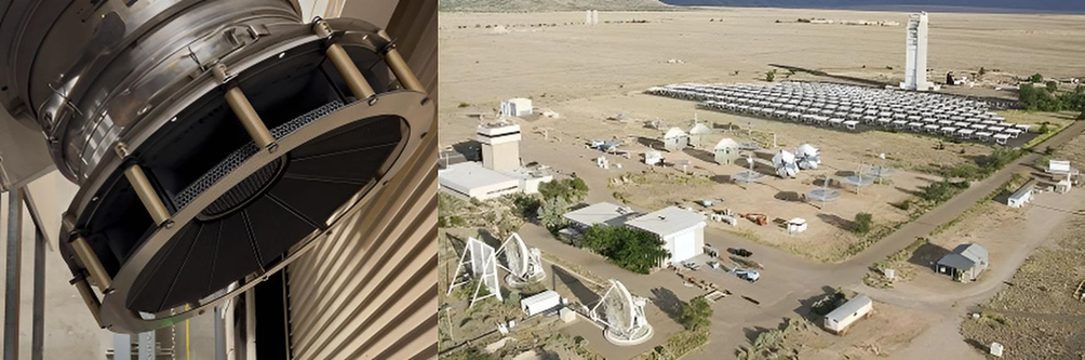
Sandia National Laboratories recently tested a prototype solar thermal technology that uses concentrated solar energy to heat air to 850 °C, showing its potential to support processes that need very high heat, such as critical mineral processing and other industrial applications. The ultra-High Operating Temperature Silicon Carbide matrix Solar Thermal Air-Receiver (HOTSSTAR), designed by GE Aerospace Research, also reached surface temperatures near 1,400 °C during testing at Sandia’s National Solar Thermal Test Facility, demonstrating that the receiver's silicon carbide can withstand the extreme heat required for industrial applications.
Supported by IESO, the HOTSSTAR system can expand options for process heat, thermal energy storage, and power production, improving U.S. energy resilience. These results mark an important step toward commercializing lower-cost, high-temperature thermal energy systems for U.S. industry, including systems that use air for thermal energy storage.
|
|
 Events
July 29 & 30 | Richland, WA
DOE’s Securing Solar for the Grid (S2G) initiative invites industry and cybersecurity stakeholders to an in-person workshop at Pacific Northwest National Laboratory. This two-day event will gather national laboratories, industry, and S2G Industry Advisory Board members to collaborate on practical cybersecurity solutions for protecting critical energy infrastructure. Join us to discuss emerging challenges and strategies for strengthening the resilience and security of integrated energy technologies. Register by July 17.
|
|
|
CMEI’s Critical Material Innovation, Efficiency, and Alternatives funding opportunity awarded $45.7 million to 19 projects to strengthen domestic critical mineral supply chains, including materials essential for solar photovoltaics (PV) and wind turbines. Two of these projects involve the development of pilot-scale facilities in Oklahoma and Wyoming for processing magnesium and rare earth elements. The 17 others will develop innovative technologies and practices to support commercially viable sources of critical materials in the United States.
|
|
CMEI announced funding through its Rare Earth Elements Demonstration Facility Program. Up to $134 million will go to two U.S. facilities that will extract, separate, and refine rare earth elements. The United States has long relied on other nations for rare earth elements, which are vital components in advanced manufacturing, defense systems, and high-performance magnets used in power generators and electric motors.
|
|
|
IESO recently hosted the Space PV Workshop—a technical forum for experts from industry, government, and the National Labs dedicated to accelerating U.S. leadership in space PV innovation. Discussions informed attendees about future technical targets and collaboration strategies, helping shape a cohesive national approach to the next generation of space solar arrays for defense, communications, and deep space applications.
|
|
|
|



